


OECD expects AI to increase productivity the most in the US and the UK
Offshore processing wasn’t what stopped the crossings to Australia
Will AI drive humans off social media?
On networks such as X (Twitter), an increasing share of content is written by AI. Replies to big accounts are often dominated by bots. Ethan Mollick argues it could spell the end of traditional social media (quotations have been slightly edited for clarity):
Human interaction is going to shift to discords and group chats, invite-only. The open web and social media are going to be left for the agents lurking amongst the ruins. Everything public will be Moltbook.
I suppose social media companies can figure out a way forward to ensure an element of human interaction, but they haven’t seemed to be able to do that, yet.
Maybe we will all go back to bowling leagues and masonic lodges.
Email is also affected. Arvind Narayanan:
AI agents seem to be killing the ability to do cold outreach. Look at it from my perspective – someone who gets dozens of unsolicited invitations/requests in my email from strangers every day. In the past there used to be a sharp distinction between unpersonalized mass emails and those that were meant specifically for me. My spam filter could mostly automate this classification, and even when it didn’t, it would take me only a few seconds to tell if an email was worth reading/responding to. Now the distinction is gone because it is trivial to use AI to send out mass emails that appear deeply knowledgeable about each recipient’s work and expertise. I guess we have to go back to the bad old days of needing to be ‘introduced’ to someone before communicating with them.
Alex Imas comments:
I’ve been beating this drum: by making traditional signals of effort/information obsolete (e.g., writing a thoughtful email), AI will *increase* the value of social capital and networks.
This is not a good outcome: information technology was supposed to ‘flatten’ interactions. But I don’t see a solution on the horizon.
The ease of applying to jobs with AI is also changing the nature of hiring.
I’ve seen more places do hiring rounds privately, only by word of mouth. This was always happening, especially for jobs that want people within specific networks, but now it’s happening more.
Employers are reacting to the lower friction cost of applying to jobs.
I agree that AI will reshape social and professional interactions in a number of ways, but I think its impact will vary across cases. It’s useful to distinguish between two types. First, there’s evaluation – for instance, of job applicants or students. Since AI makes it easier to fake competence, I think it will definitely change our evaluation processes. As I’ve previously reported, some professors are already returning to in-person exams in response to students using AI on essay assignments.
The second issue is that people are inundated with AI-written content in some contexts. Mollick’s problem isn’t that he can’t distinguish between good and bad accounts – it’s that the flood of AI-generated replies is annoying in itself. But while it’s true that these replies are a nuisance, I’m not sure that they will kill social media like X. Most people with big accounts are using it to promote their own ideas, not to engage in debates with small accounts. While more advanced AI could have a big impact on social media, I don’t think this type of AI bot will.
In Scandinavia, more intelligent men have more children
What is the relationship between intelligence and fertility? Earlier American studies reported a negative correlation, but demographers have raised concerns that they were based on unrepresentative samples. Recent Scandinavian studies based on military conscription records and national birth registers have found a strikingly different pattern. In a study of virtually all Swedish men born between 1951 and 1967, men with the lowest scores on military cognitive tests had around 0.5 fewer children by age 45 than median-scoring men.
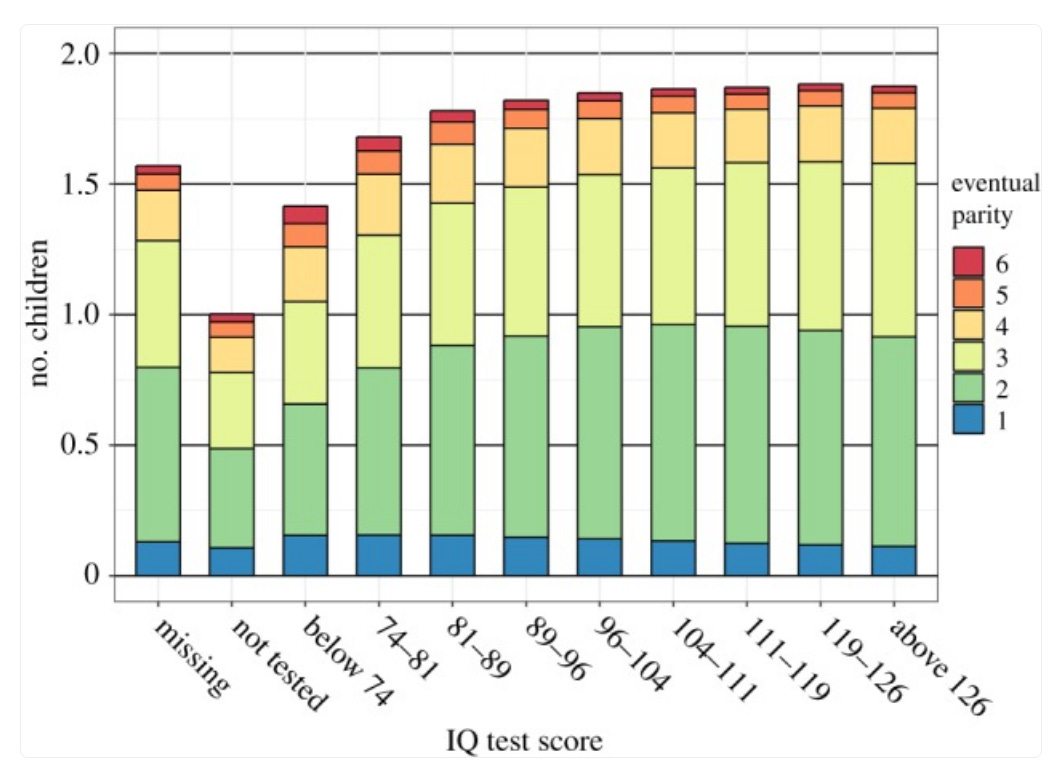
Fertility by age 45 for Swedish men born between 1951 and 1967, by IQ category and eventual parity (total number of children per man). Source: Kolk and Barclay, 2019.
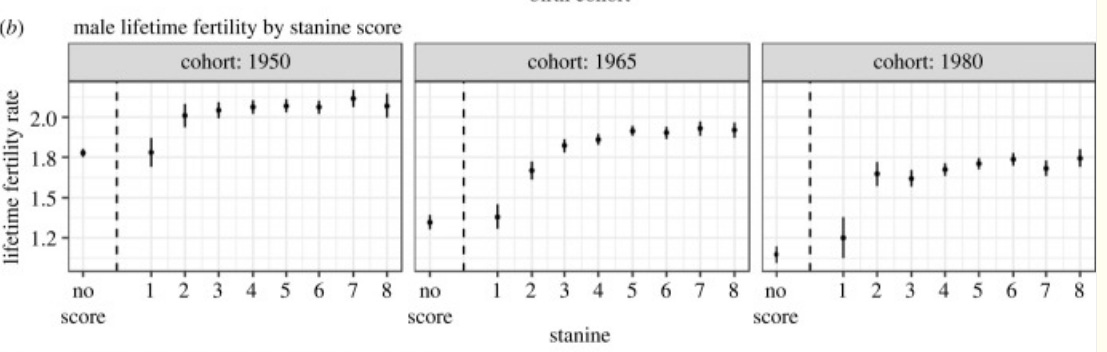
Less intelligent Norwegian men also have fewer children, primarily because they are more likely to remain childless.
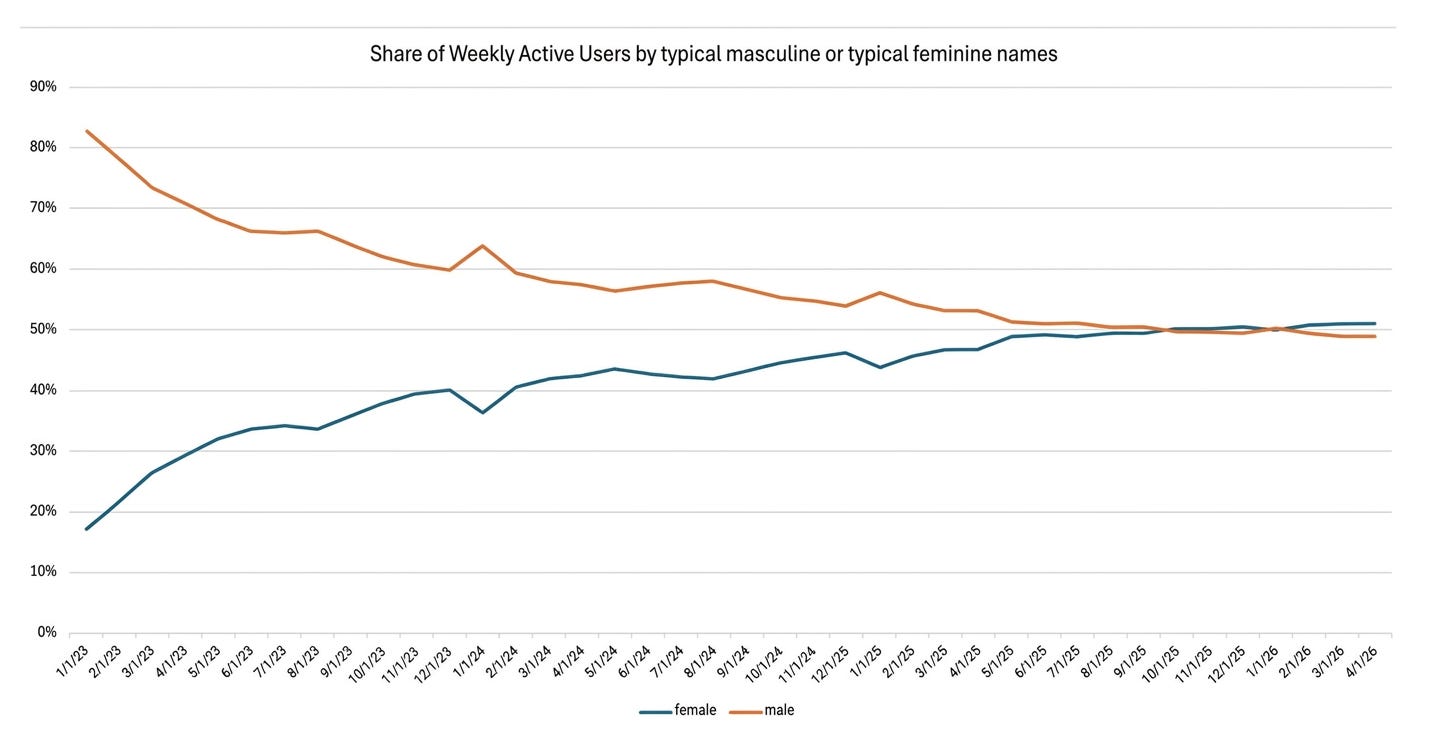
Most ChatGPT users are now women
In the early days of ChatGPT, almost all users were men. But the share of women has gradually grown, and recently, they probably became the majority. However, surveys suggest men still use AI more overall.
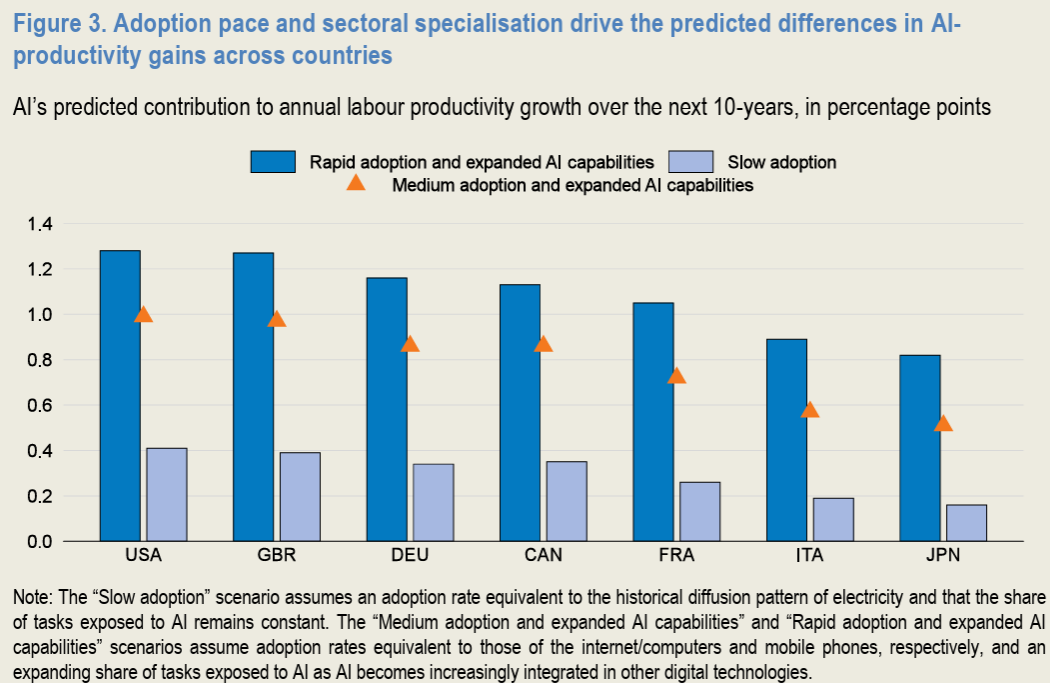
OECD expects AI to increase productivity the most in the US and the UK
In recent years, productivity has grown significantly faster in the US than in other G7 countries. A new OECD report predicts that AI will enable the US to extend this lead, thanks in part to greater adoption rates. The UK is a close runner-up, while Italy and Japan are expected to lag behind.
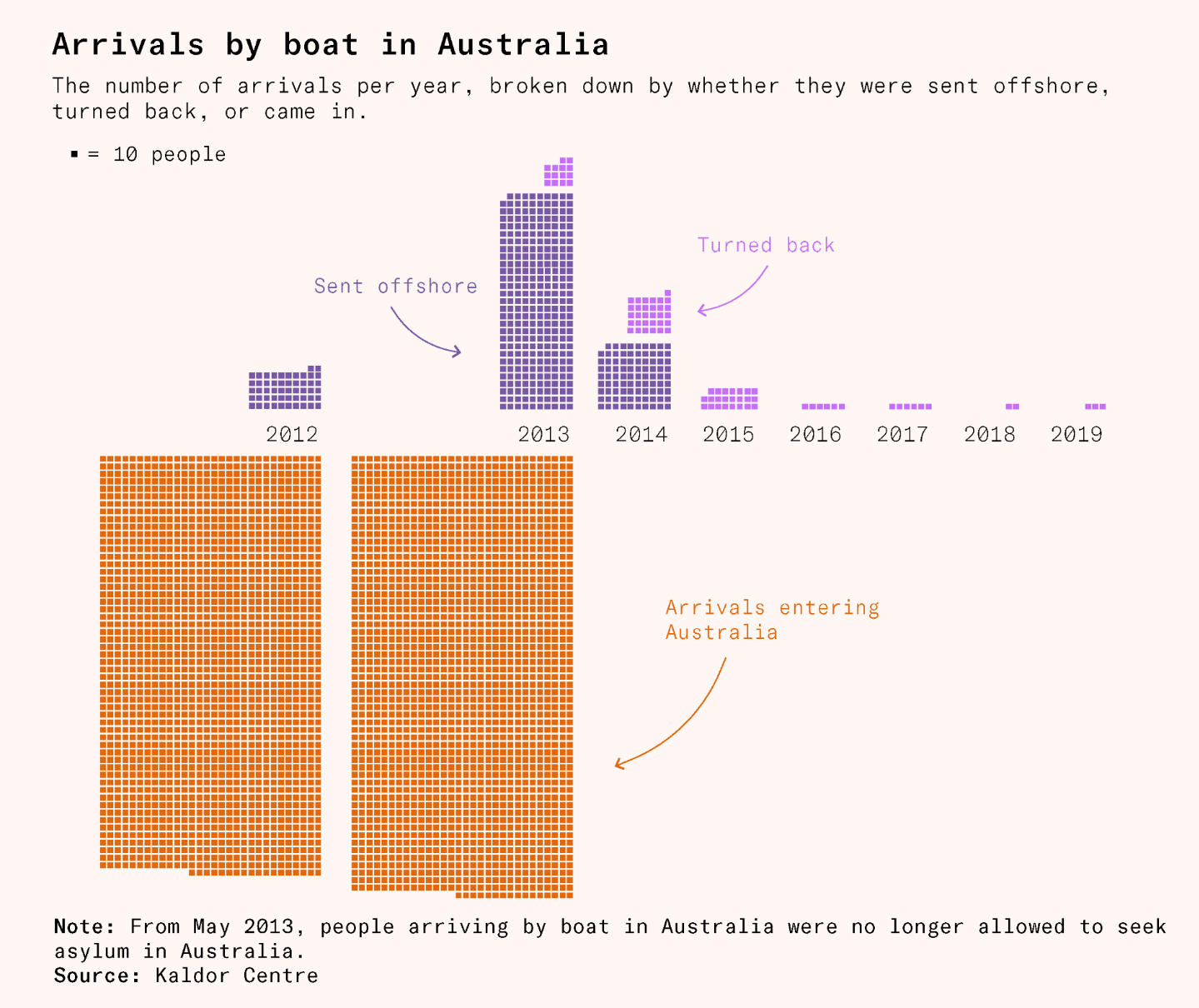
Offshore processing wasn’t what stopped the crossings to Australia
Each year, many migrants cross the Mediterranean in small boats, leading to thousands of drownings. To stop the crossings, many European governments want to copy an old Australian policy: processing asylum seekers in other countries. But in a new Works in Progress article, Amelia Wood argues that the decisive policy was turnbacks: the Australian navy escorting migrant boats back to where they came from. Both arrivals and drownings fell quickly after this policy was introduced in 2013. Since then, offshore processing has been quietly wound down, and yet the crossings haven’t resumed.
In brief
English landlords are quitting the rental market ahead of the Renters’ Rights Act
Dan Williams and Henry Shevlin interview Robert Long on the philosophy and politics of AI welfare
The case that some drug trials should be funded only retrospectively, if they succeed
Kelsey Piper argues that education research should bring in economists to fix its lack of rigor