


Right-wing parties avoid Trump effect in Danish election
Many outside commentators expected Donald Trump’s demands for Greenland to help the Danish left, but this wasn’t borne out in yesterday’s election. The right-wing bloc actually gained ground against the left compared with 2022.
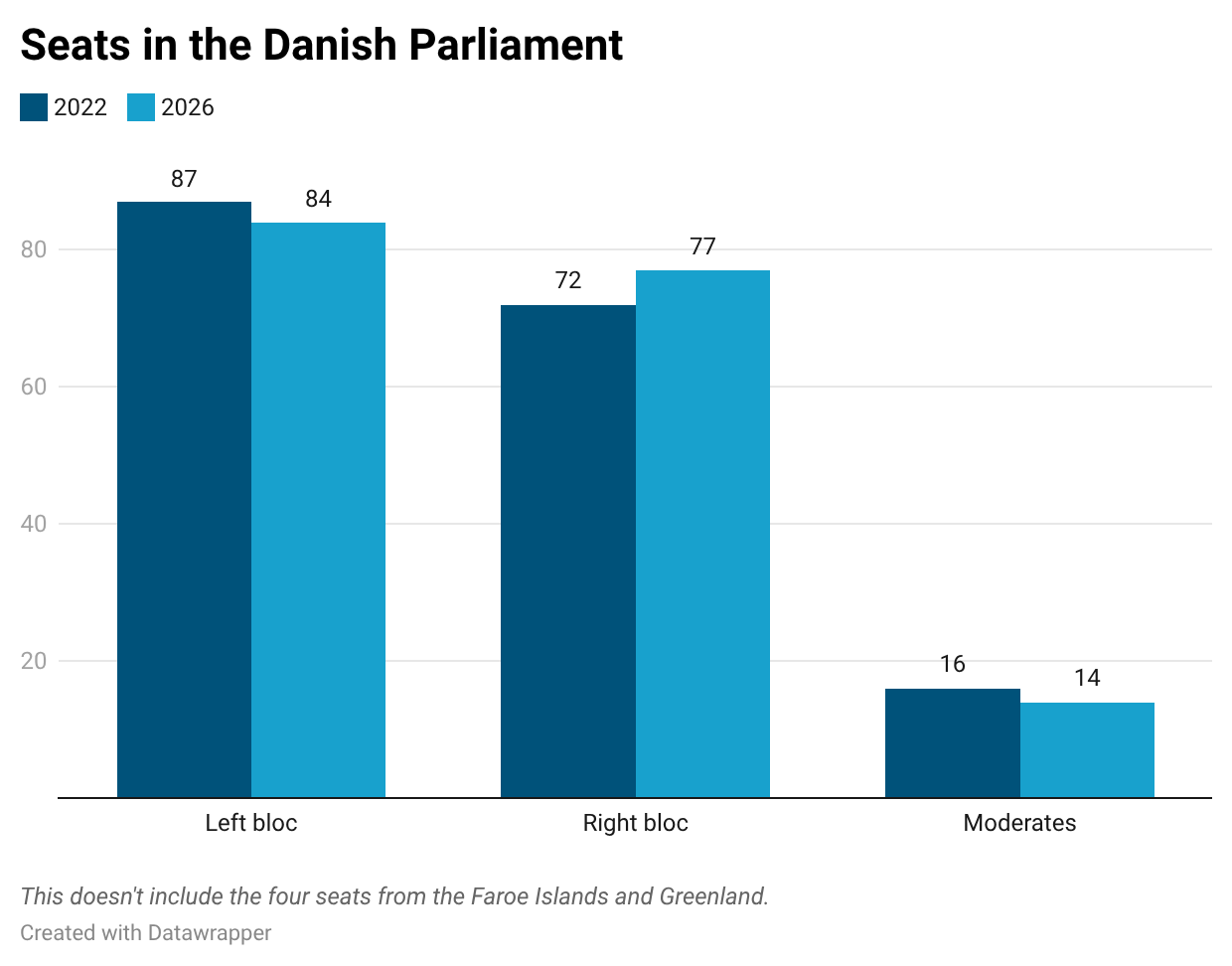
It was specifically the right-wing parties most opposed to immigration that grew, contradicting the narrative that the Social Democrats’ stricter stance has undercut them.
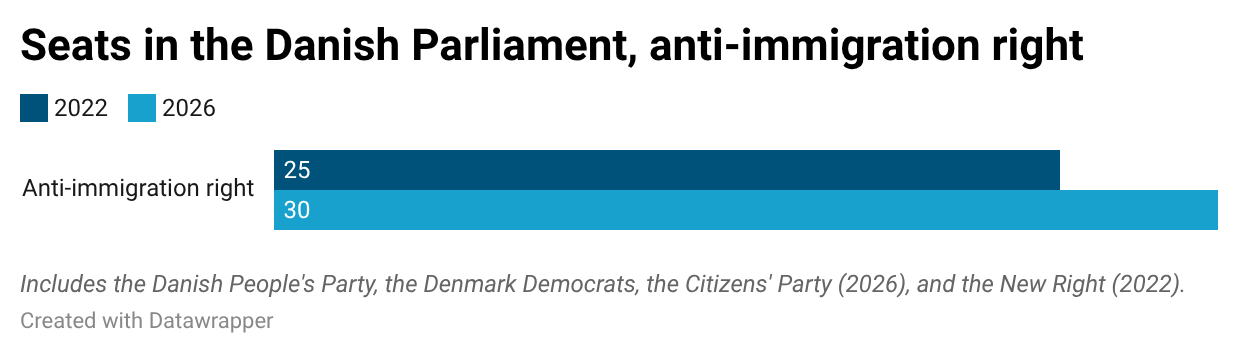
As neither bloc won a majority, most experts expect a new broad coalition, but with different parties from the previous one. Social Democrat Mette Frederiksen is predicted to remain prime minister.
First-time homebuying in the US keeps getting delayed
In 1975, first-time American homebuyers had a median age of only 28, but today, they are almost eight years older.

The growing ideological divide between young men and women
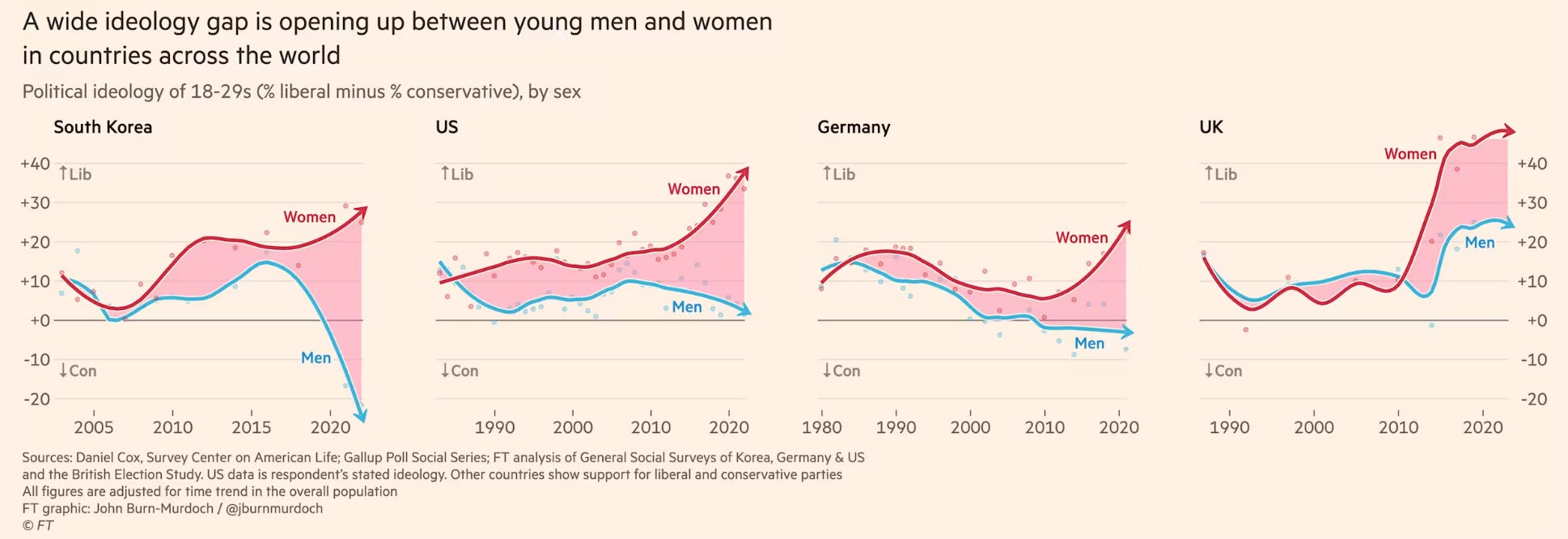
The Financial Times has previously reported that the political views of young men and women are drifting apart in several countries:
Now they report on the same thing happening in Spain:
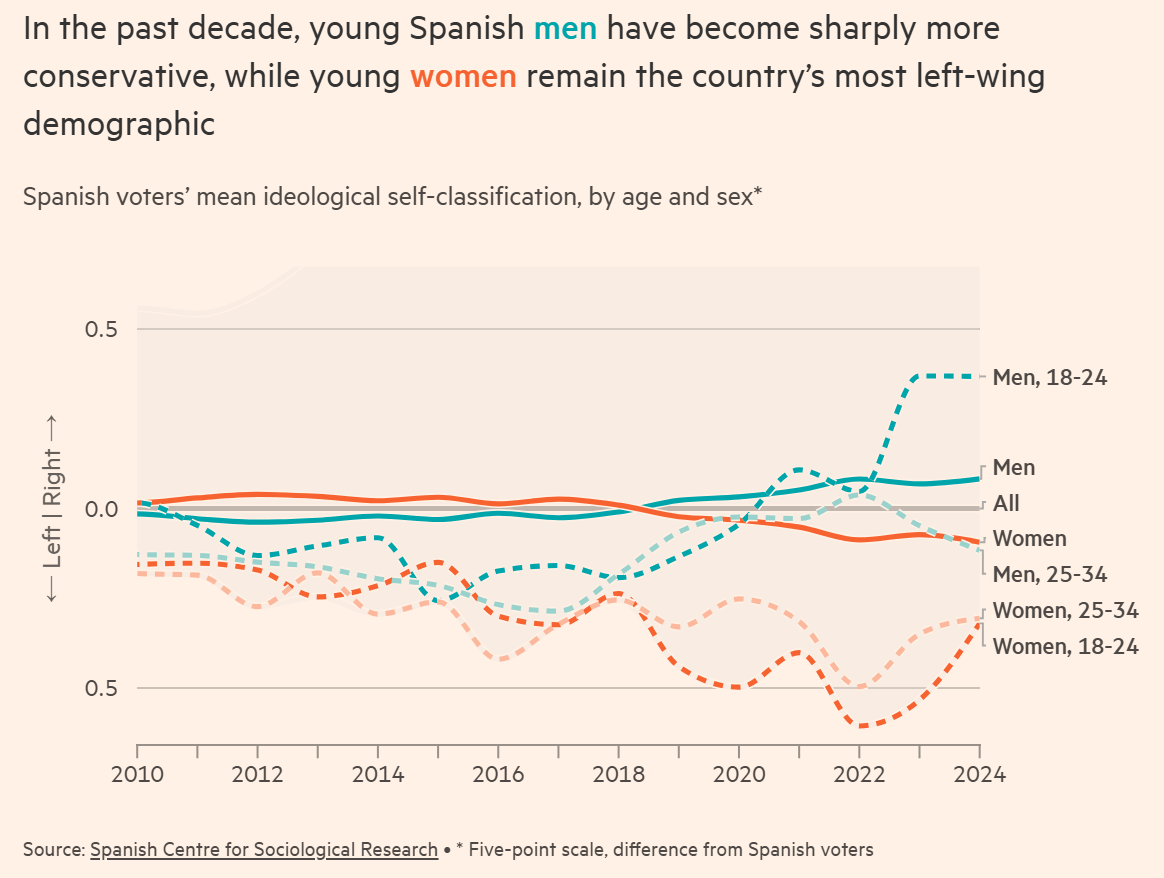
One driver may be that questions young men and women often disagree on – such as gender and immigration – have gotten more attention.
Cutting the knot of AI understanding
Do AIs possess real understanding, or are they actually little more than stochastic parrots? Matthew Adelstein argues it matters less than it might seem.
We know that AI can code, discover novel math proofs, provide original analysis of philosophical arguments, and more. We know that AIs can complete programming tasks that take humans a number of hours, and this has been doubling consistently, only to speed up recently. If you ask an AI to analyze a political issue, you’ll get a much more sensible answer than you’d get from 99 percent of the population – and not just in terms of knowing more facts but also in terms of reasoning better. We similarly know that AI is being designed to complete increasingly long tasks and function as an artificial agent.
The case for AI being a big deal, and potentially a serious threat to the world, simply depends on extrapolating out these trends. If AI is getting smarter, more ingenious, and more agentic by the day, then in the limit, we should expect AIs that are very smart and agent-like. That poses a number of quite severe risks. It also has the potential to radically upend the global economy by replacing most human workers.
You don’t have to sort out any of the interesting philosophical questions to evaluate this case. Whether the AI really understands what it’s doing . . . just isn’t relevant to this case.
I think this is mostly right. Too much of the current AI debate consists of people with different intuitions about the meanings of words refusing to see each other’s point of view. Sometimes the best approach to philosophical knots is not to undo them but to cut them.
That said, some underlying disagreements are substantive, and not merely verbal. Extrapolating current AI trends is less straightforward than this passage might suggest. As I’ve reported previously, smart and well-informed people disagree on how to extrapolate from METR’s time horizon studies of AI capabilities. And a major reason they disagree is that they hold different views on how AI systems work.
Bluesky is gradually declining
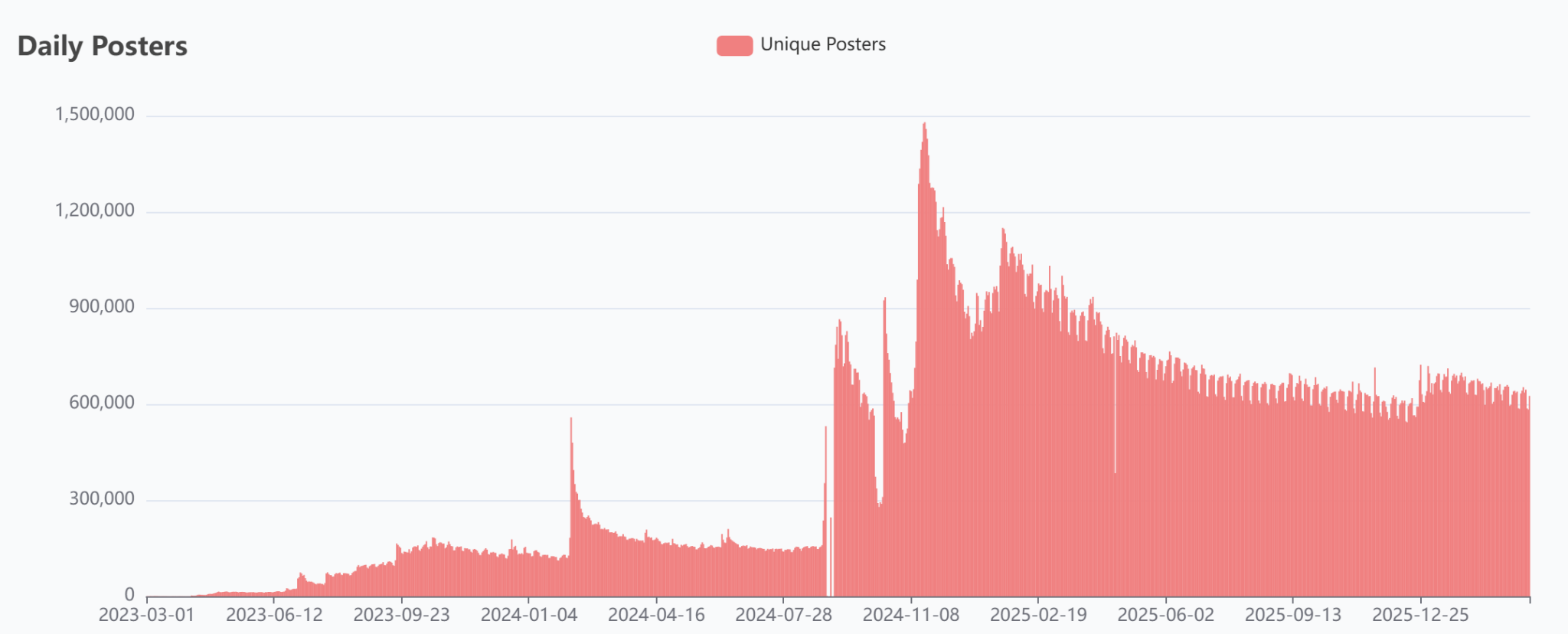
After Elon Musk acquired Twitter (now X) in 2022, some users left for Bluesky, a platform with similar functionality. The number of posters surged in late 2024 in response to Musk’s campaigning for Donald Trump. But since then, posting has gradually declined. Though activity has fallen at X, too, it is estimated to be around 10–30 times larger than Bluesky, depending on the metric.
Running AI models now costs more than training them
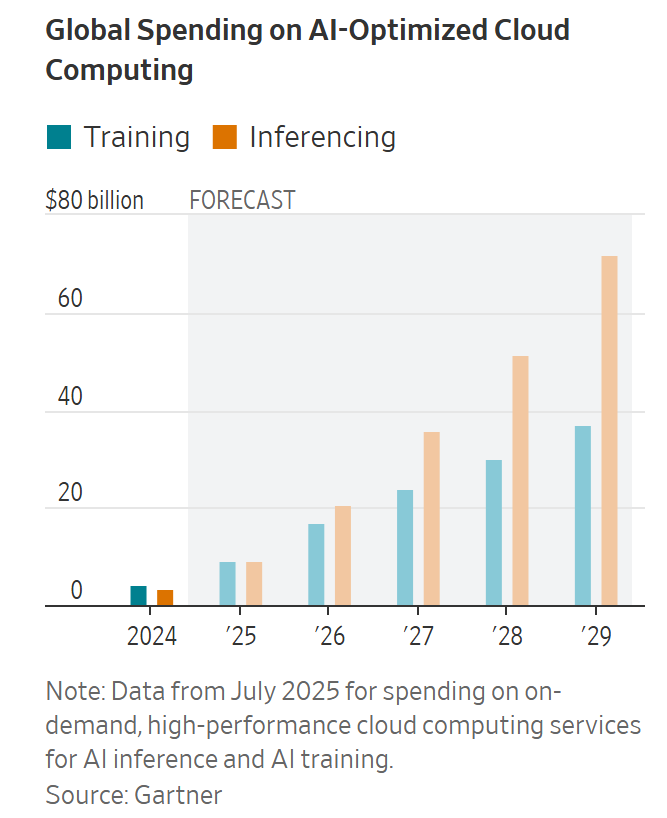
During the first half of this decade, most money invested in AI went into training better models. But now, the bigger expense is inference – actually running the models. This could widen the gap between free and premium models, as it becomes too costly for AI companies to give access to good models for free.
Coal is all but over in Britain
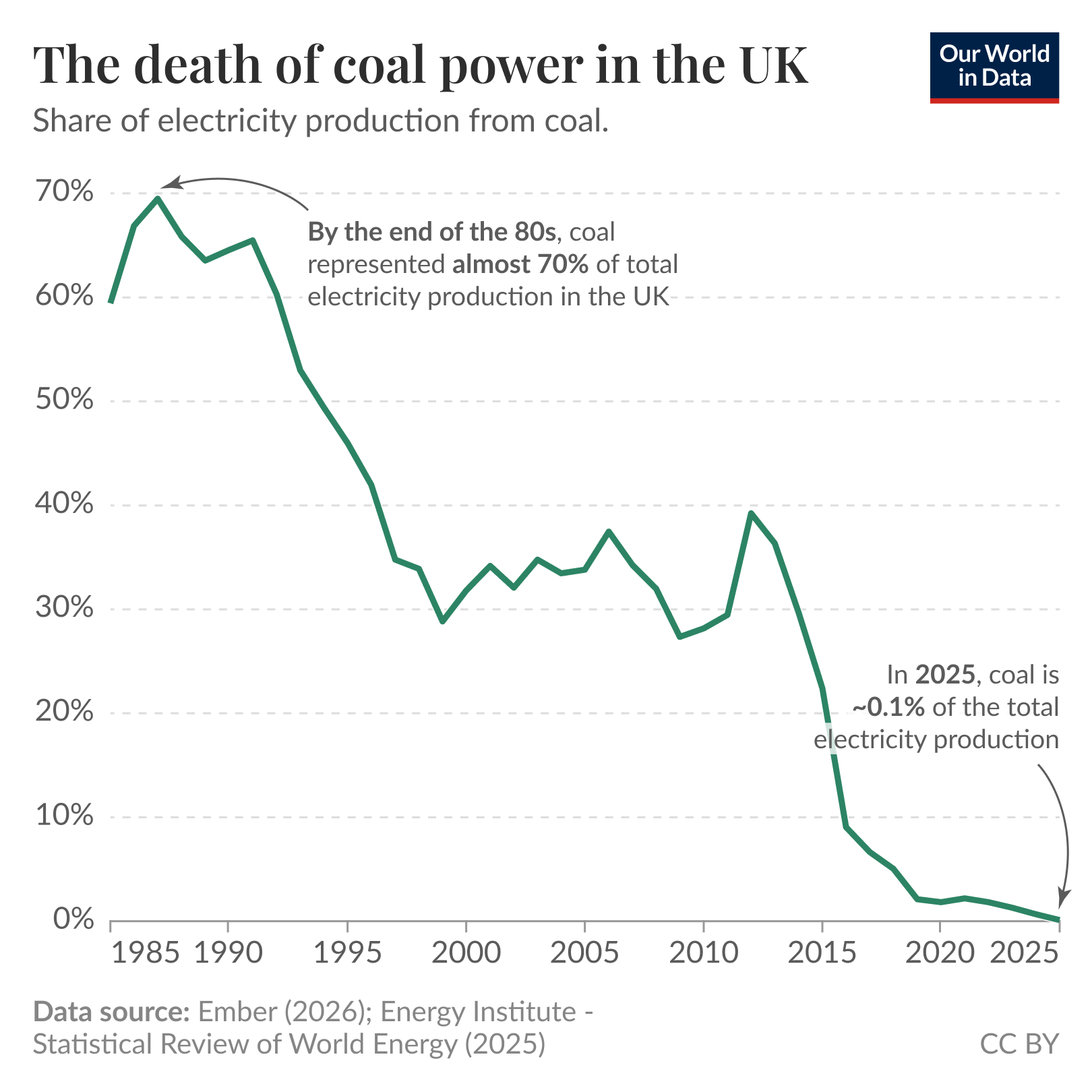
Coal has a special place in British history, as it helped launch the Industrial Revolution. It was the dominant source of electricity as late as the 1980s, but since then, the decline has been steep. In 2025, only 0.1 percent of British electricity came from coal.
In brief
Many carmakers are delaying their shift to electric vehicles
Venezuela opposition leader María Corina Machado says US pressure is leading to reforms
Jobs that are more exposed to AI aren’t necessarily more likely to be displaced
Ben Todd publishes a book on how to do good with your career, with a special focus on AI
Fermented foods may have contributed to the evolution of bigger brains
Kenyan field experiment finds dramatic effects of cheap GMO biofertilizers
Social science papers lean left, and increasingly so since 1990
Stuart Ritchie and Tom Chivers on the different theories of Tourette’s syndrome
Re: AI understanding, only text processing tasks are showing exponential benchmark improvement, other tasks are not. LLMs suck at simple things like parsing a PDF and can’t reliably make sense of the contents, and some of the most valuable human knowledge is locked up in PDFs. I asked Claude Code to create a PowerPoint presentation and it created one where all the slides were static images, not a proper, editable PPTX. An entry level intern can read PDFs and make PowerPoints.
Maybe the age of buying a first home keeps rising because the age of first marriage and first child keeps rising. I am N=1, but I could have bought a home at 25. I had no desire and waited until I had a baby in the house.