


Welcome to The Update. In today’s issue:
The human touch or mere convenience? Why job automation lags
Urban air pollution is improving in East Asia, but not in South Asia
In brief: surging Russian casualties, the Works in Progress podcast on inflation, and more
Why are so many English speakers dying early?
The Financial Times journalist John Burn-Murdoch has given a talk about life expectancy trends in English-speaking countries that I highly recommend. In recent years, the lower end of US life expectancy has fallen through the floor.
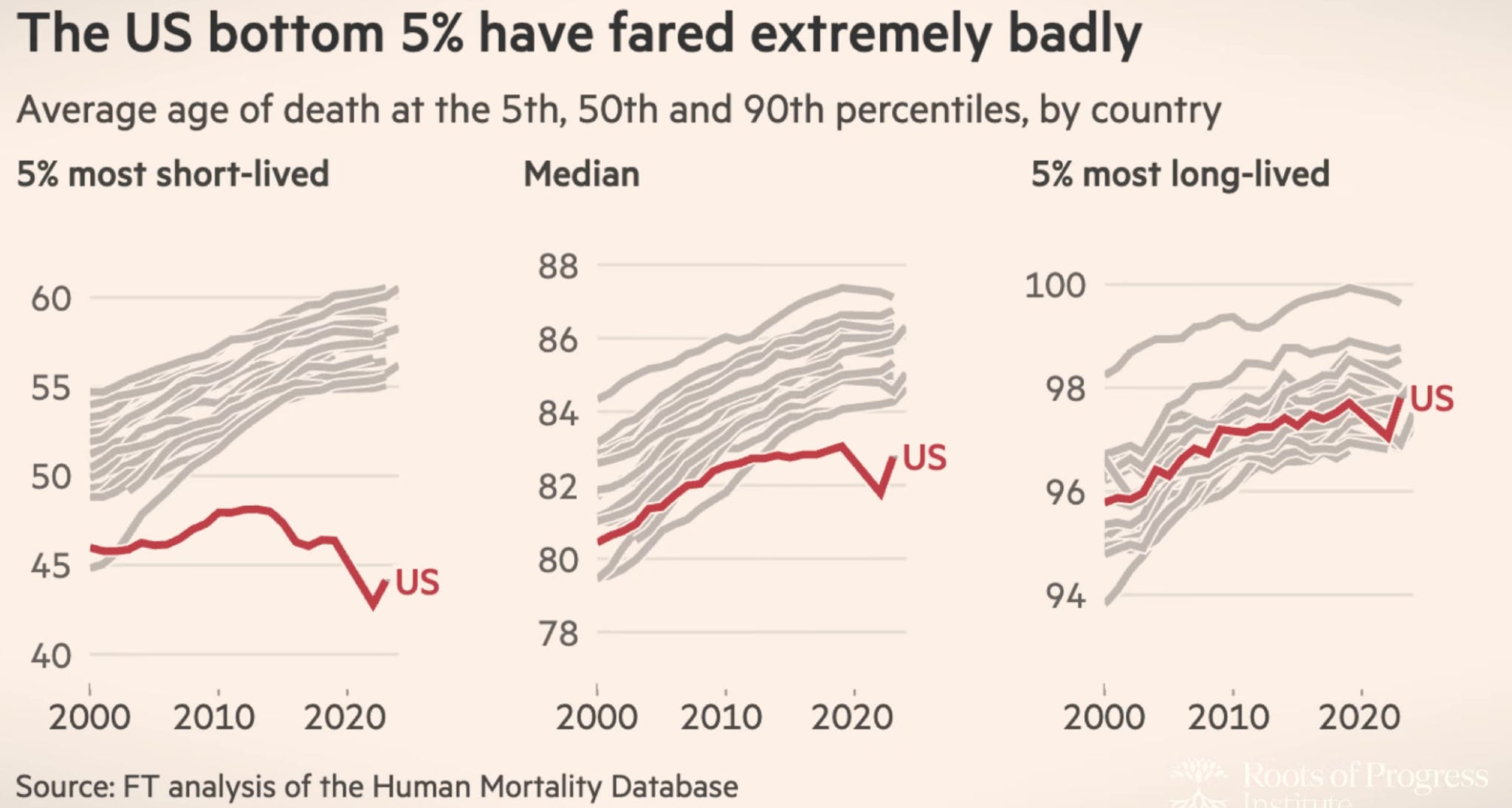
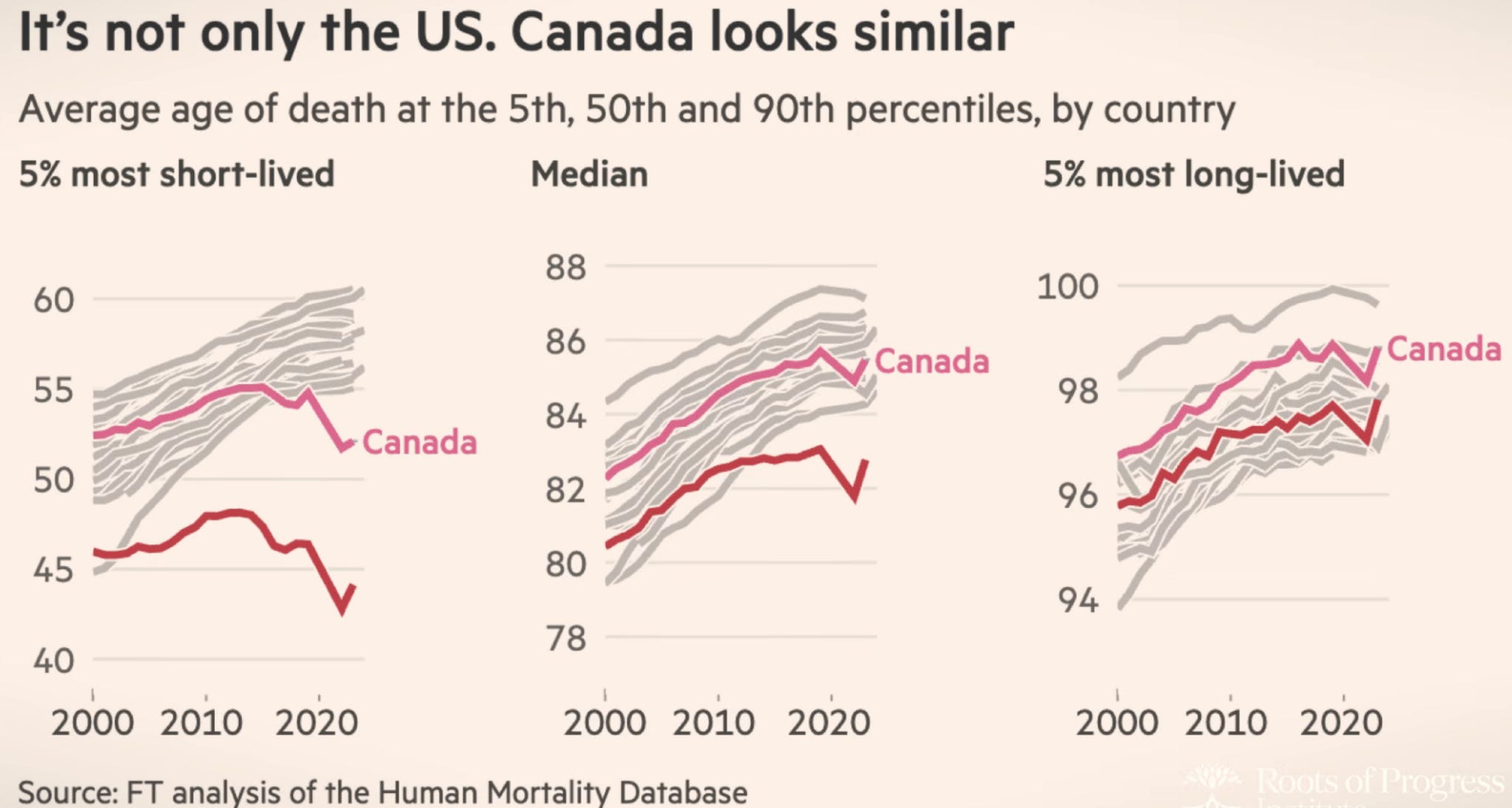
But the US isn’t the only English-speaking country that has this problem. Look at Canada:
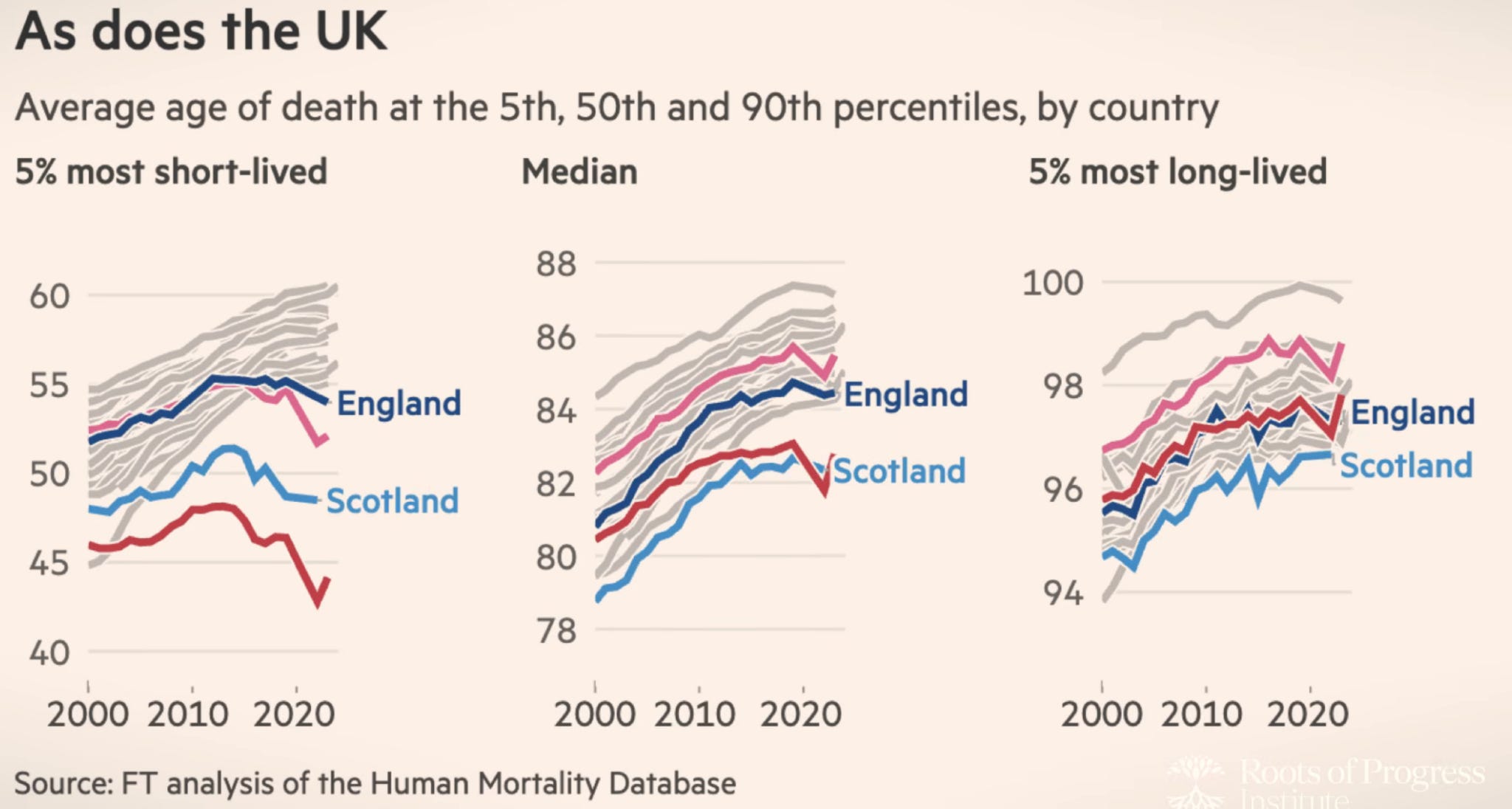
And the UK:
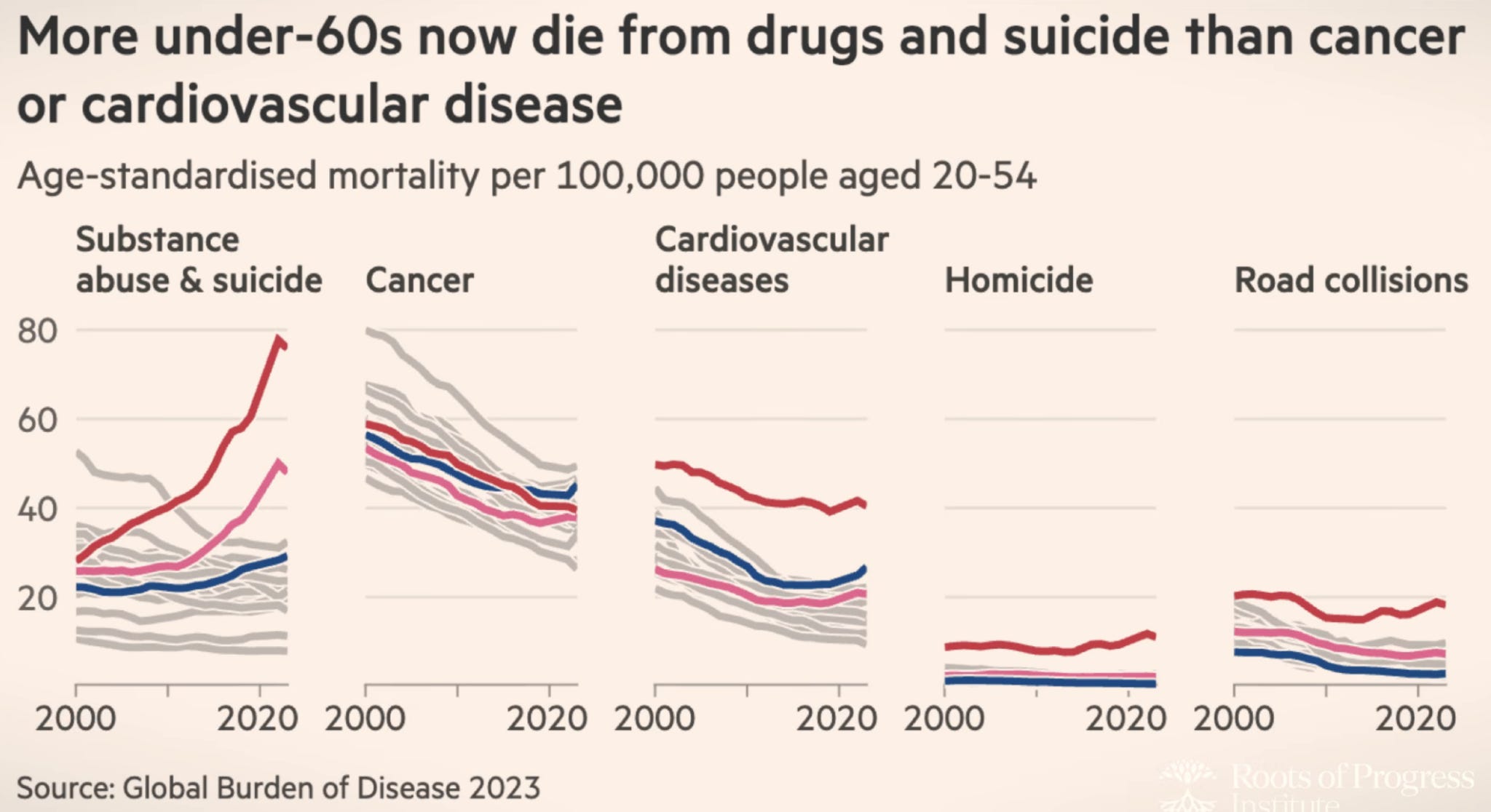
This is driven by external and behavioral causes:
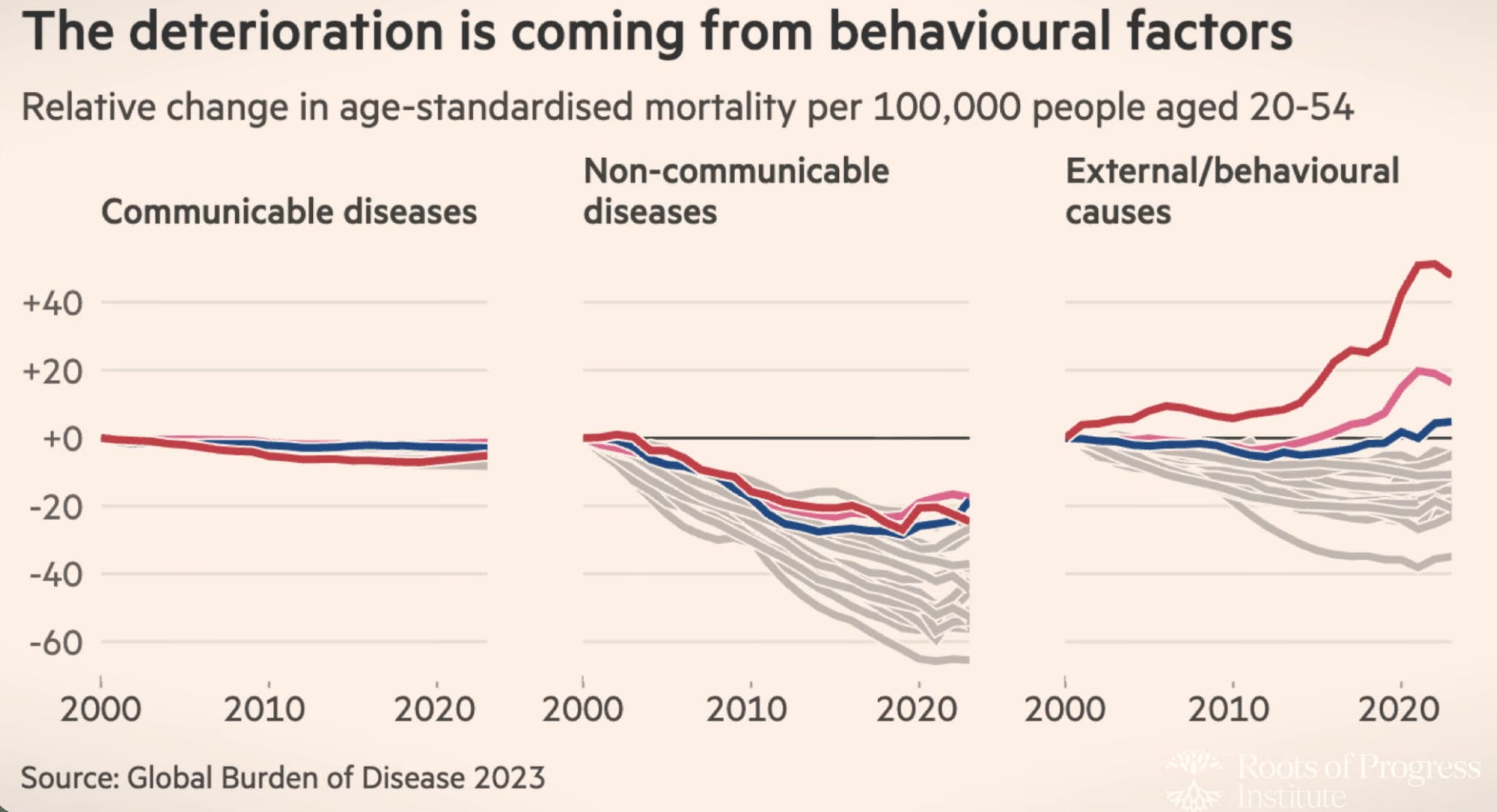
Among 20–54-year-olds, it’s especially deaths from substance abuse and suicide that have increased.
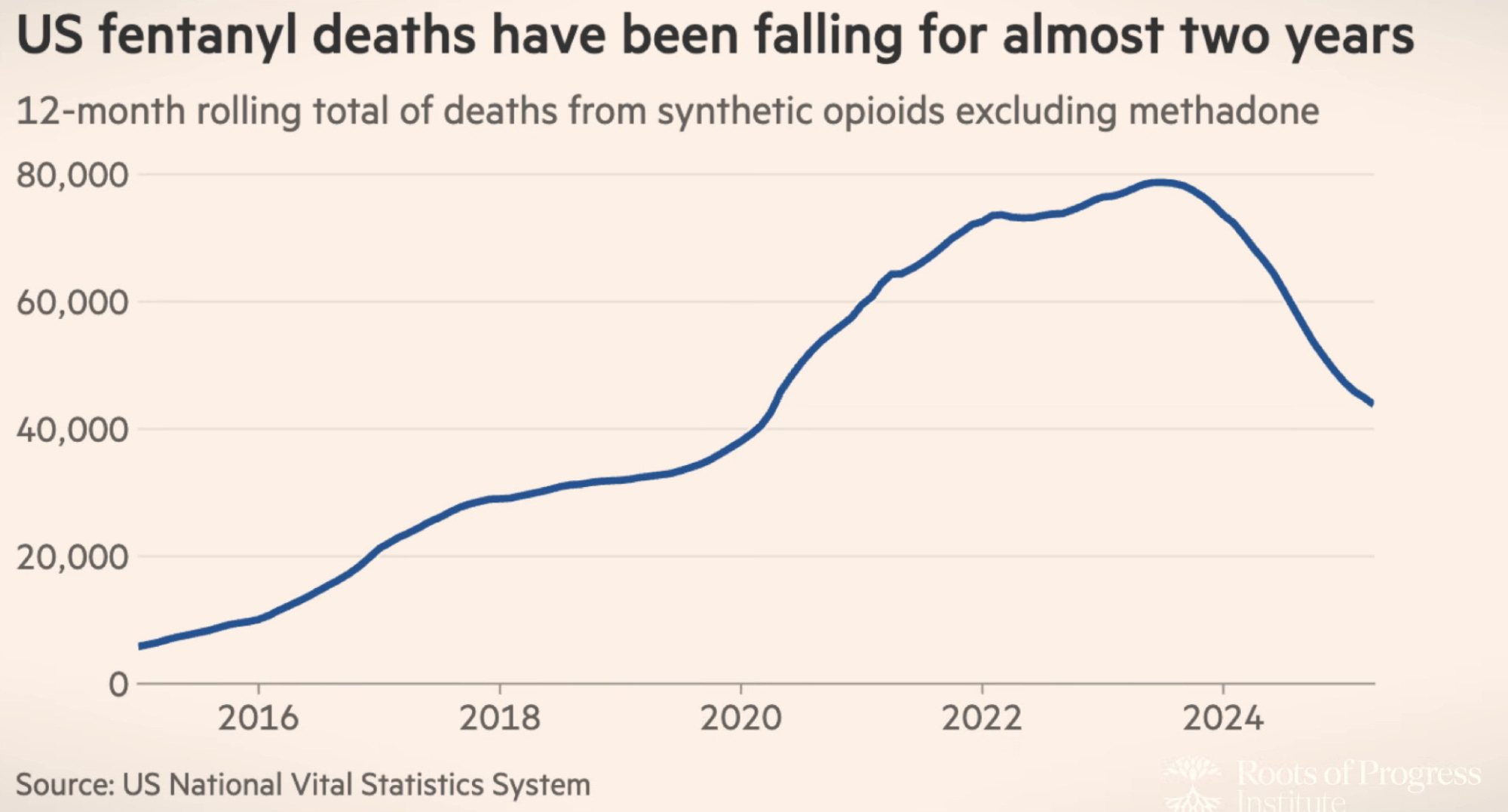
Thankfully, fentanyl deaths are falling in the US, which could help reverse the American trend of premature deaths.
As I’ve reported previously, there are other positive signs about US life expectancy as well. But this doesn’t change the broader takeaway: there’s something that drives more people toward self-destructive behavior in the English-speaking world than in other rich countries.
Europe is moving west
Since 1989, populations in many formerly communist countries have fallen, due to a combination of emigration, high death rates, and low birth rates. While Russia’s population has been almost flat, other former Soviet republics have shrunk 10 percent or more. Most countries in the Balkans have also seen declining populations. Among the countries that once were behind the Iron Curtain, only Poland, Czechia, Slovakia, Slovenia, and Montenegro have grown slightly.
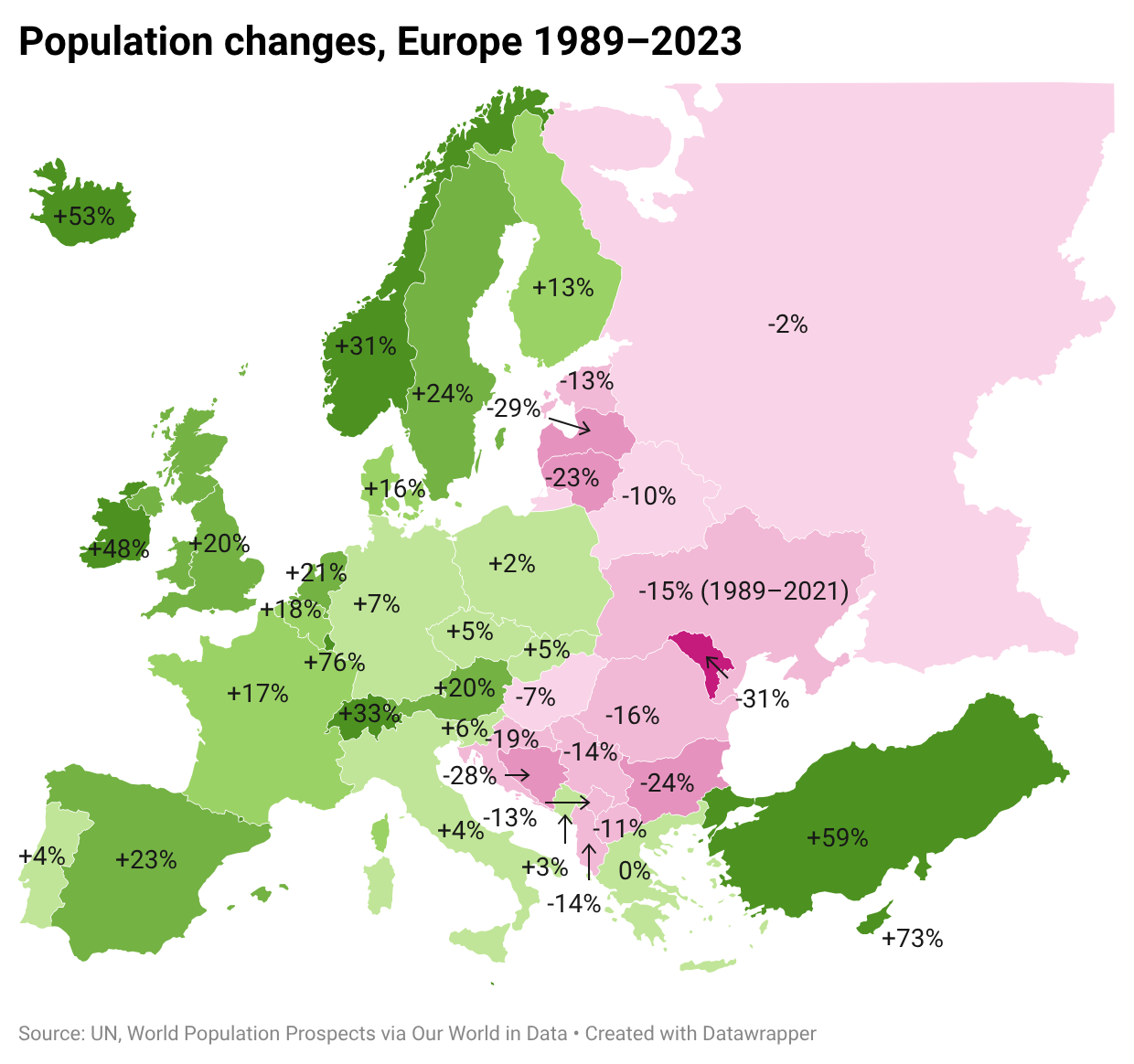
The Russian figure includes the Asian part.
By contrast, all countries that were outside the Iron Curtain have seen their populations increase, largely due to immigration. For instance, while Sweden had a smaller population than Bulgaria in 1989 (8.5 million versus 8.9 million), it had become more than 50 percent larger by 2023 (10.4 million versus 6.9 million). Overall, the formerly communist parts of Europe had approximately 42 percent of Europe’s population (excluding Turkey) in 2023, substantially less than the 48 percent the same areas had in 1989. The center of Europe has effectively moved west.
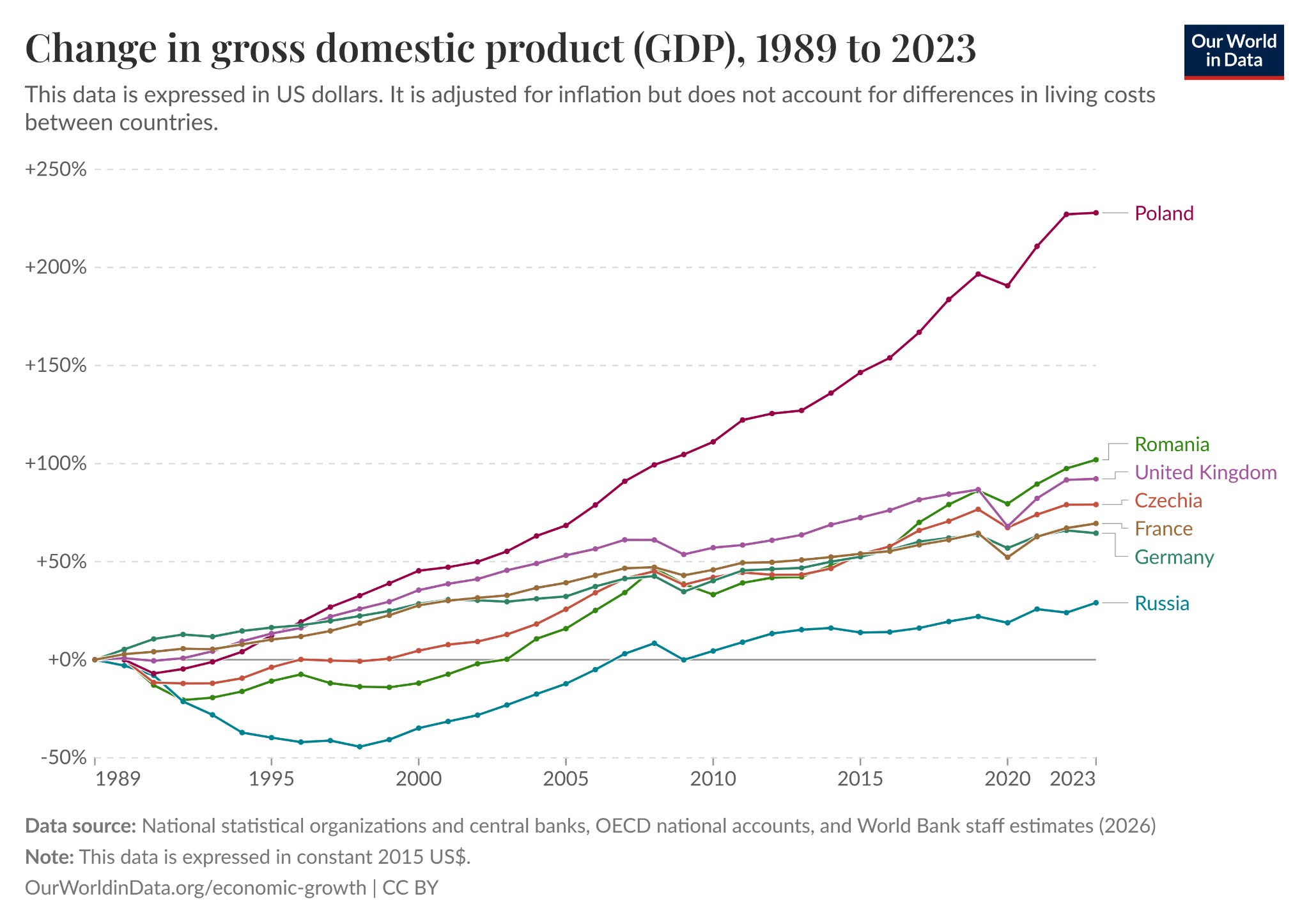
But what about GDP? As I’ve reported previously, the eastern members of the EU have seen rapid growth in recent years. However, many of these countries did poorly in the 1990s, meaning that growth since 1989 has actually been fairly modest (with Poland as a notable exception). Looking at GDP instead of population doesn’t change the picture as much as one might think.
The human touch or mere convenience? Why job automation lags
While AI and robots keep getting better, some argue that consumer preferences impede automation. Adam Ozimek writes that even though ‘on paper, the job of a waiter has been fully automated for over a decade’, there are still 1.9 million waiters in the US.
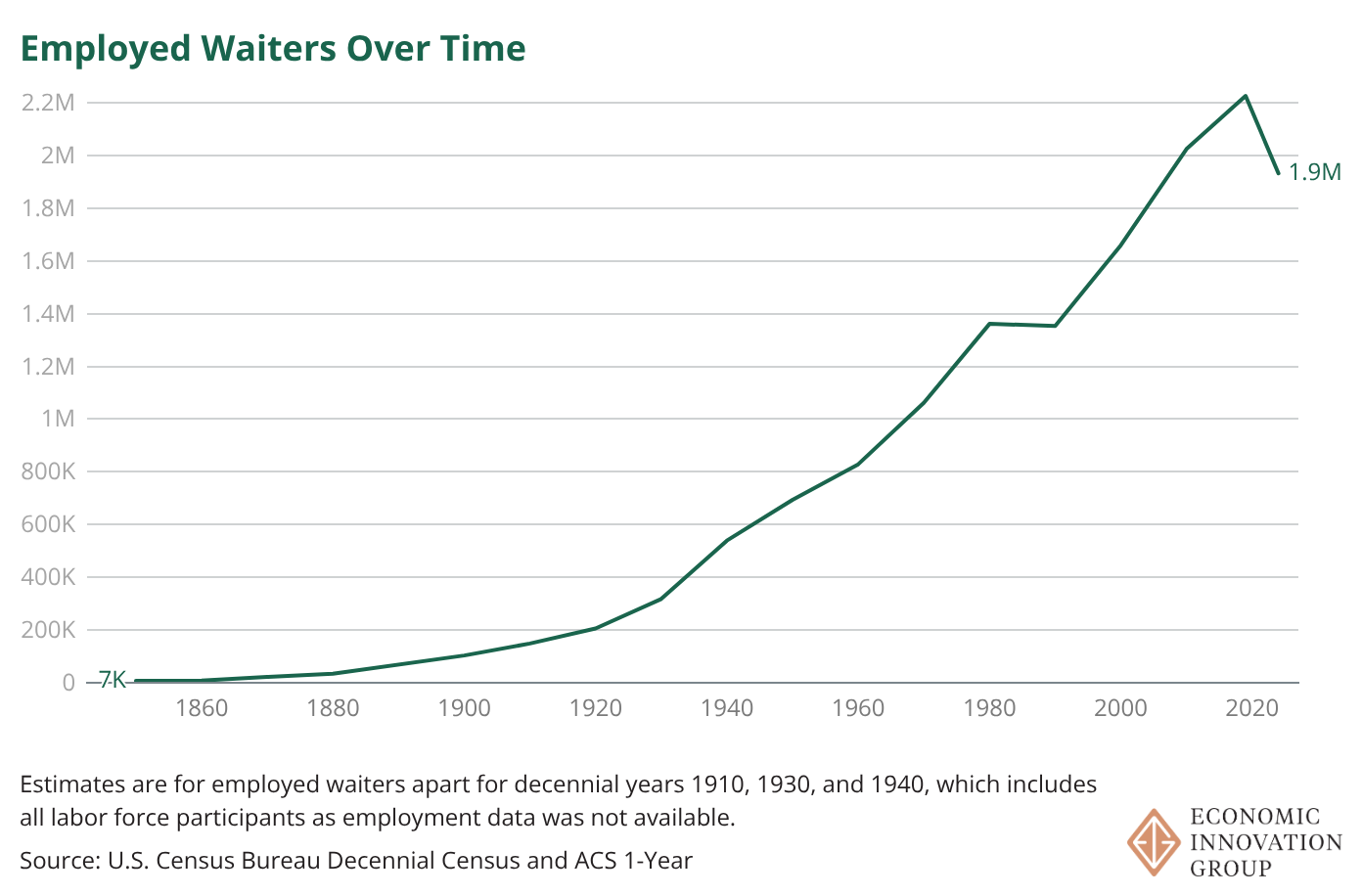
In Adam’s view, this is because ‘the human touch is a specific and valued characteristic of the service . . . people don’t just go to a restaurant to order and pay as fast and with as little friction as possible.’ He cites several more examples of this pattern, such as self-checkouts that have failed to replace millions of cashiers and retail sales workers.
But is this lack of automation really just about a preference for the human touch? I’m not so sure. I think it’s largely that the machines aren’t good enough yet. At restaurants, it’s often tricky to place complex orders. When I was out with my family the other day, we ordered from the waitress simply to get my very particular nephew’s order right. Likewise, I often go to human cashiers at the supermarket only because it’s faster and less work for me. It’s not because I crave the human touch.
As I’ve discussed previously, people often prefer machines over humans on tasks where they perform similarly. Granted, there’s variation between services, but in general I think people’s preference for the human touch is overestimated. Once the machines get more convenient to use, I expect substantially more job automation.
Urban air pollution is improving in East Asia, but not in South Asia
The Development Data Lab has built a fascinating site showing the relationship between GDP and urban air pollution between 2013 and 2023. Cofounder Paul Novosad makes several interesting observations about regional trends, including that East Asia has seen big improvements, whereas South Asia is lagging behind.
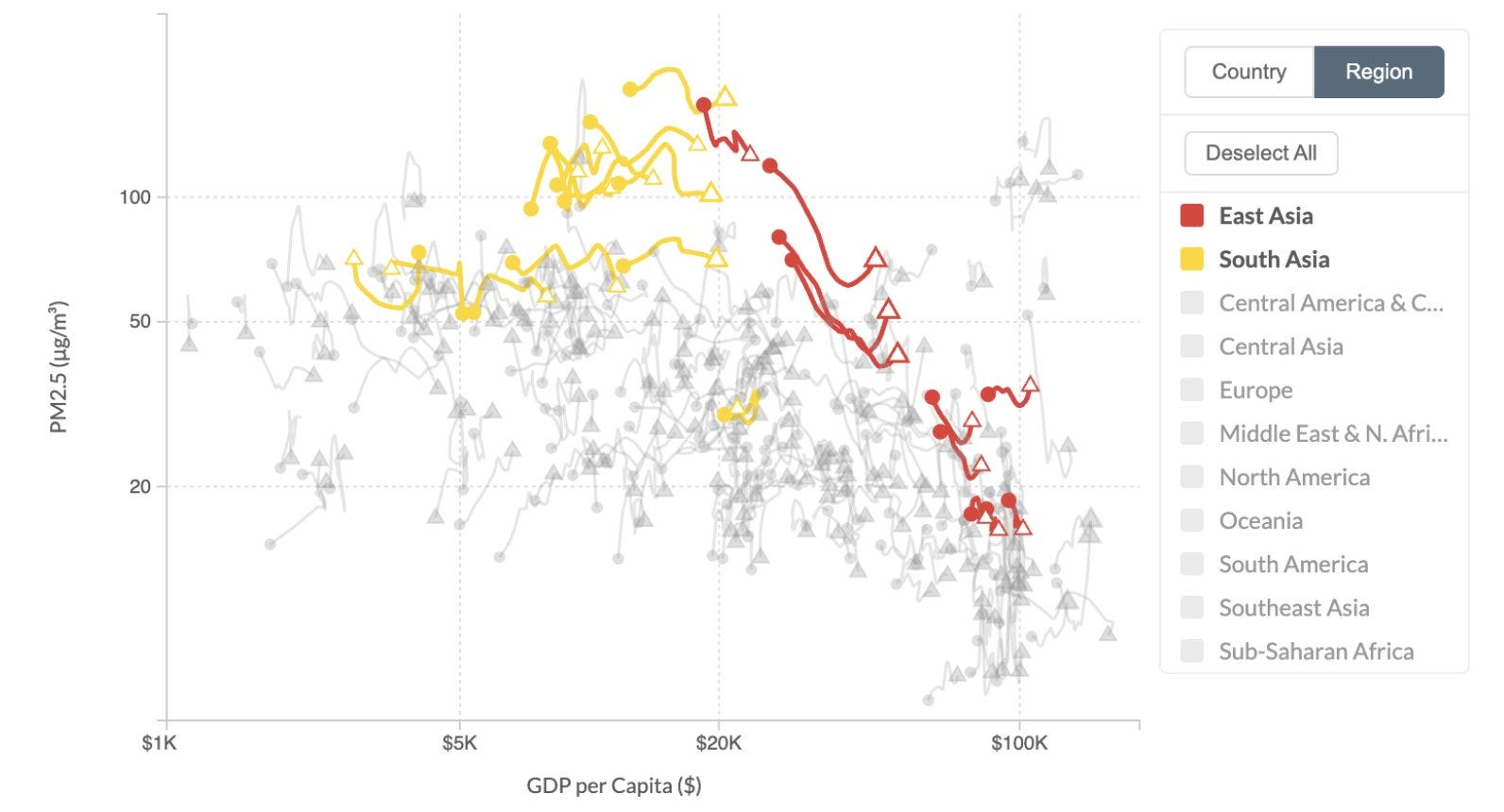
This is in line with the environmental Kuznets curve, which suggests that when countries grow, pollution initially increases but eventually declines. Hopefully, South Asian cities will continue along that path as they become richer.
European defense spending increasingly goes abroad
Since the Russian invasion of Ukraine, European NATO members have increased their defense expenditure considerably. Whereas the US contributed 73 percent of NATO spending in 2018, that number has fallen to 60 percent, primarily thanks to rising European spending.
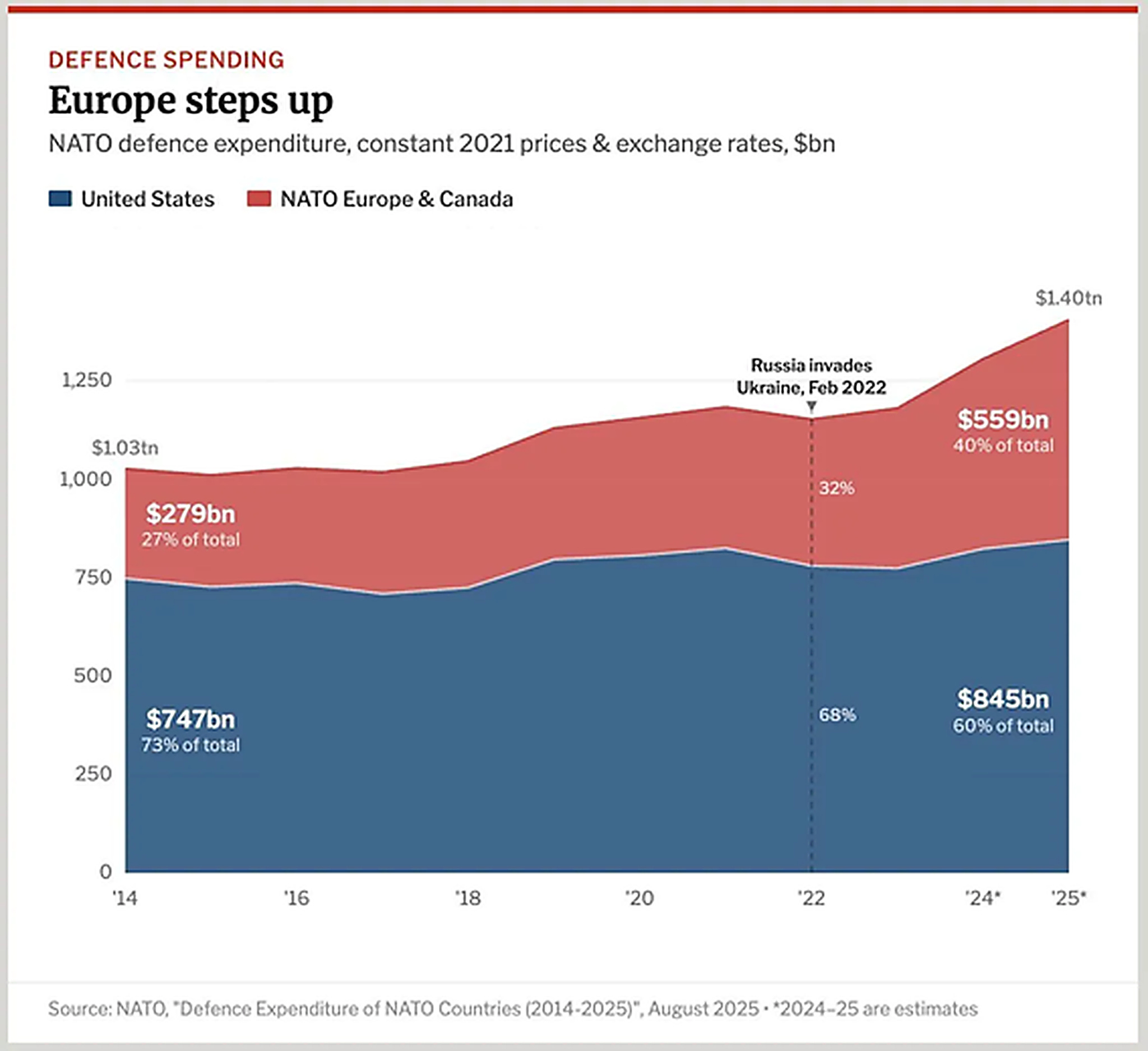
Adapted from Shashank Joshi of The Economist.
But European defense companies haven’t capitalized on this increase as much as they would have liked. The share of European orders going to European suppliers has declined from more than two thirds to barely more than half between 2018–2021 and 2022–2025.
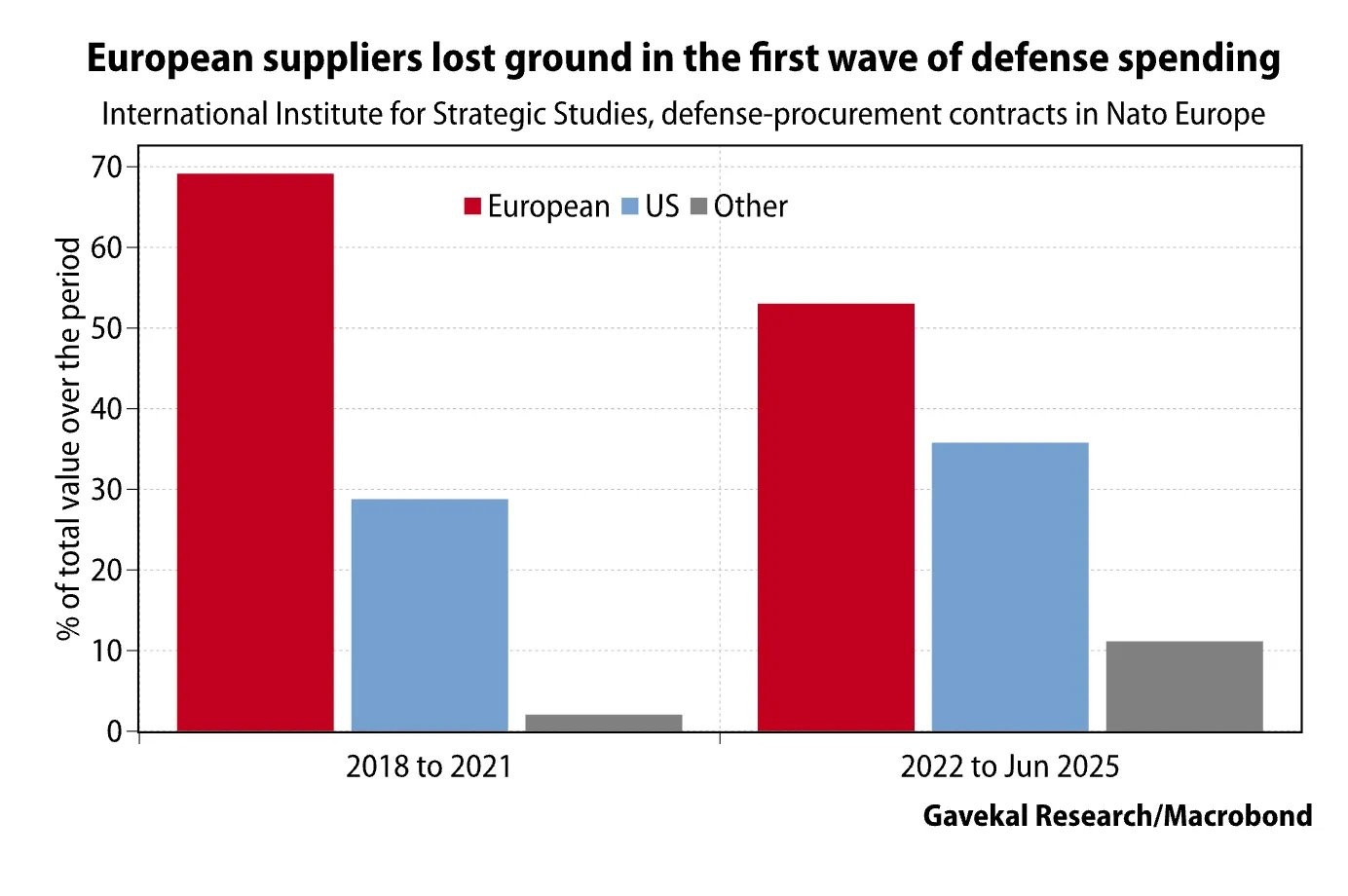
However, this could change in the years to come as European countries seek to reduce their reliance on the US.
In brief
The Works in Progress podcast on how inflation drives extremism
Surging casualties and higher recruitment bonuses in the Russian army
Officials trained by Thomas Malthus delivered less drought relief in British India
The case that Trump could be an aberration, not a permanent shift for the worse
The American Medical Association sets up vaccine review as the CDC’s falters
FDA regulatory inconsistency and how it hurts American biotech
Polymarket estimates Democrats at 83 percent to win the House of Representatives
That’s all for today. If you like The Update, please subscribe – it’s free.
Could you add in Australia and New Zealand as English-speaking countries? I'm very curious. Thanks!
Your GDP figure measures GDP in USD terms, so is mixing changes in exchange rates with actual growth. It overstates the gaps, particularly vs. Russia. These countries (Russia includes) have similar or higher GDP per capita now to most Southern European countries (other than Italy)
And in terms of growth, Russia and the other Eastern block countries grew this period much faster than the UK, for example (not surprising, as they started out a lot poorer, and still haven’t quite caught up)