


Driverless car travel more than doubles in California
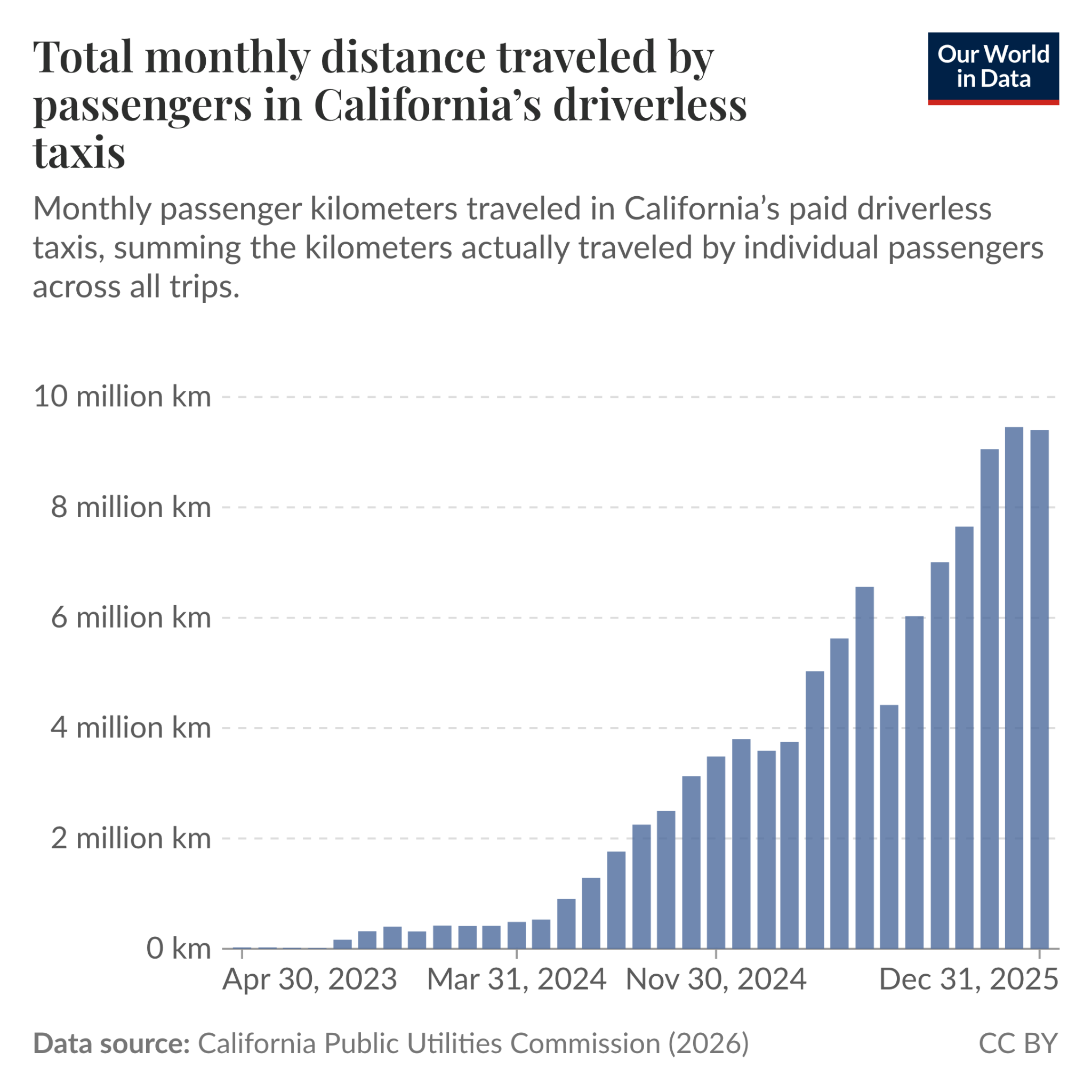
Driverless cars are rapidly becoming more widely used in the US. Waymo has expanded to 11 cities, and in existing markets, travel keeps rising. In California, monthly passenger kilometers more than doubled between December 2024 and December 2025.
The political salience of AI will only grow with time
As I’ve previously reported, Americans are increasingly concerned about the impact of AI on society. On the Odd Lots podcast, Byrne Hobart said that this makes him worry about misguided regulation, but he also gave a reason this might not happen after all (lightly edited for clarity).
The thing that makes me more optimistic is that the salience of these different issues fluctuates over time. Maybe AI deployment is so fast that it becomes part of the background noise, like the internal combustion engine or electricity or even the internet, which is not a campaign issue right now. It was sort of an issue in 2000, there were internet-y issues in 2016 and 2020, but it’s becoming less and less salient. We just don’t think about it in terms of ‘are you pro or anti the internet?’
This kind of habituation is no doubt very common, but I don’t think it will happen with AI. The reason the internet has faded into the background is that it hasn’t changed much in recent years. By contrast, AI promises to improve rapidly. As it grows more pervasive, so will its political salience.
Electric vehicle sales are surging in Southeast Asia
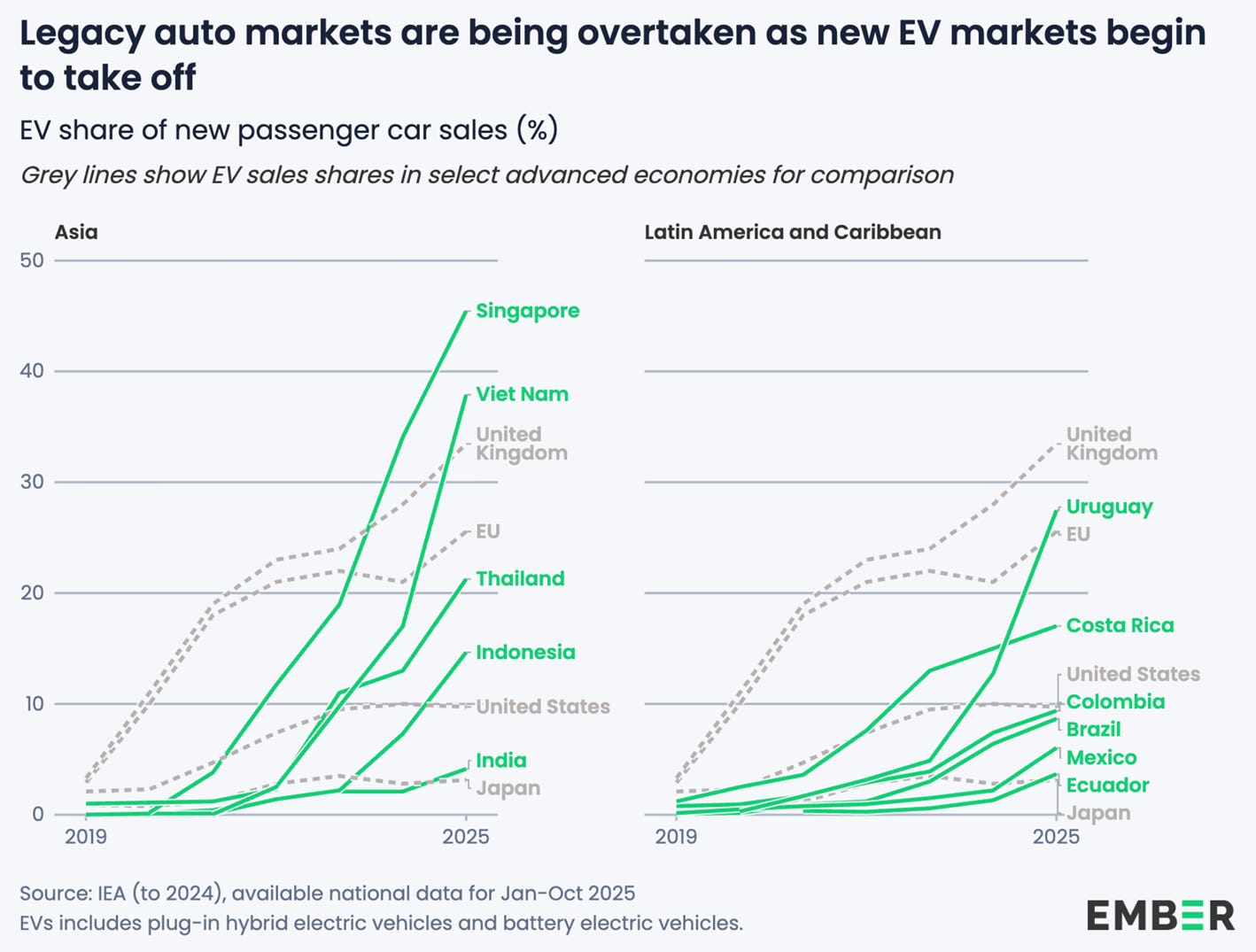
Southeast Asian countries are highly dependent on fossil fuel imports, which has proved costly during the recent supply disruptions. But their rapid adoption of electric vehicles could reduce this dependence. In Singapore and Vietnam, EVs already have a larger market share than in Europe.
Why Japan’s railways are so successful
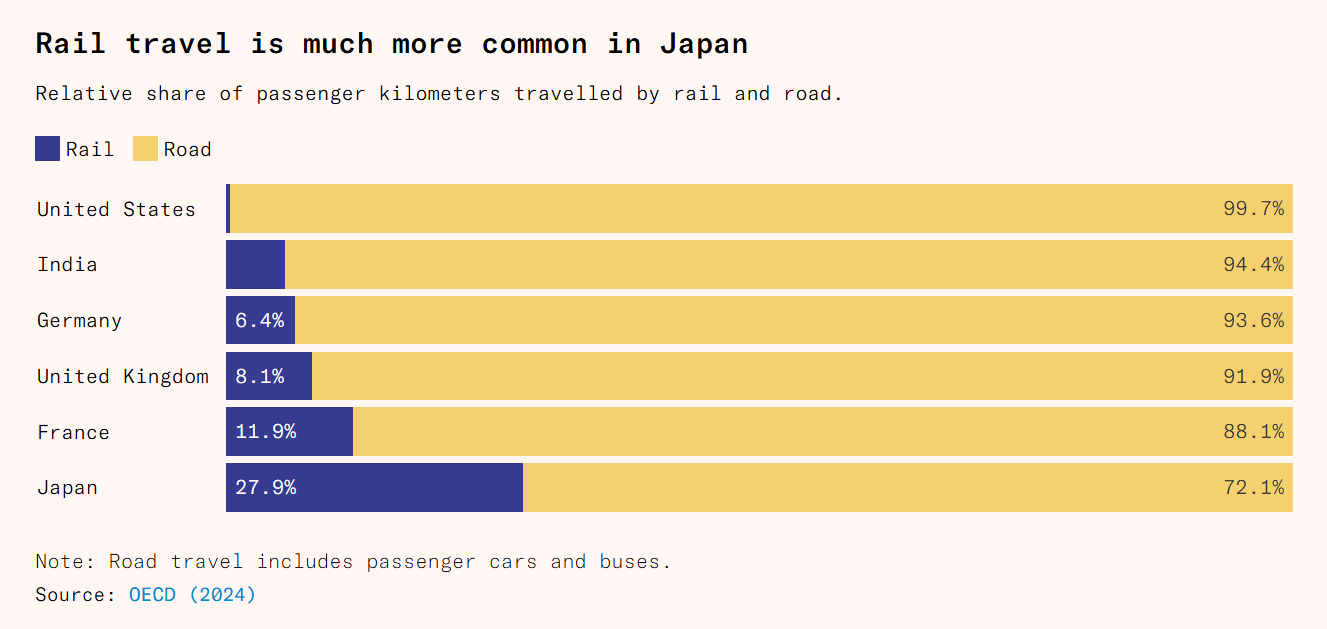
More than a quarter of all passenger travel in Japan is by rail. In Works in Progress, Matthew Bornholt and Benedict Springbett explain why. One reason is that driving isn’t as subsidized as in other countries: motorways are tolled and parking is expensive. But the railways also have a smart ownership structure. They’re mostly run by private companies that own not just the trains and tracks but also part of the surrounding land. This gives them an extra reason to grow their ridership, as it raises the value of that land. Conversely, they can increase their ridership by developing the land. A large share of the railway companies’ revenue comes from these developments: everything from retirement homes to amusement parks. It’s a model that other countries could learn from.
A one-person billion-dollar company?
In 2024, Sam Altman predicted that AI would make it possible for a single person to run a company worth one billion dollars. On a recent podcast, he suggested this has now happened. The company is Medvi, an online seller of GLP-1 weight-loss drugs that’s on track for $1.8 billion in revenue this year. However, Medvi actually has two employees and nine contractors. While AI does enable startup founders to do more with less, they’re more reliant on human labor than it might seem.
In brief
Anthropic withholds new Mythos model from public release, citing cyberattack capabilities
Major works of literature are written by much older authors today than a century ago
Large Nature project finds that many studies in the social and behavioral sciences don’t replicate
Study finds that light skin color arose earlier in East Asia than in Europe
New OpenAI paper on how to manage economic disruption from AI
OpenAI puts Stargate UK data center on hold, citing energy costs and regulations