


Growth won’t keep creating new jobs forever – and that’s good, actually
The share of British students who get a First has quadrupled since the 1990s
In brief: an extra baby per $107,000, recessions have grown rarer, and more
Growth won’t keep creating new jobs forever – and that’s good, actually
In 2016, Geoffrey Hinton famously argued that we should stop training radiologists. But as radiology employment has since grown, this has become the go-to example for those who think that worries about job displacement are exaggerated. Marc Andreessen argues that Hinton’s mistake is rooted in the view that the number of jobs is fixed:
AI employment doomerism is rooted in the socialist fallacy of lump of labor. It is wrong now for the same reason it’s always been wrong.
Working will be optional in the future.
Who is right? It depends on what stage of AI development we’re talking about. Here’s Andreessen’s case in more detail:
When a technology increases the productivity of labor or replaces labor entirely in a given task, it lowers the cost of producing whatever that task was part of. Lower production costs mean either:
Lower prices for consumers (real purchasing power rises), or
Higher profits for producers (which get reinvested, distributed as dividends, or spent as wages for other workers), or
Both.
Either way, aggregate real income in the economy rises. That additional real income does not evaporate. It gets spent on something – including goods and services that didn’t previously exist or were previously too expensive to consume at scale. That spending creates demand. That demand creates jobs.
Andreessen is right that people tend to miss these dynamics, and that this makes them worry prematurely about job displacement. But unless we stop AI development, we will eventually reach the stage Musk is talking about, where AI systems are better than humans at all tasks. At that stage, the last step in Andreessen’s argument no longer applies. More demand for goods and services won’t translate into human jobs.
Is talking about job displacement a poor communication strategy?
Musk isn’t the only CEO of an AI company who is talking about job displacement. In response to an interview with Sam Altman, Noah Smith suggests this is a poor communication strategy:
The heads of the big AI labs continue to insist that their products are going to take all your jobs, and also pose various catastrophic risks.
I take a different view. Sufficiently advanced AI does have these implications, and telling the world about them ahead of time is clearly the right thing to do. And from a purely self-interested perspective, trying to downplay them would probably backfire. More and more people are figuring out where AI is heading, and an AI leader who tries to hide it would look disingenuous.
But the deeper problem with this debate is that most participants view job displacement as a bad thing. It’s true that a transition to a world without work would require extensive political reform. But automatic abundance should fundamentally be welcomed. That’s another thing AI leaders should communicate.
The case for egg freezing
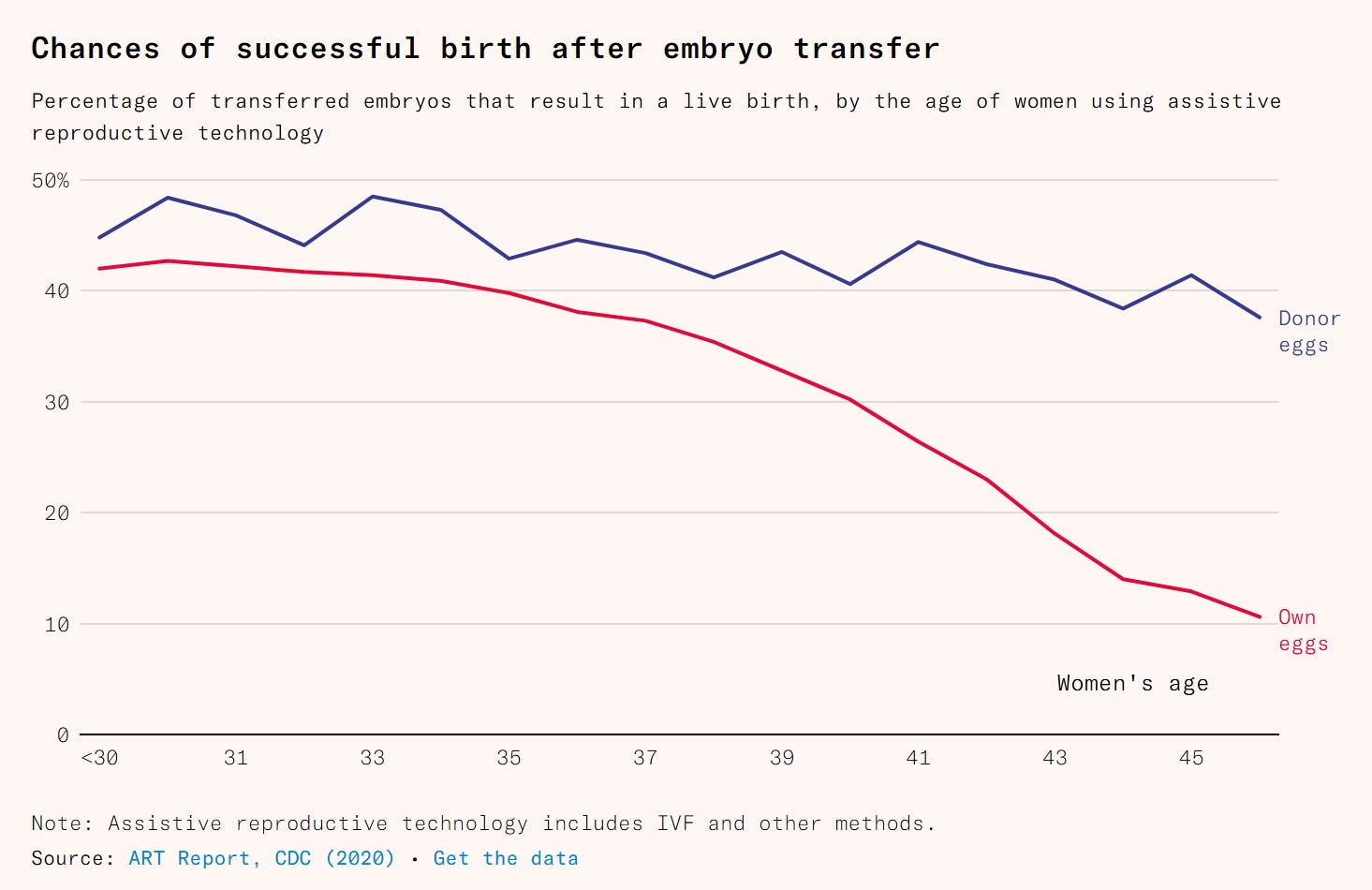
Women are having children later than ever, leaving many struggling to conceive. But there is a solution: egg freezing. In Works in Progress, Luzia Bruckamp and Ruxandra Teslo write that it works far better than widely believed. They recommend women freeze around 20 eggs in their late twenties or early thirties, arguing it may give a cumulative 85 percent chance of a live birth.
The share of British students who get a First has quadrupled since the 1990s
Grades at British universities have risen sharply over the past three decades, even though there’s little evidence that students are actually learning more. To reverse the trend, some people have suggested limiting the share of Firsts that universities can award. In a new paper for the Higher Education Policy Institute, Tom Richmond proposes a 15 percent cap. A similar cap is under consideration at Harvard.

Leapfrogging landlines for mobile phones
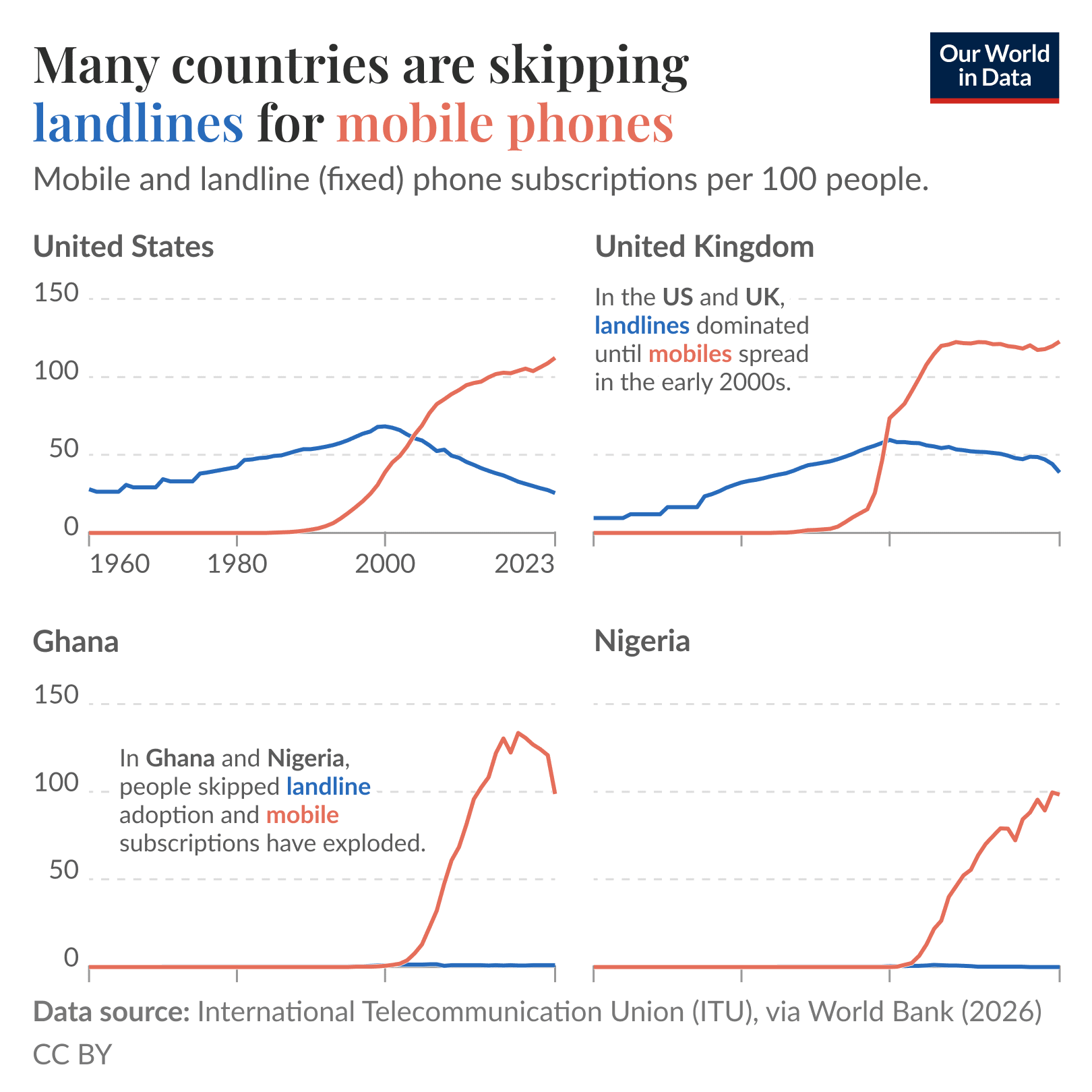
When countries develop, they don’t always need to repeat every step the technological leaders took. Sometimes they can skip a step: what’s called ‘leapfrogging’. Landline networks require expensive physical infrastructure, and many countries in sub-Saharan Africa never built them. By contrast, they did build cheaper mobile networks once the technology arrived. As a result, phone access has surged since the turn of the millennium.
Are changing relative prices driving the loneliness crisis?
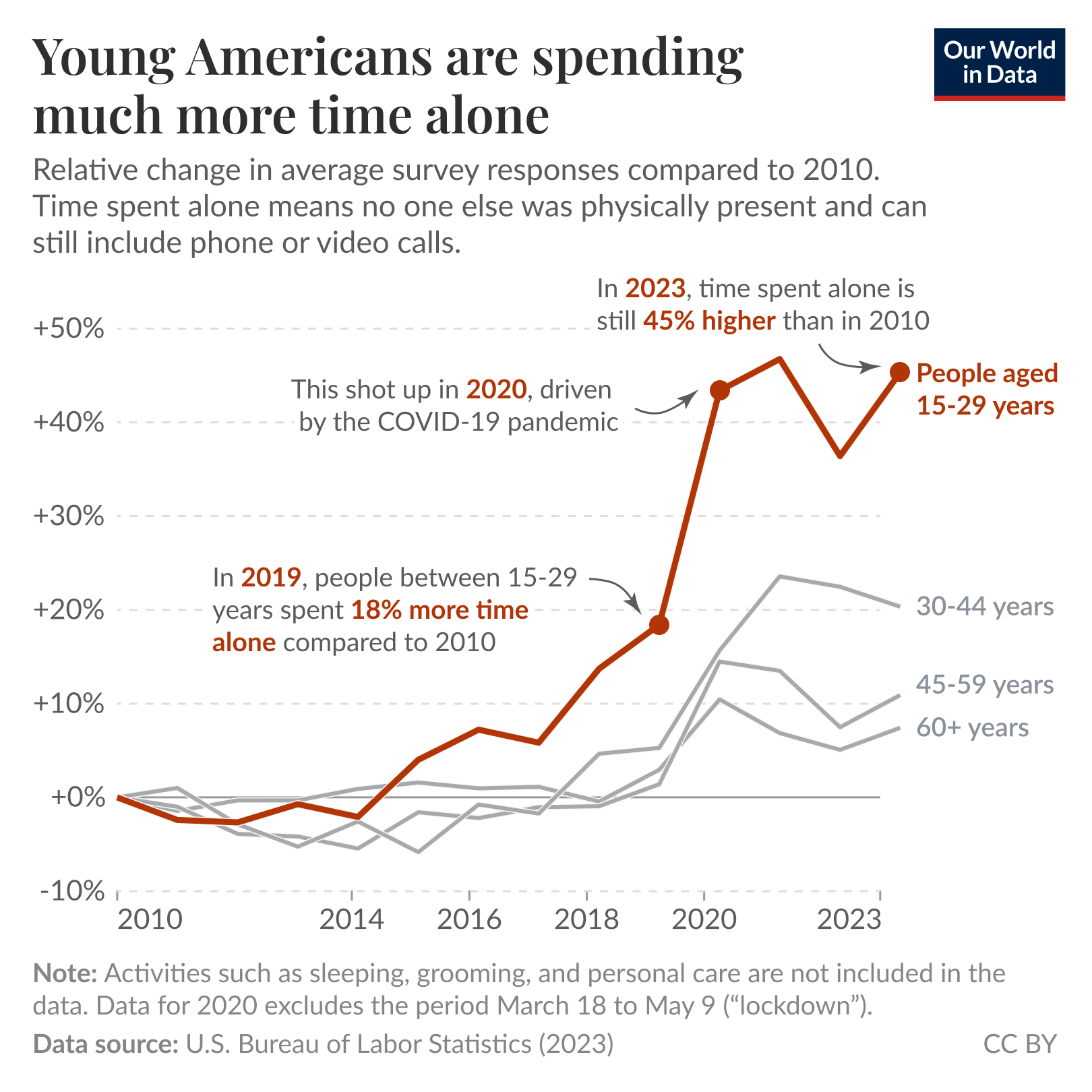
In recent years, people have started to spend more and more time by themselves. Why is that? Alex Mayyasi argues that a major driver is changing relative prices. Technology has made solitary digital entertainment cheaper compared with social experiences like restaurant visits and concerts.
I think his argument has some appeal. While many accounts of the loneliness crisis treat people as helpless or compulsive, Mayyasi shows that they’re simply reacting to changing incentives. But my explanation would be a bit different. First, an important factor Mayyasi doesn’t discuss is convenience. Many people who can afford to go out don’t do so because it requires more effort than staying home scrolling Instagram or X. Second, I think that the key change is that digital entertainment is simply more fun than TV and other predecessors. While Mayyasi does mention this factor, I would put it front and center.
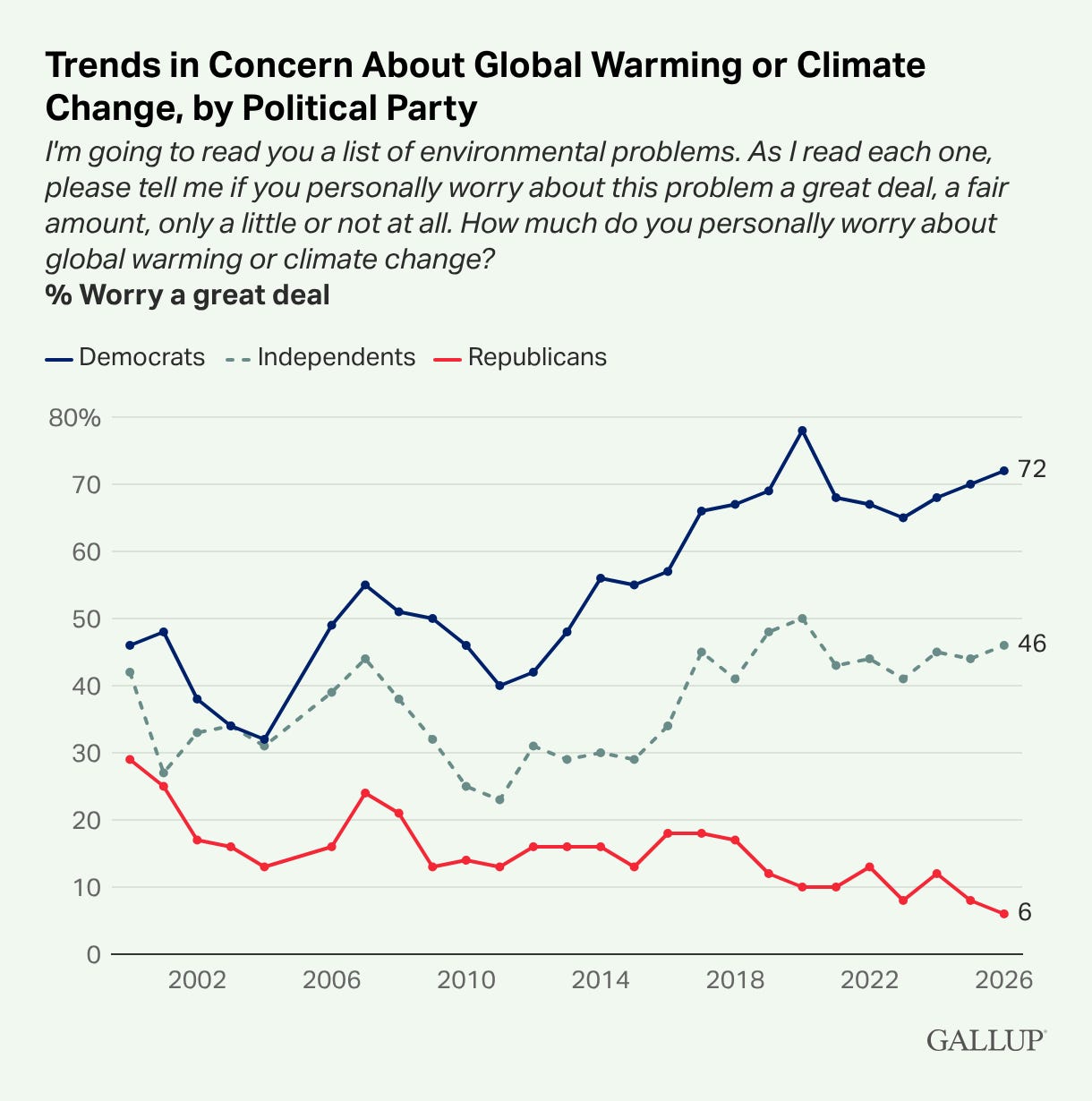
Climate change is increasingly polarizing in the US
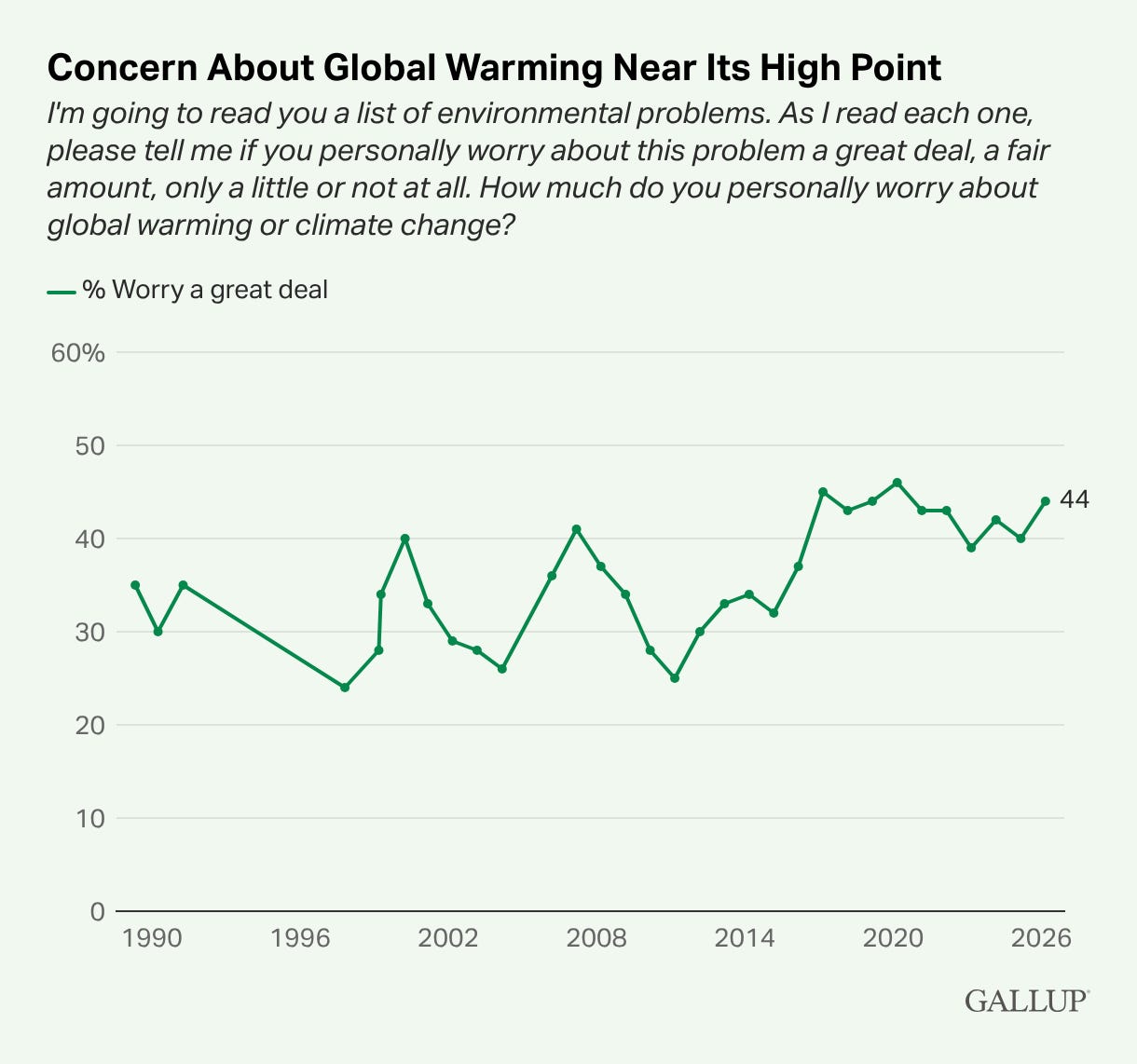
Though climate change receives less attention than it used to, Americans haven’t grown less concerned. The share of people who worry a great deal about it is 44 percent, close to the peak.
But this trend hides a growing partisan divide. Currently, 72 percent of Democrats worry a great deal about climate change, whereas only 6 percent of Republicans do.
In brief
In a Michigan study, baby bonuses induced an additional birth for every $107,000
Study finds that home staging adds ten percent to sale prices
Former allies Trump and Meloni fall out over the Iran war and the Pope
More Russians are moving to Belarus
Study finds that AI is rated as better than humans at fact-checking on X
Maine becomes the first US state to pass a data center moratorium
Tibor Rutar argues that strong kinship structures hold back economic development
Emergent Ventures grants, for writers, creatives, and intellectuals
Reported agreement in principle to extend the ceasefire between the US and Iran
"But the deeper problem with this debate is that most participants view job displacement as a bad thing. It’s true that a transition to a world without work would require extensive political reform. But automatic abundance should fundamentally be welcomed."
Exactly. So long as it's assumed that work is a moral requirement for deserving that one's needs are met, AI job displacement will be perceived as a threat to one's survival. If we drop that assumption (one based on scarcity) and distribute abundance according to needs, not the ability or opportunity to work, then a post-work culture becomes conceivable. What's the counterargument? See the Culture novels by Iain M. Banks for a post-scarcity world without the need for work. https://en.wikipedia.org/wiki/Culture_series