


American college costs are falling fastest for the poorest families
Switzerland’s constitutional referendums have a populist slant
In brief: Works in Progress is hiring a social media lead, Sam Altman’s home attacked, and more
American college costs are falling fastest for the poorest families
Many people believe that the cost of college is spiraling in the US, but as I’ve previously reported, this isn’t true. Net prices after financial aid are falling.
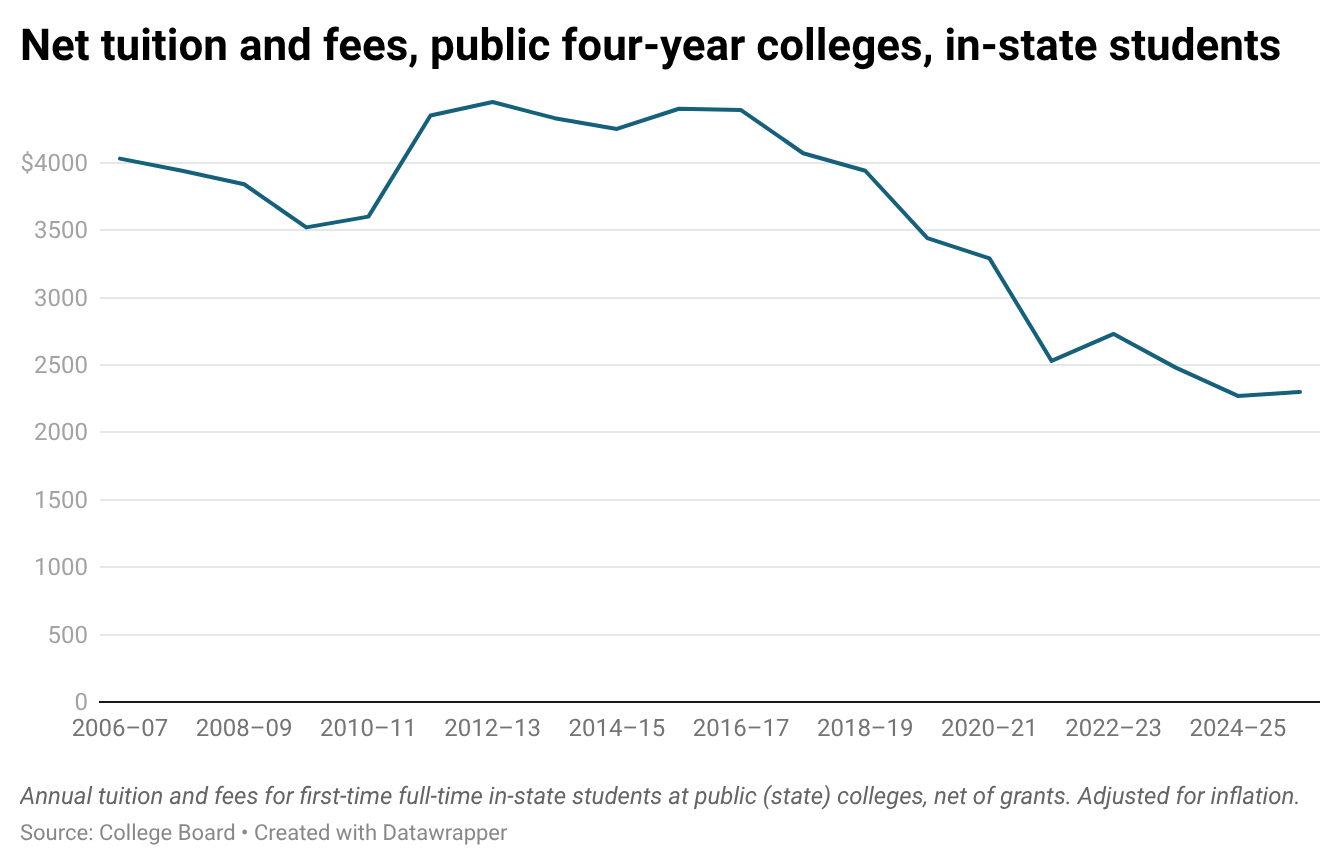
But there is a further reason the conventional wisdom is off the mark. The costs have fallen the most for those who are least able to afford them.
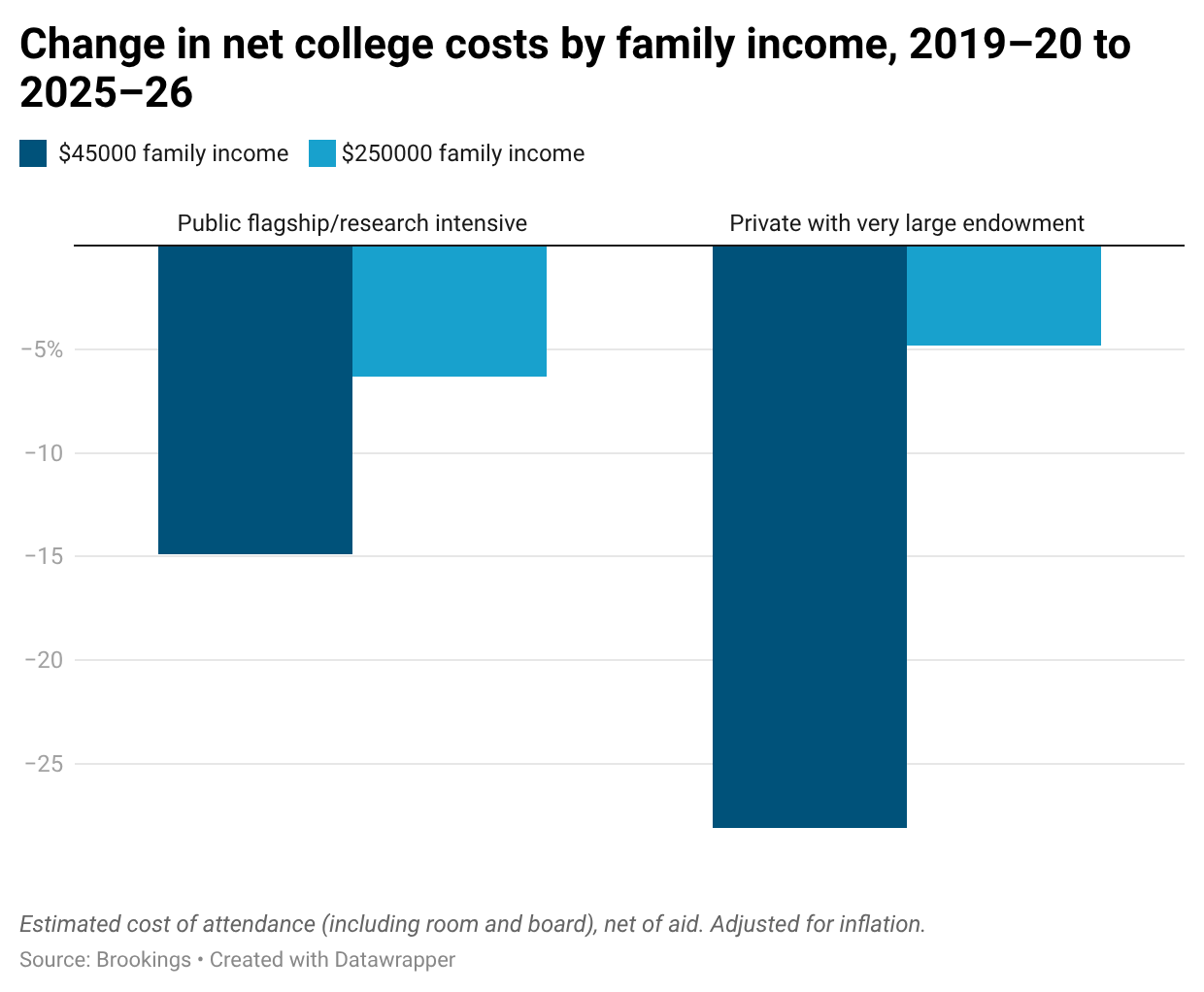
At the richest private colleges, families earning $250,000 now pay almost twenty times as much as families earning $45,000.
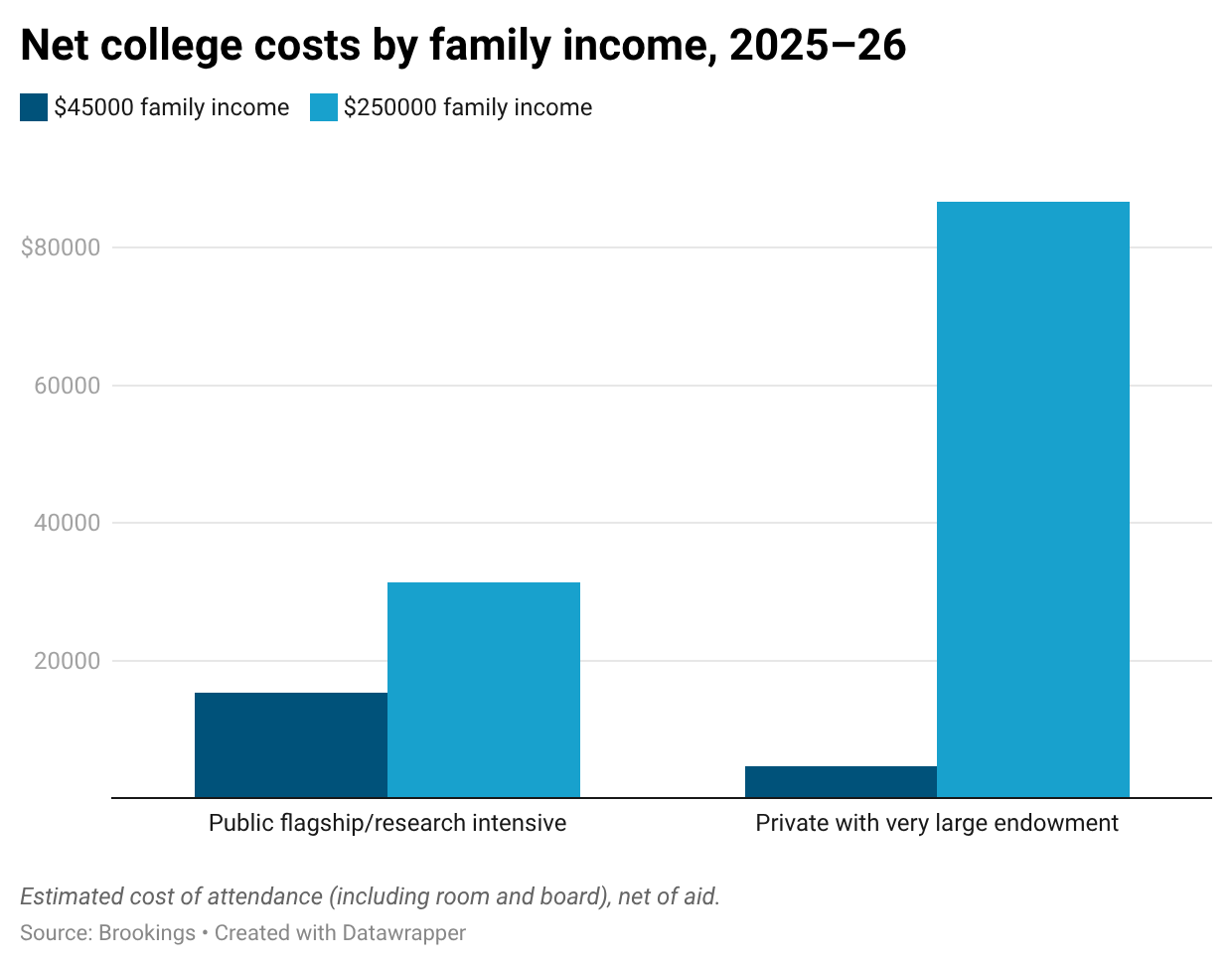
These numbers run counter to much of the discourse about American colleges, not least here in Europe.
Hungary sees a democratic transition
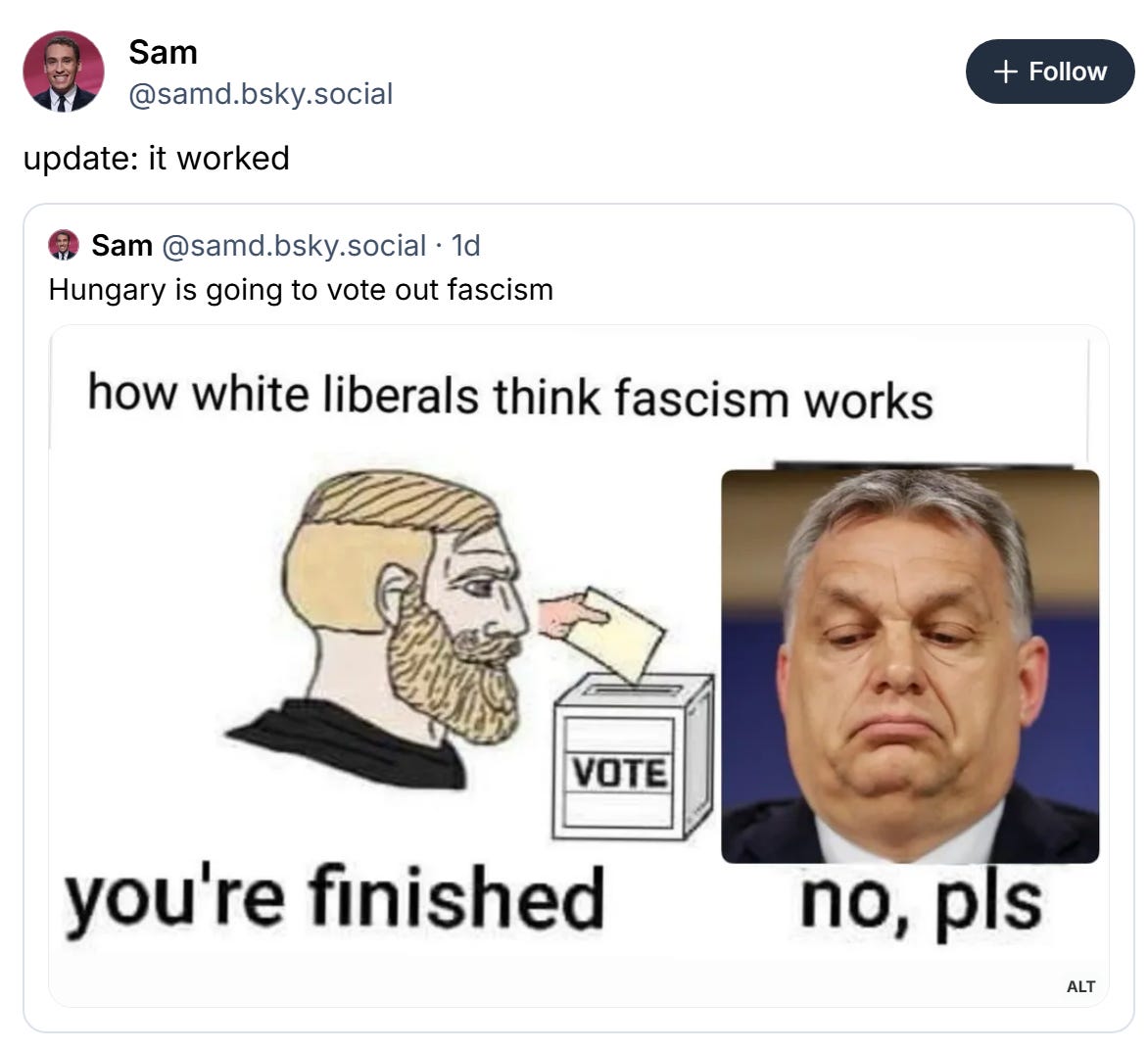
Many worried that Viktor Orbán’s hold over Hungary was so complete that he would be impossible to unseat as prime minister. But in Sunday’s election, Péter Magyar won in a landslide and Orbán quickly conceded. Democracy is not as fragile as the alarmists claim.
Switzerland’s constitutional referendums have a populist slant
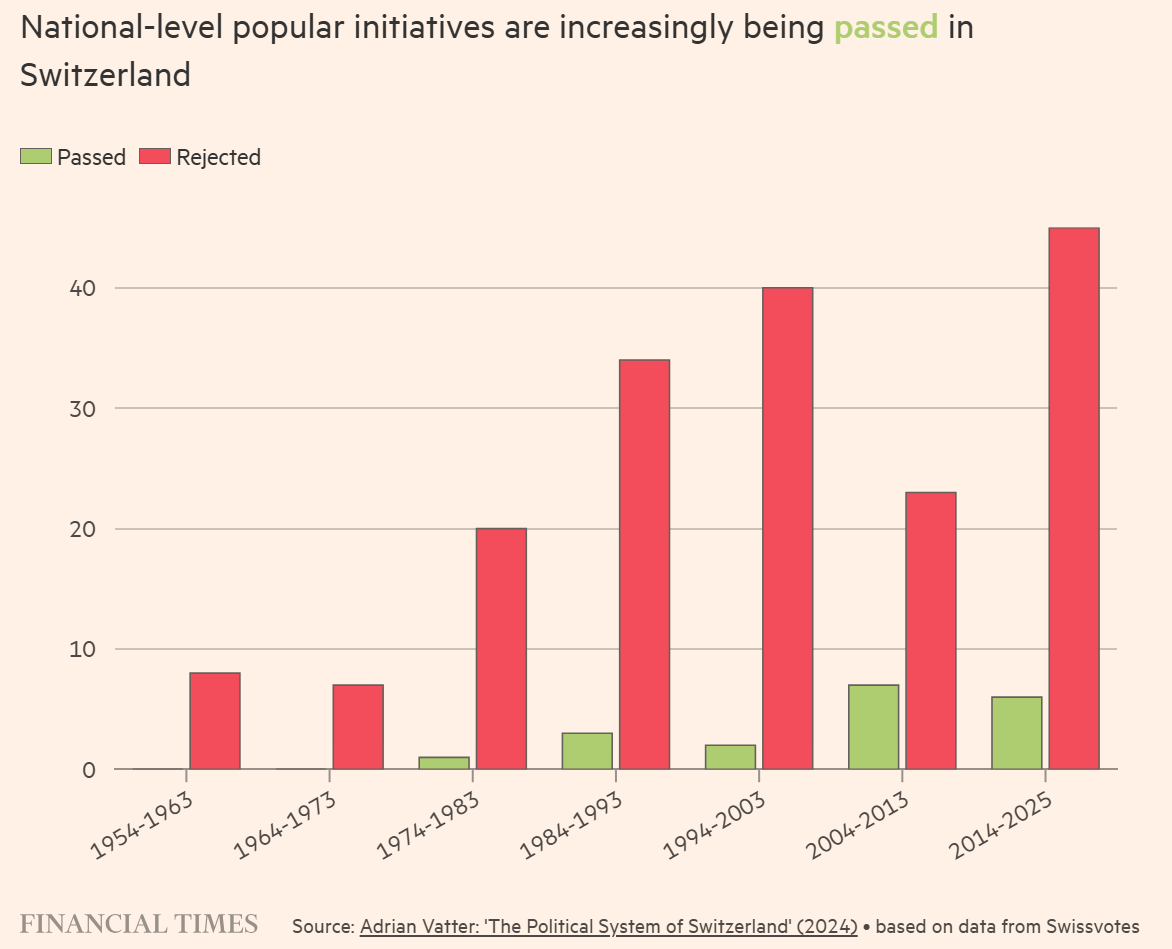
While referendums initiated by citizens have long been a feature of Swiss democracy, they’ve become much more frequent in recent decades. One reason is that campaigns to collect the required signatures have become more professionalized. It also helps that the Swiss population has grown by almost 50 percent since the 1970s, while the thresholds to force referendums have remained fixed.
Several types of referendum can be initiated by citizens – including the vetoing of new legislation – but the most consequential are popular initiatives to amend the constitution. While a large majority of these initiatives are rejected, the pass rate has risen. Since 2000, 14 popular initiatives have been adopted. Most of them are decidedly populist. (Translations from Wikipedia, slightly edited.)
For Switzerland’s accession to the United Nations
Life imprisonment for untreatable, extremely dangerous sexual and violent offenders
For GMO-free food
No statute of limitations for pornographic crimes against children
Against the construction of minarets
For the deportation of criminal foreigners
End the unchecked construction of second homes!
Against rip-offs (on executive pay)
Against mass immigration
Pedophiles should no longer be allowed to work with children
Yes to a ban on full facial coverings
The Nursing Initiative (more support for nurses)
Yes to protecting children and youth from tobacco advertising
For a better life in old age (a 13th monthly state pension payment)
On the plus side, cantons with lower thresholds for triggering referendums have higher trust in their governments, according to a recent study.
Banning AI for writing is a bad idea
In the past few weeks, there’s been an intense debate over the use of AI for writing. When Megan McArdle said she uses AI to do research, transcribe interviews, and suggest edits, some reactions were scathing. Philosopher Ben Burgis:
In a healthier media culture, an admission like this would at the very least get her fired.
I think it should be deeply embarrassing for any journalist employed by a news organization to admit to this level of AI use.
In academia, hostility to the use of AI is widespread. Sociologist Nathan Kalman-Lamb:
I’m sorry, but it is disgraceful to be an academic who uses this technology to conduct research. It should be prohibited in all of our scholarly institutions, including universities and journals.
Science communicator Jey McCreight:
Scientists who get caught using AI to write scientific papers should be banned from ever publishing in any journals
Critics are right that AI makes it easy to produce low-quality content that superficially seems credible. But AI is a general tool that can be used in a diverse set of ways. More diligent people are using it to improve their writing through detailed feedback and fact-checks. Prohibiting them from doing so is not a good idea.
Many people assume that you must either be for or against AI across the board: that it’s hypocritical to use it in your own research if you don’t allow it for students. But as political scientist Alexander Kustov points out, this just isn’t true. Every case needs to be judged on its own merits.
We also need to consider how fast AI is improving. I don’t think the association with low-quality slop is going to last. Instead, I think people who use AI will increasingly produce better writing than those who don’t. Calls for blanket bans won’t age well.
Applications are open for Invisible College 2026
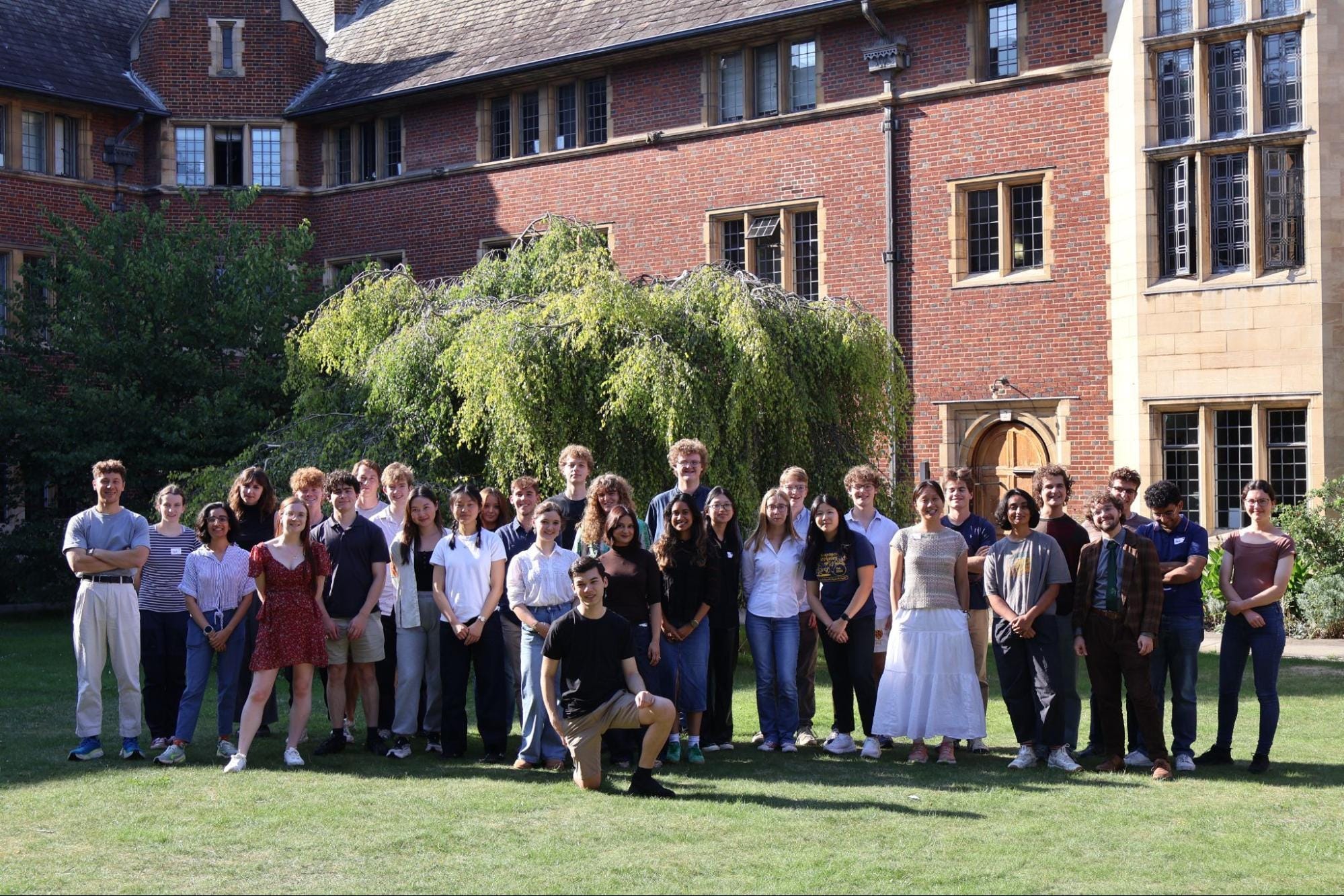
Works in Progress is hosting its third Invisible College, a week-long seminar for 18–22-year-olds in Cambridge, UK. The program covers three topics: the origins of modern abundance, obstacles to scientific progress, and the political economy of cities. It’s free to attend and takes place 17th–22nd August. Several past attendees have won Emergent Ventures grants or found jobs in progress circles. Apply by 8th May.
In brief
OpenAI CEO Sam Altman’s home attacked with a Molotov cocktail
Saloni Dattani on how public discourse often seeks to explain trends that aren’t actually real
The Works in Progress podcast on egg freezing, Australian migration policy, ASML, and more
The American data center boom is delayed by a shortage of electrical equipment
Anthropic overtakes OpenAI on Ventuals, a small market for private company valuations
American consumer sentiment is at its lowest since records began in 1952
Workshop for university faculty on how to teach progress studies in Washington, DC
In a trial, a new pancreatic cancer drug doubled median survival time
Re Switzerland, you are looking at the wrong metric. Typical referendum is either has little support, nobody cares and it gets rejected or it has significant support and then it is sorted out by adjusting the relevant laws before the vote, by initiators reaching a deal with the govt and withdrawing the referendum etc. Large part of your list is just SVP showing off and deliberately picking up fights.