


Why the standard redistribution playbook may not work with AI
In brief: fast-charging EV batteries, we don’t have AGI yet, and more
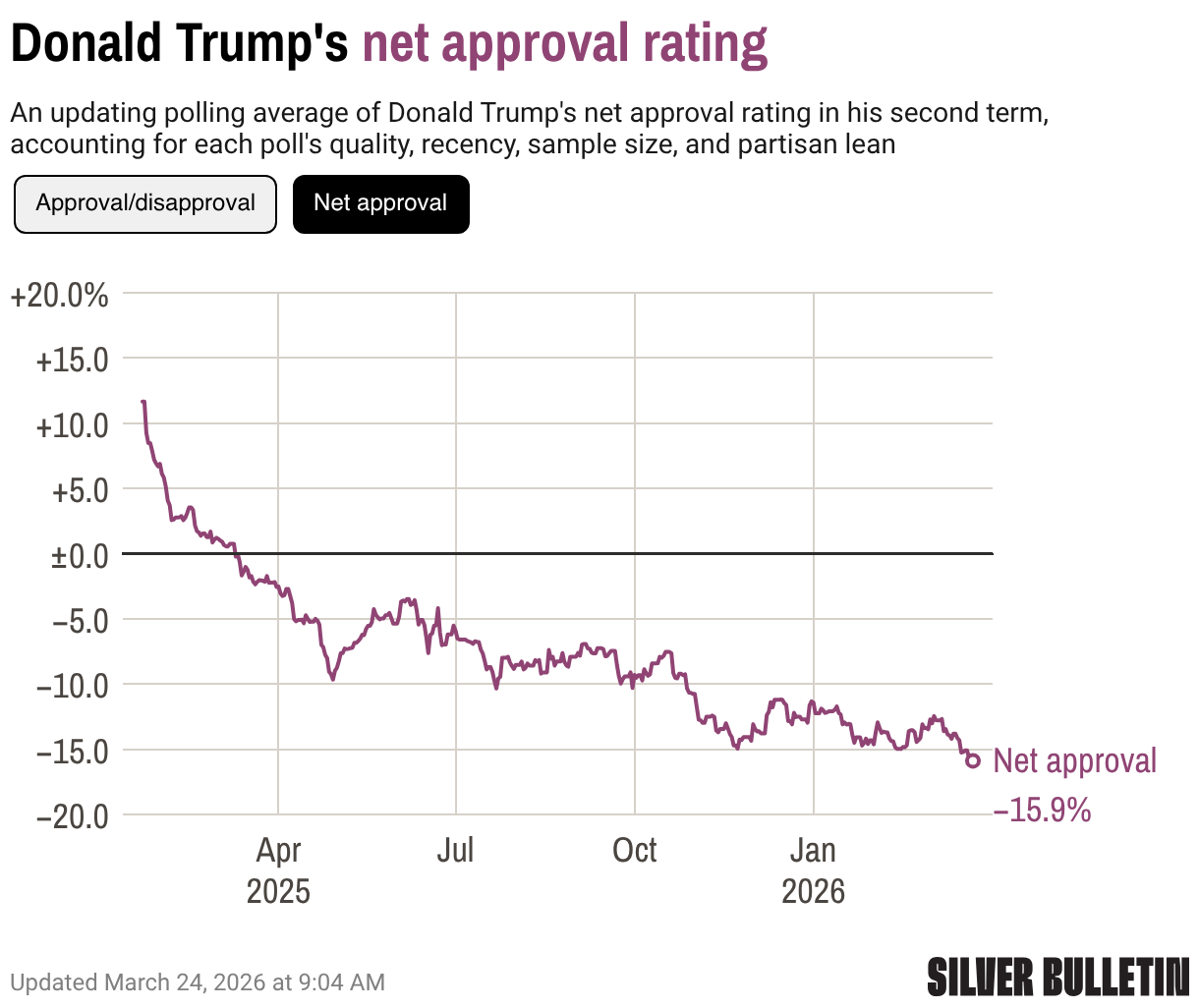
Trump approval rating hits a second-term low
Silver Bulletin reports that Donald Trump’s net approval rating has fallen to -15.9, a second-term record low. A key driver is inflation, which is expected to rise as a result of the Iran War and could drive Trump’s ratings lower still.
Why the standard redistribution playbook may not work with AI
AI may eventually lead to widespread job automation and wealth concentration. How should governments respond? Matt Bruenig writes in The Argument:
There is a well-established playbook for achieving economic security and equality that can be applied to an AI-infused economy just like any other advanced economy. Countries can levy taxes to fund universal welfare states in order to hold down income inequality and keep people’s material lives stable over time. They also can increase social ownership and impose targeted corporate taxes to put a lid on wealth inequality and excessive accumulation in specific industries.
The reason why the solutions to economic inequality and instability are always the same is because the problems are fundamentally the same. Capitalist economies distribute income by paying people for their labor and paying returns to people who own capital (wealth). Due to certain feedback loops, capital factors – or wealth – end up overwhelmingly concentrated in the hands of a small percentage of people.
I agree that there are similarities to previous economic paradigms, but a crucial difference is that a single country may come to dominate the AI economy: the United States. Since redistribution has so far mostly taken place within countries, that could make Matt’s well-established playbook insufficient. Deena Mousa (lightly edited for clarity):
One (big) problem: these solutions assume the country redistributing will have captured some gains from AI advancement. This is true for the US, but not for most of the world.
. . .
This isn’t an issue with Matt’s piece specifically; it’s intentionally US-centric. But when we talk about labor market impacts, we usually mean ‘for US white collar workers’, and I am much more concerned about people in countries that won’t capture as much value from AI.
Deena’s focus is on low- and middle-income countries, but this could also be a problem for rich countries that lack competitive AI companies.
Canadian brain drain
In the last decade, Canada has seen poor per capita growth, both compared with the US and the OECD as a whole.
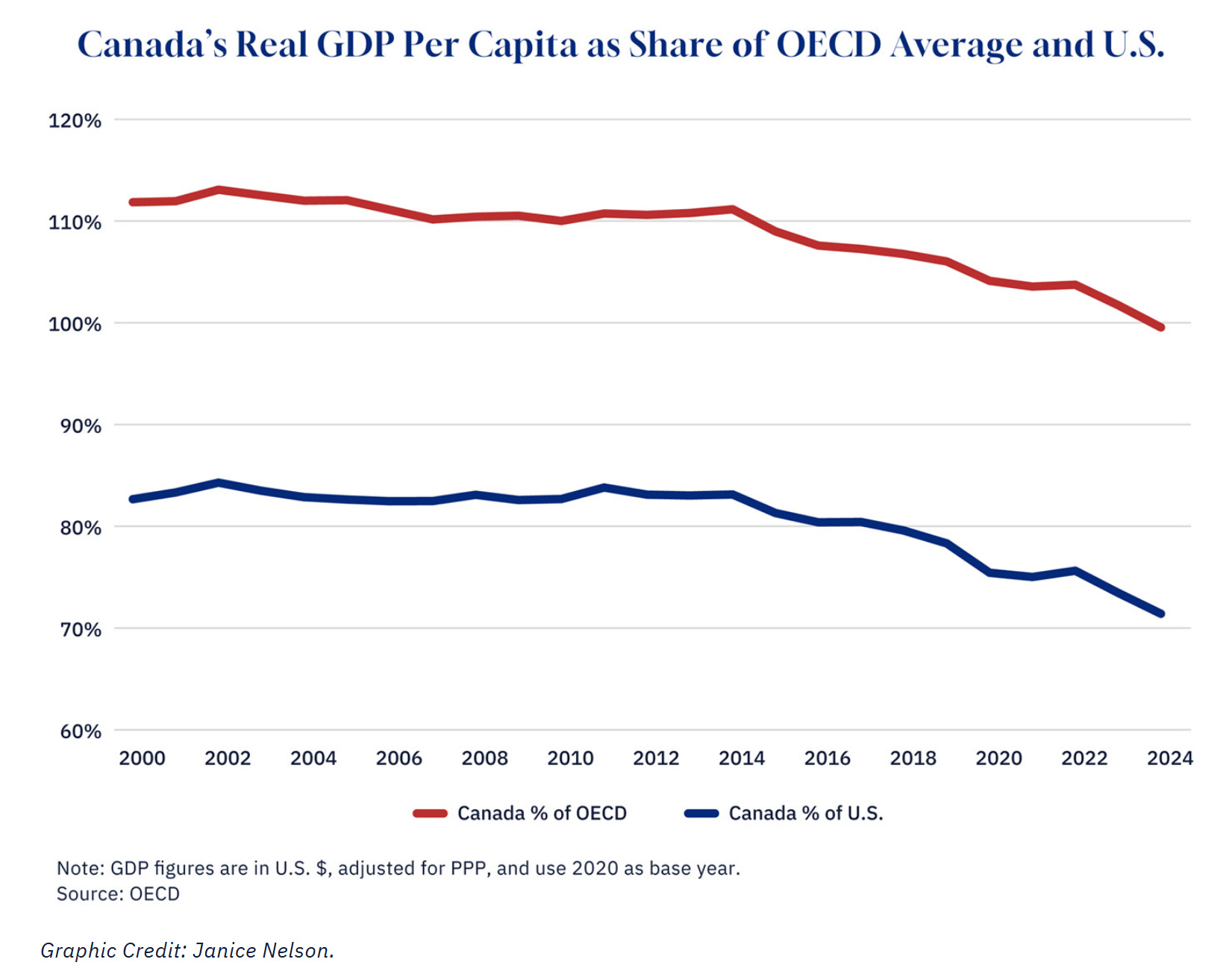
Part of Canada’s problem is that a large fraction of the most skilled workers emigrate to the US. The top one percent of earners in Canada make only forty percent of what the top one percent make in the US. Consequently, at least forty percent of this group of Canadians emigrate, according to an estimate from a Bank of Canada working paper. This share almost doubled between 2005 and 2019, likely reducing Canadian growth. Net migration has also risen among Canadians in the top 2–10 percentiles, whereas it has remained low for those who earn less.
The EU introduces duties on cheap Chinese goods
In the last few years, a huge influx of cheap Chinese goods to the EU has overwhelmed customs authorities. At the Liège airport, officers can check less than one percent of packages – and of those that they do check, almost a third are unsafe, counterfeit, or misdeclared. The EU now plans to introduce duties on goods worth less than €150, which have so far been exempt.
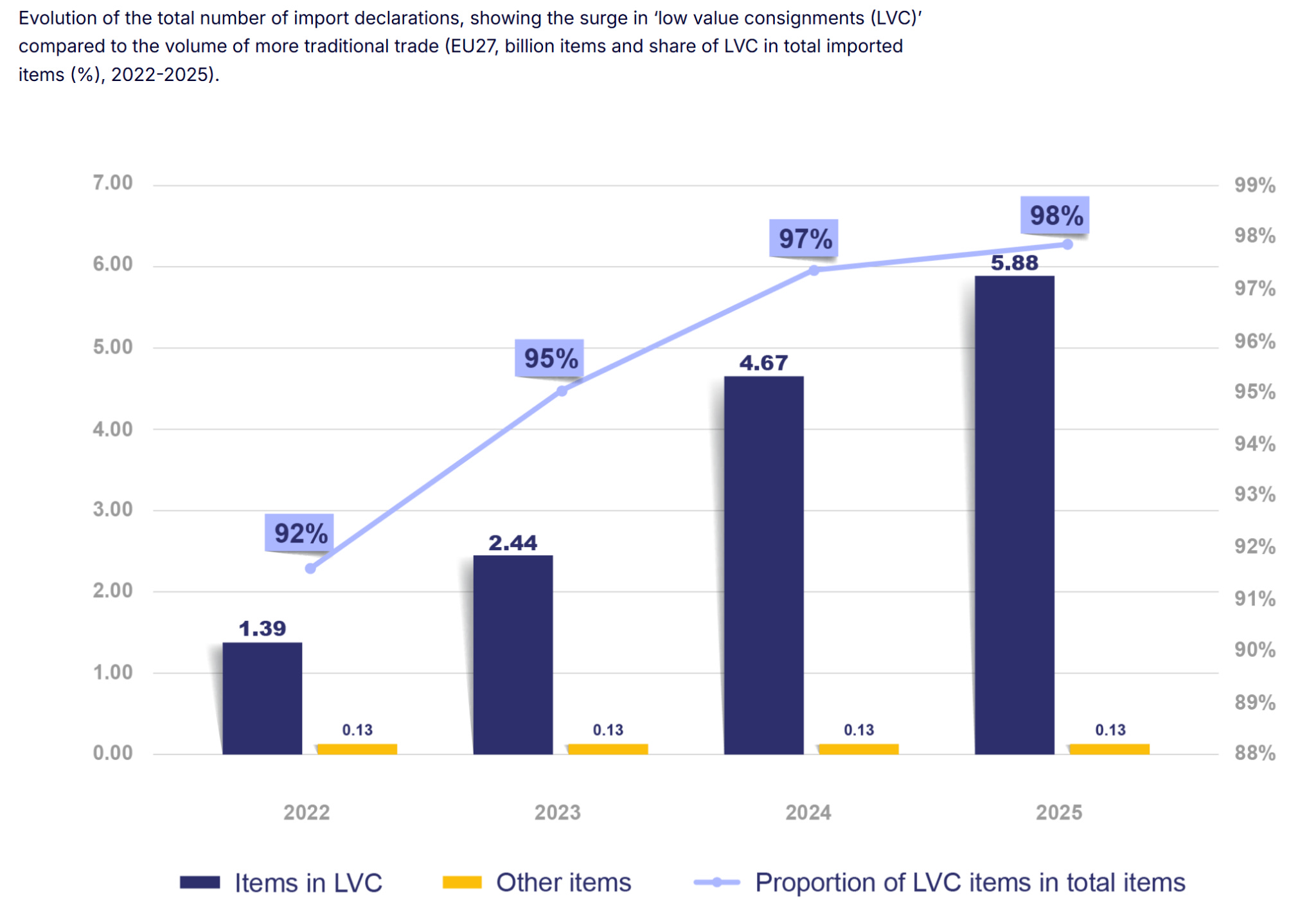
Source: European Commission. LVC: packages worth less than €150.
Chinese girls are now taller than American girls
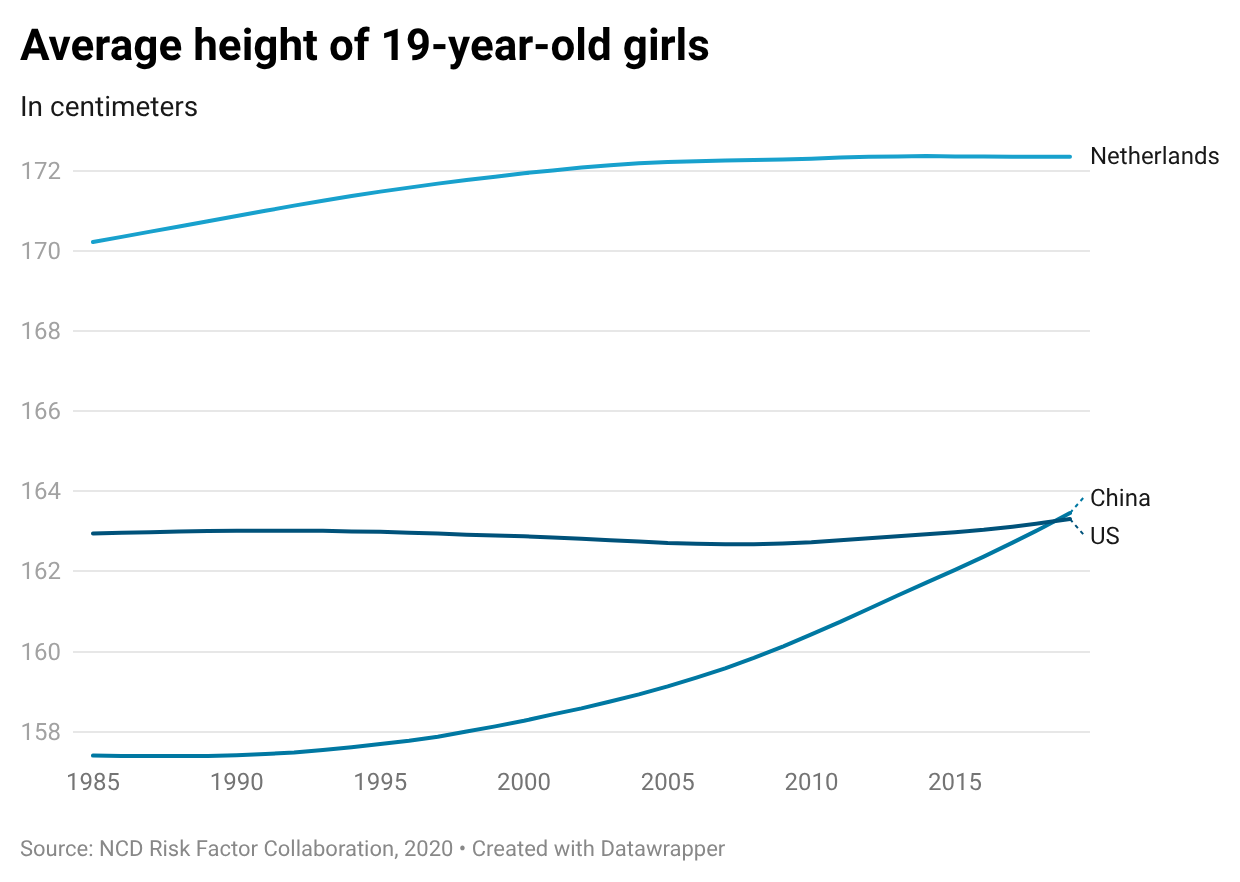
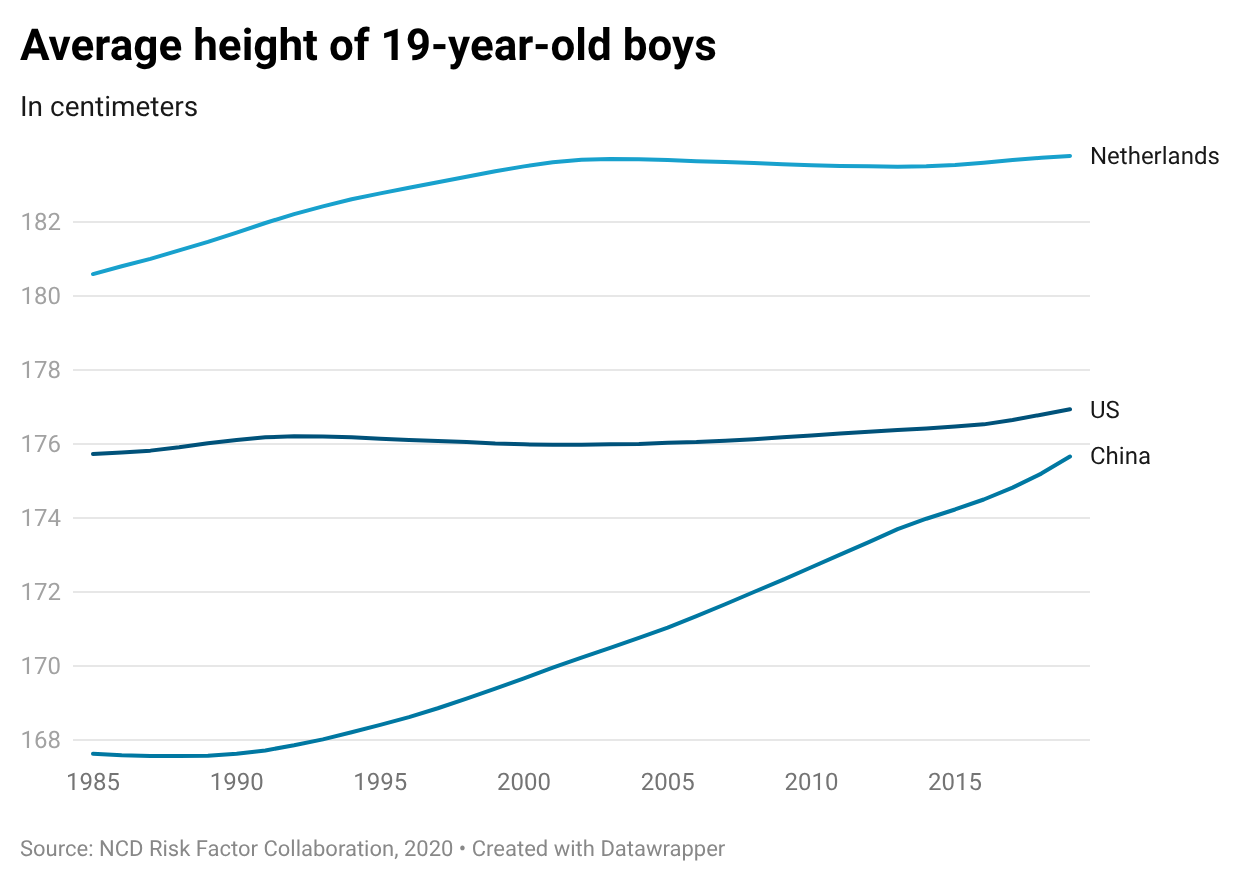
Thanks to better nutrition, average height has increased significantly in China. By 2019, Chinese 19-year-old girls were taller than their American peers, and boys were catching up as well. But they remain much shorter than the Dutch, one of the tallest peoples in the world.
What does it actually mean to be unemployed?
Economic statistics are often harder to interpret than it might seem. A good example is youth unemployment. According to Eurostat, Sweden has the second-highest unemployment rate among people under 30 in the EU.
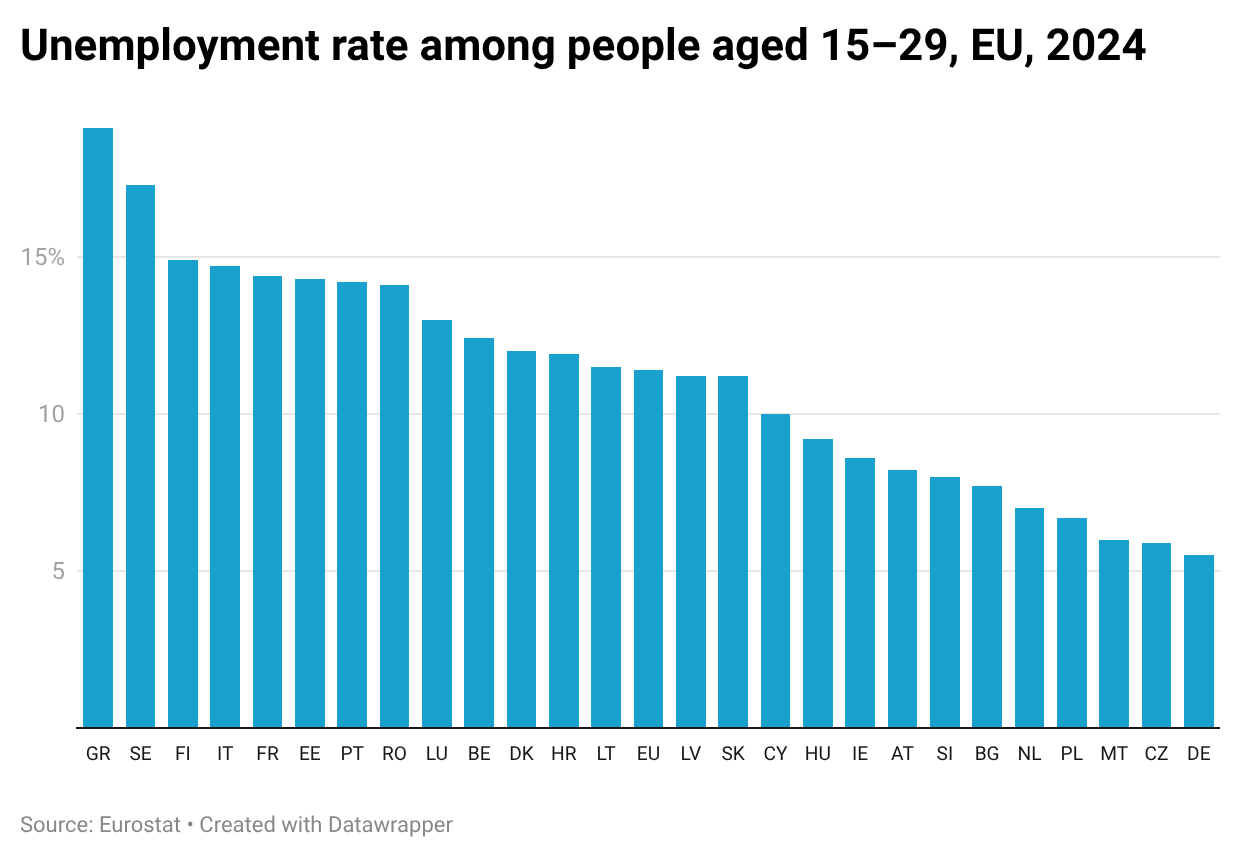
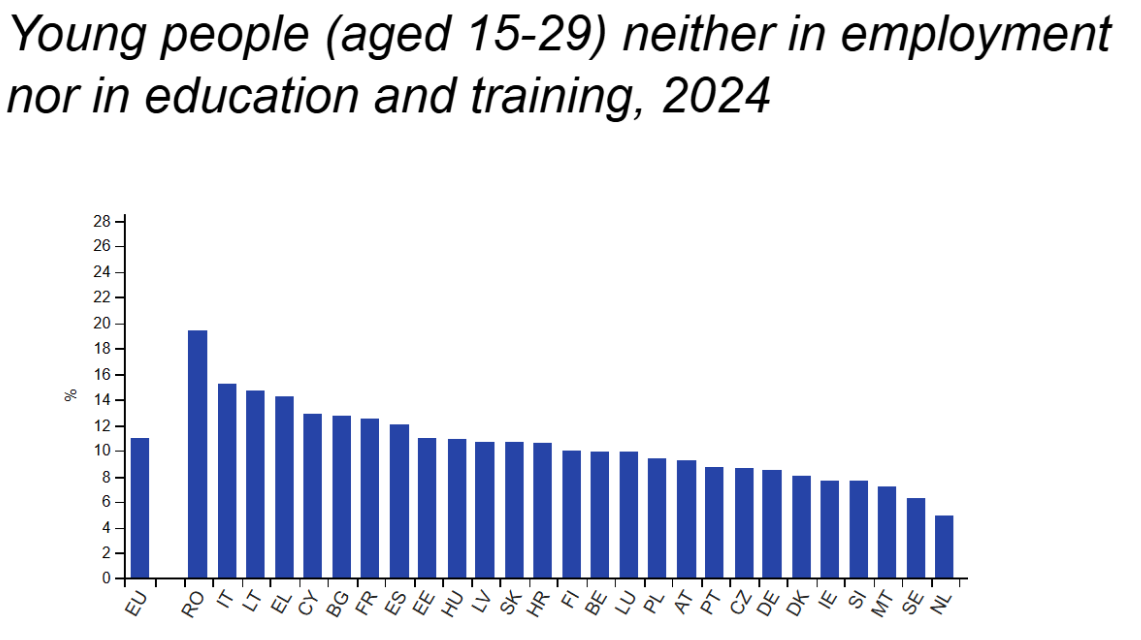
But if we instead look at young people neither in employment nor in education or training, Sweden ranks second-best. One reason is that Sweden has many students seeking part-time work. Perhaps surprisingly, they count as unemployed – but since they’re obviously in education, they don’t show up in the second category.
In brief
Electric vehicle batteries that charge in less than ten minutes
Liberal Robert Golob is expected to remain prime minister of Slovenia after Sunday’s election
Moderation is only a winning election strategy if applied to the right issues
Why GLP-1 weight-loss drugs need a far higher dose as an oral pill than as an injection
Prime Minister Giorgia Meloni loses referendum to overhaul Italy’s justice system
There’s a 37 percent chance that at least 1,000 US troops will enter Iran before July
The chance of two consecutive quarters of negative GDP growth (often used as a definition of recession) in 2026 is 29 percent in the US and 39 percent in the EU
Many countries generate more power from coal to compensate for lost oil and gas supply
Stock markets rise as Trump suggests a diplomatic solution to the Iran War may be near
Democrats should just stop contesting in statewide races in the reddest third of states. Completely stop. Allow a third party to emerge, it eventually will.
That is assuming it is even possible for the national and state committees to stop people using the Democrat brand?