


Canada’s population is shrinking for the first time on record
The US economy will suffer from the Iran War despite energy independence
Americans think AI companies should pay for the jobs they eliminate
In brief: Works in Progress on how Britain created a national grid, Danish prime minister set to win reelection, and more
Corn farming alone uses over 100 times more water than AI
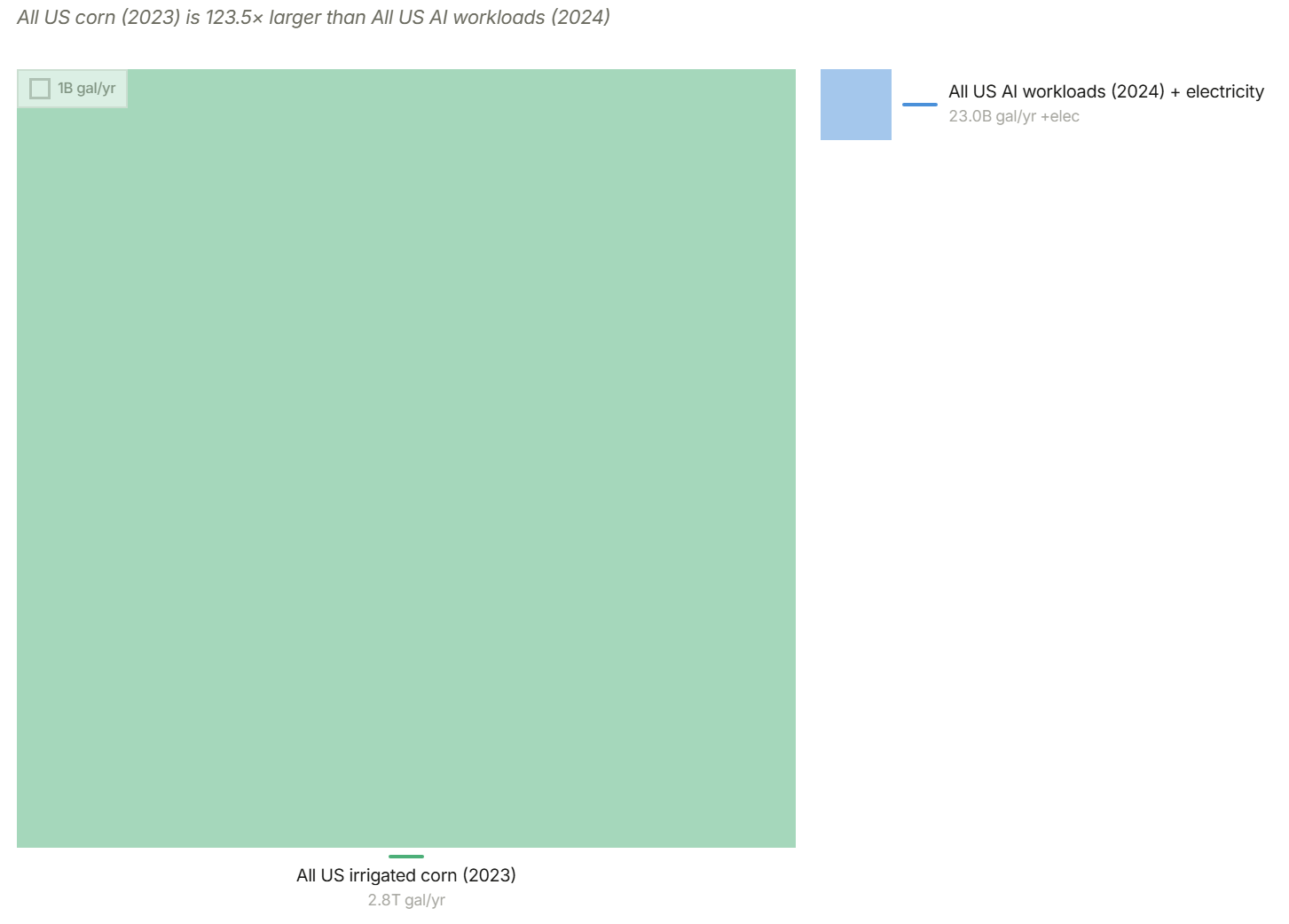
Many people worry that AI uses too much water, but this is a hugely exaggerated concern. Andy Masley has put together an interactive graphic of American water consumption that lets you compare AI with other industries, such as agriculture. The difference is striking:
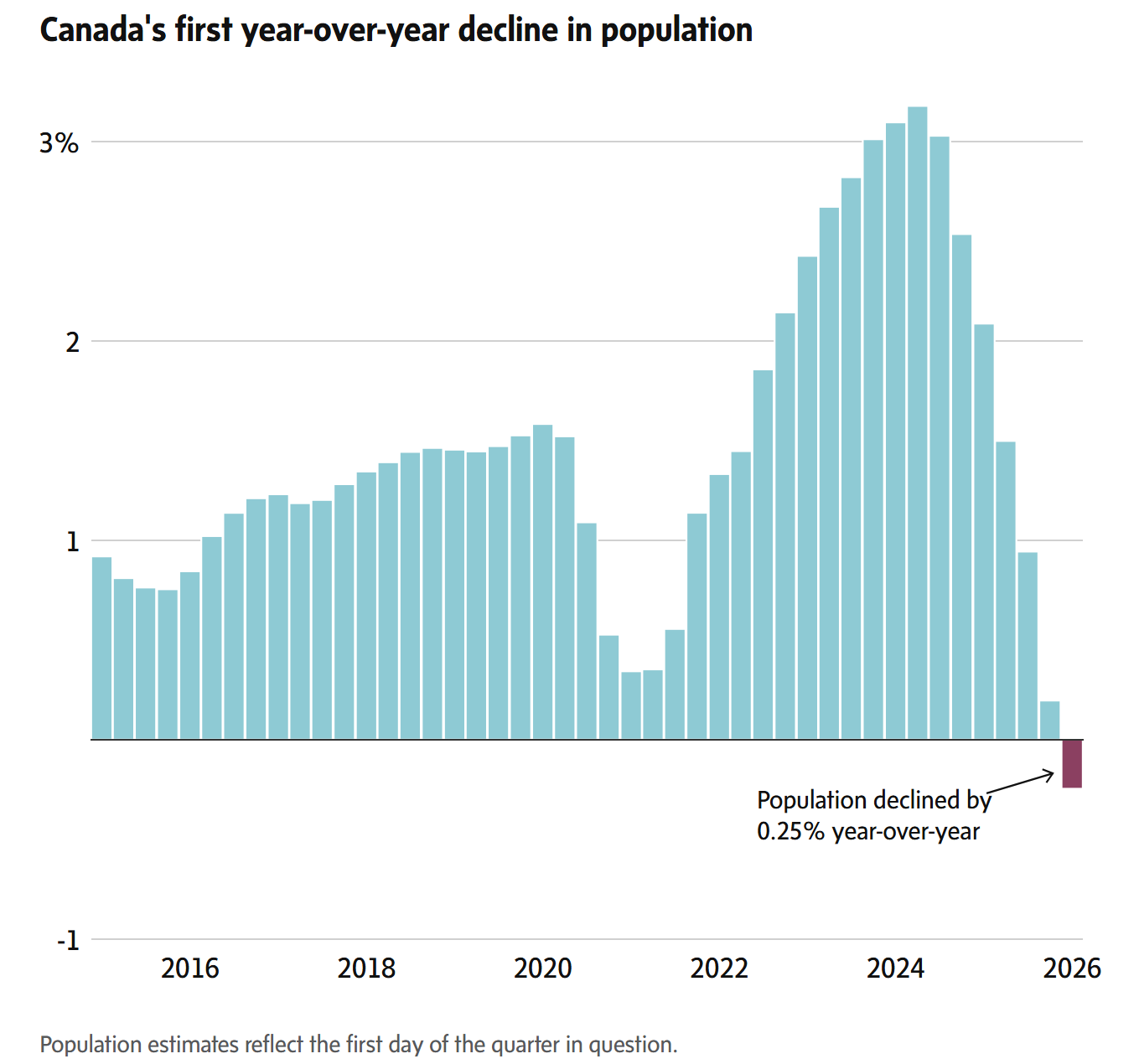
Canada’s population is shrinking for the first time on record
A few years ago, Canada’s population grew at more than three percent per year. But since then, stricter rules have led to a collapse in temporary migration. As a result, Canada’s population declined in 2025 for the first time since records began in the 1940s.
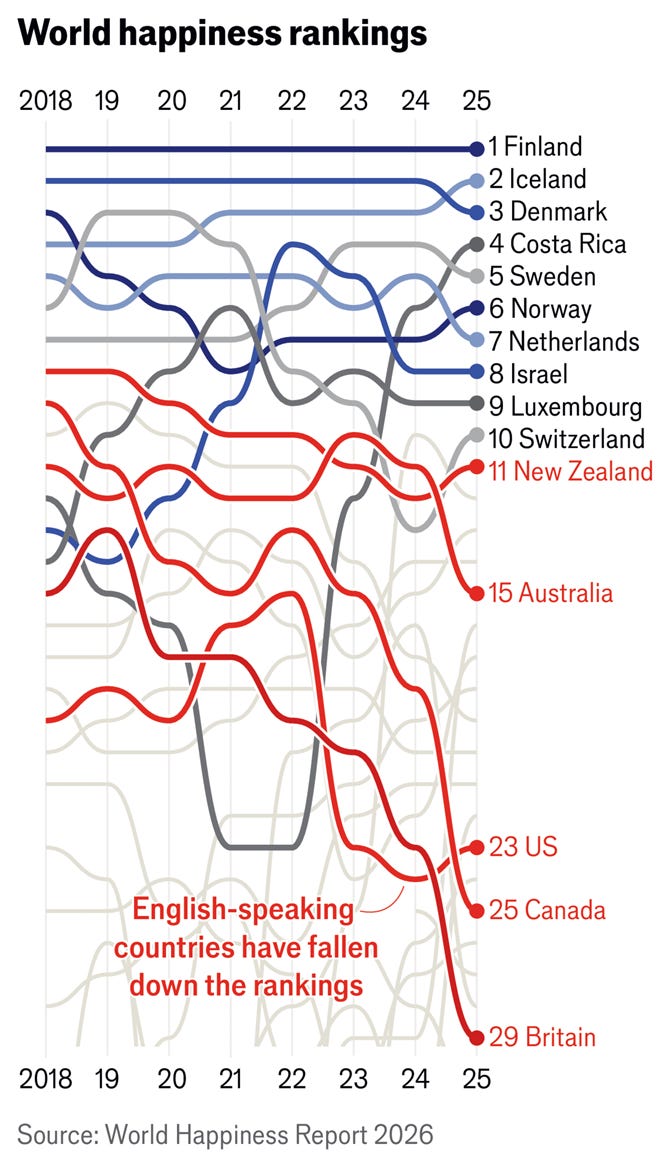
The Anglosphere is falling in life satisfaction rankings
The US, Britain, Canada, and Australia are falling in the rankings in the World Happiness Report (which despite its name asks participants to evaluate their lives, not rate how happy they are).
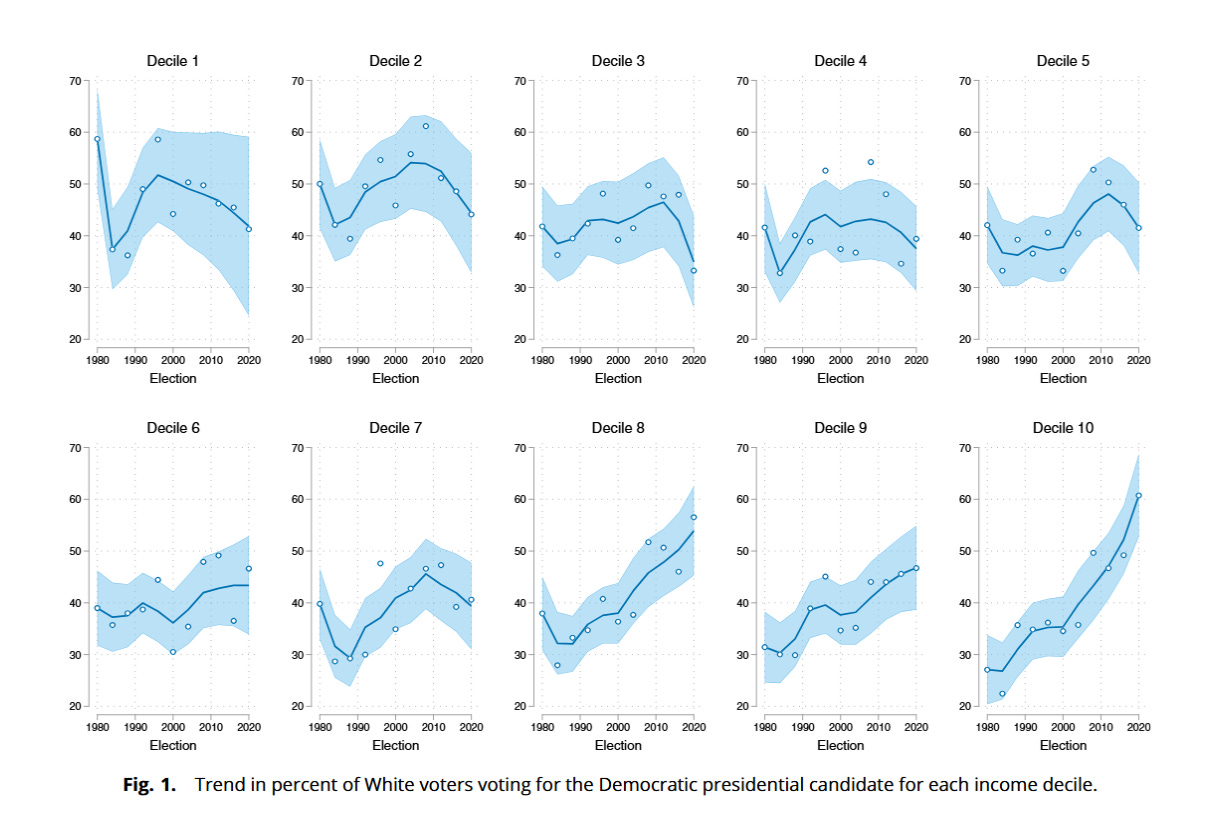
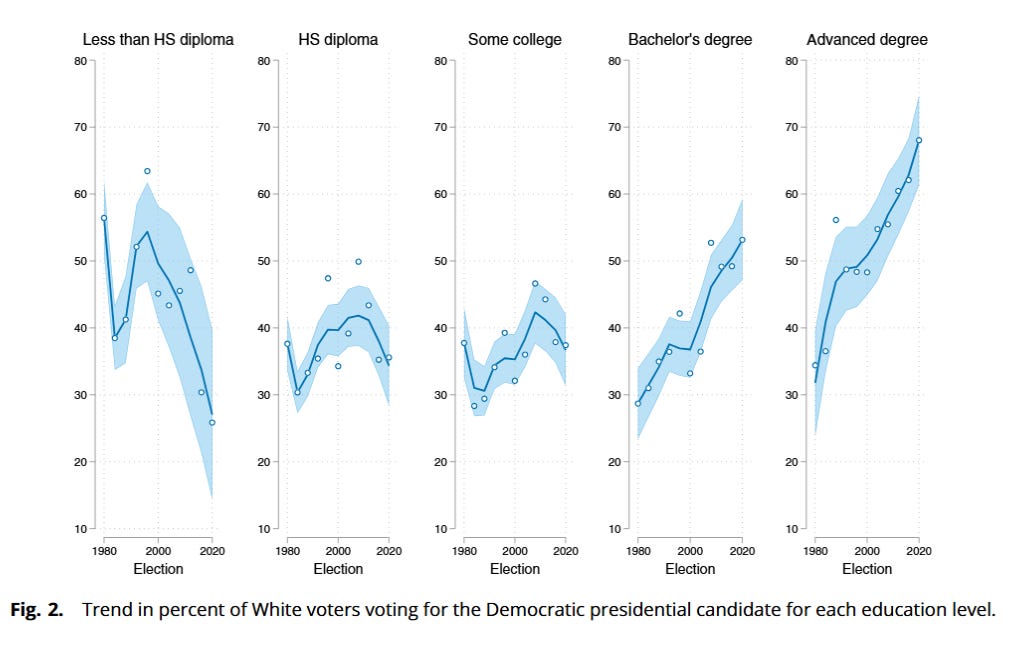
American elites have become much more Democratic
Republicans used to have higher incomes and more education than Democrats, but over the last few decades, this has changed. A new paper studies this shift among white Americans and finds that it’s strongest in elite groups, who have quickly become more Democratic.
Anthropic could overtake OpenAI
Recently, Epoch AI projected that Anthropic could be on track to pull ahead of OpenAI in revenue. According to the latest estimates, OpenAI’s annualized revenue is $25 billion and Anthropic’s $19 billion.
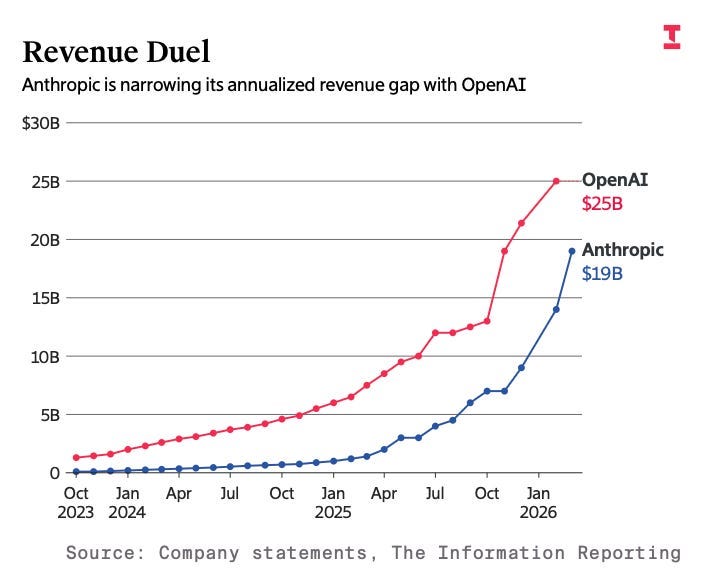
While OpenAI still dominates the consumer market, higher-paying enterprises have increasingly turned to Anthropic. The Wall Street Journal reports that OpenAI plans to respond by focusing on its coding and business tools.
Americans find their compatriots immoral
Americans have become very negative about their society in recent years. This negativity extends to moral judgments about other Americans. In a recent Pew survey, American respondents were more likely to find their compatriots immoral than respondents from other countries.
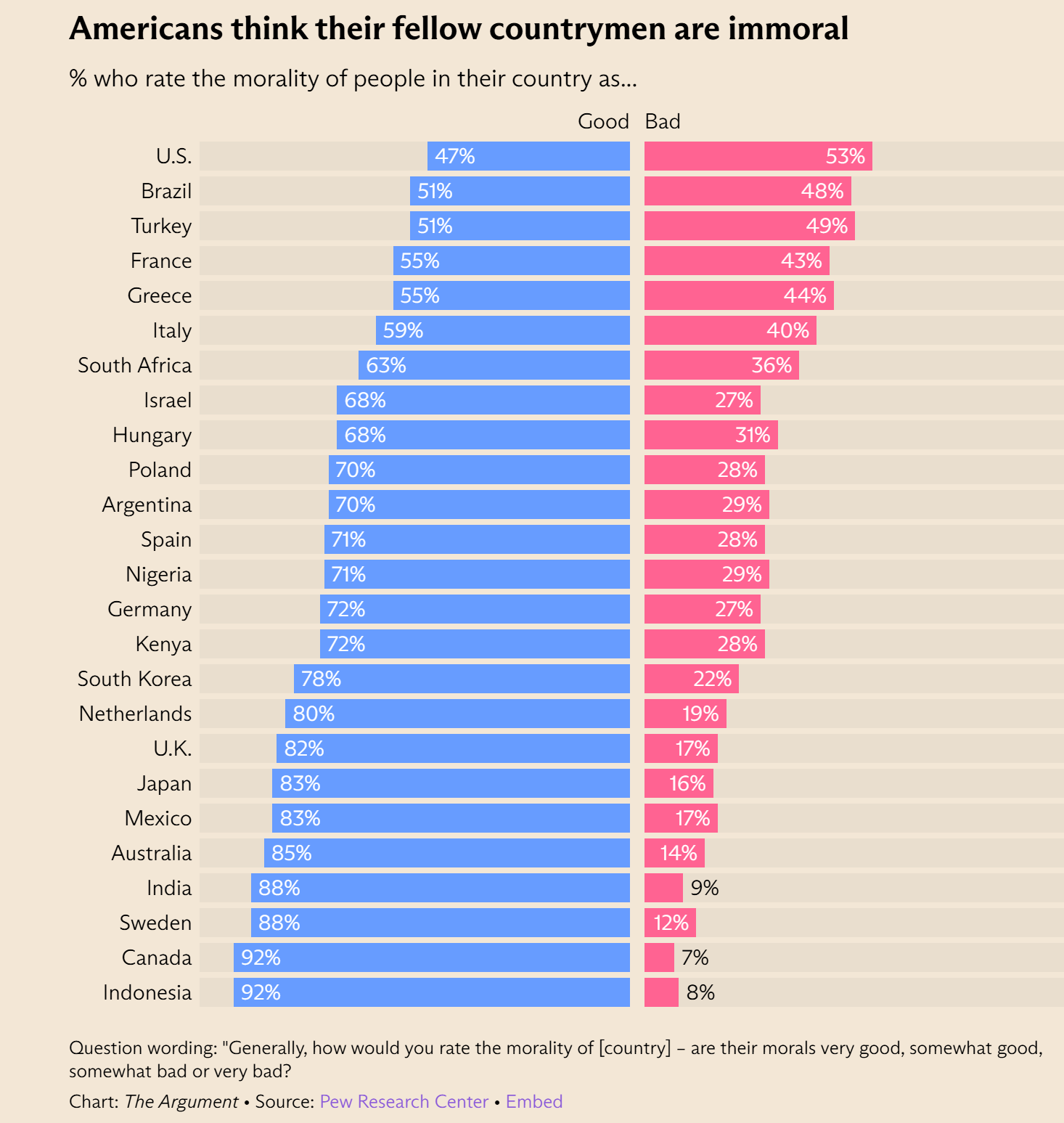
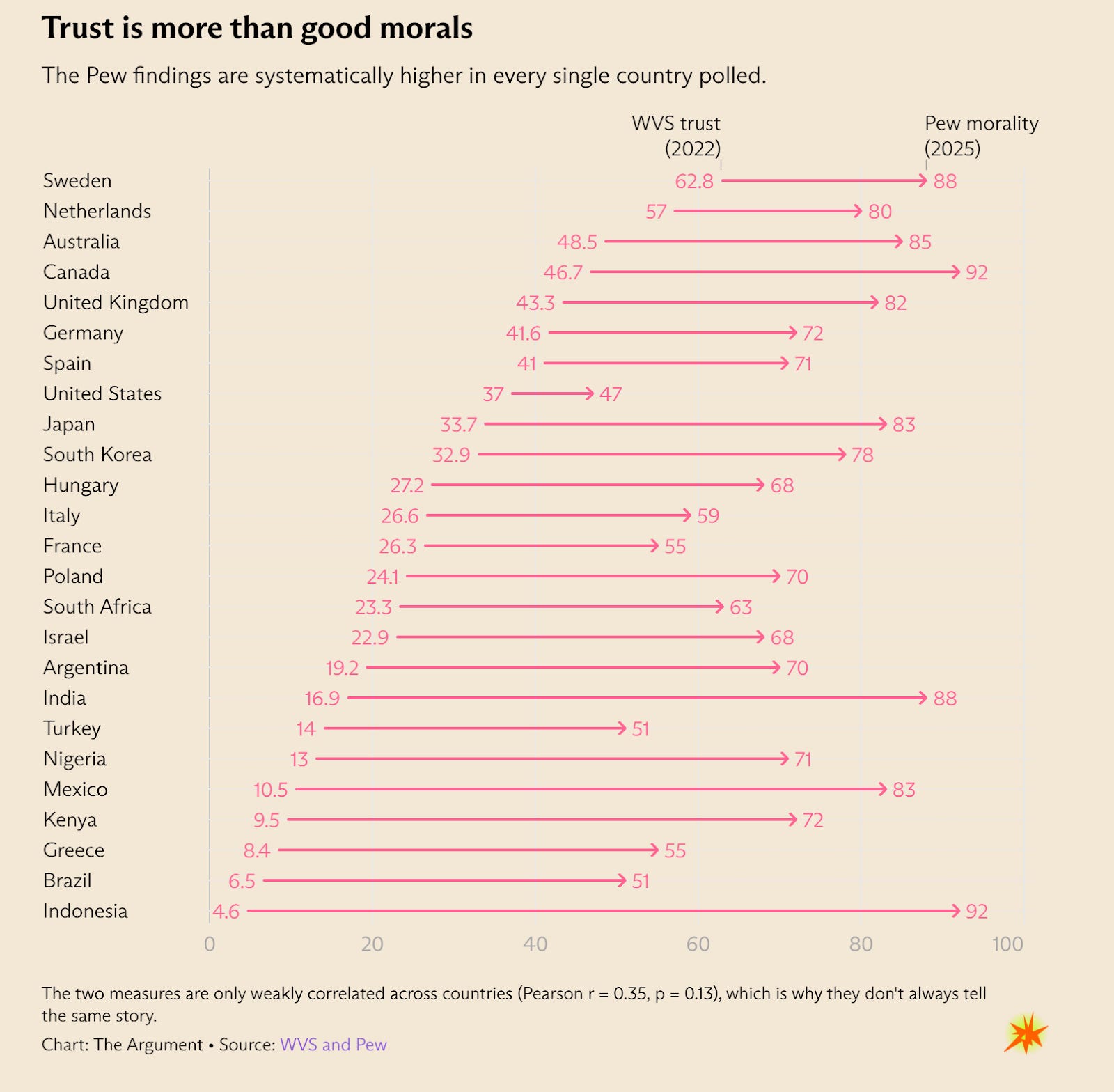
The Argument has put together an interesting comparison between these moral judgments and measures of interpersonal trust. In all countries, participants are less likely to say that people are trustworthy than that they are moral. One possibility is that the bar for trusting others is higher, since even a relatively low chance of being cheated may be viewed as unacceptable. It’s also possible that people are more generous when judging their compatriots’ character in the abstract than when deciding whether to actually rely on them. The chart suggests this may be especially true in some countries.
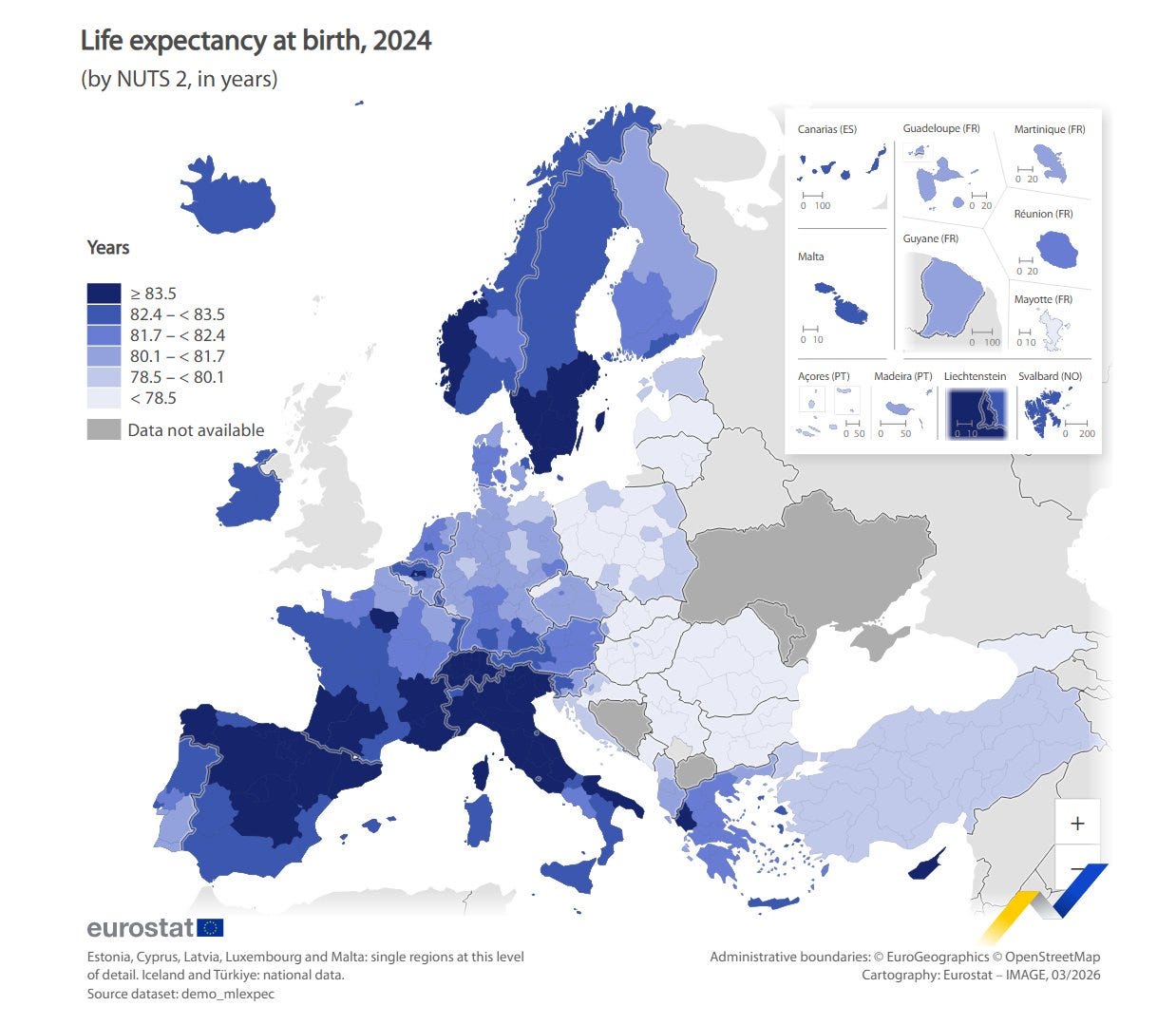
Southern Europeans live longer than richer northerners
Eurostat has released life expectancy data from 2024. While richer regions generally have higher life expectancy, there’s an exception: people live longer in poorer southern Europe than in the richer north. Meanwhile, the formerly communist countries are lagging, with Bulgaria being last.
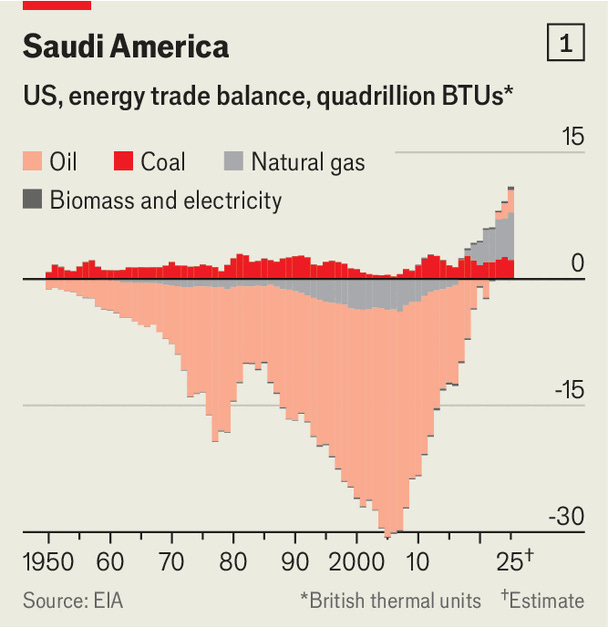
The US economy will suffer from the Iran War despite energy independence
The US was long dependent on foreign oil, but that has changed in recent years, largely thanks to fracking. This attenuates the economic impact of the Iran War, but Goldman Sachs still estimates that it will lower American GDP growth by 0.3 percentage points this year.
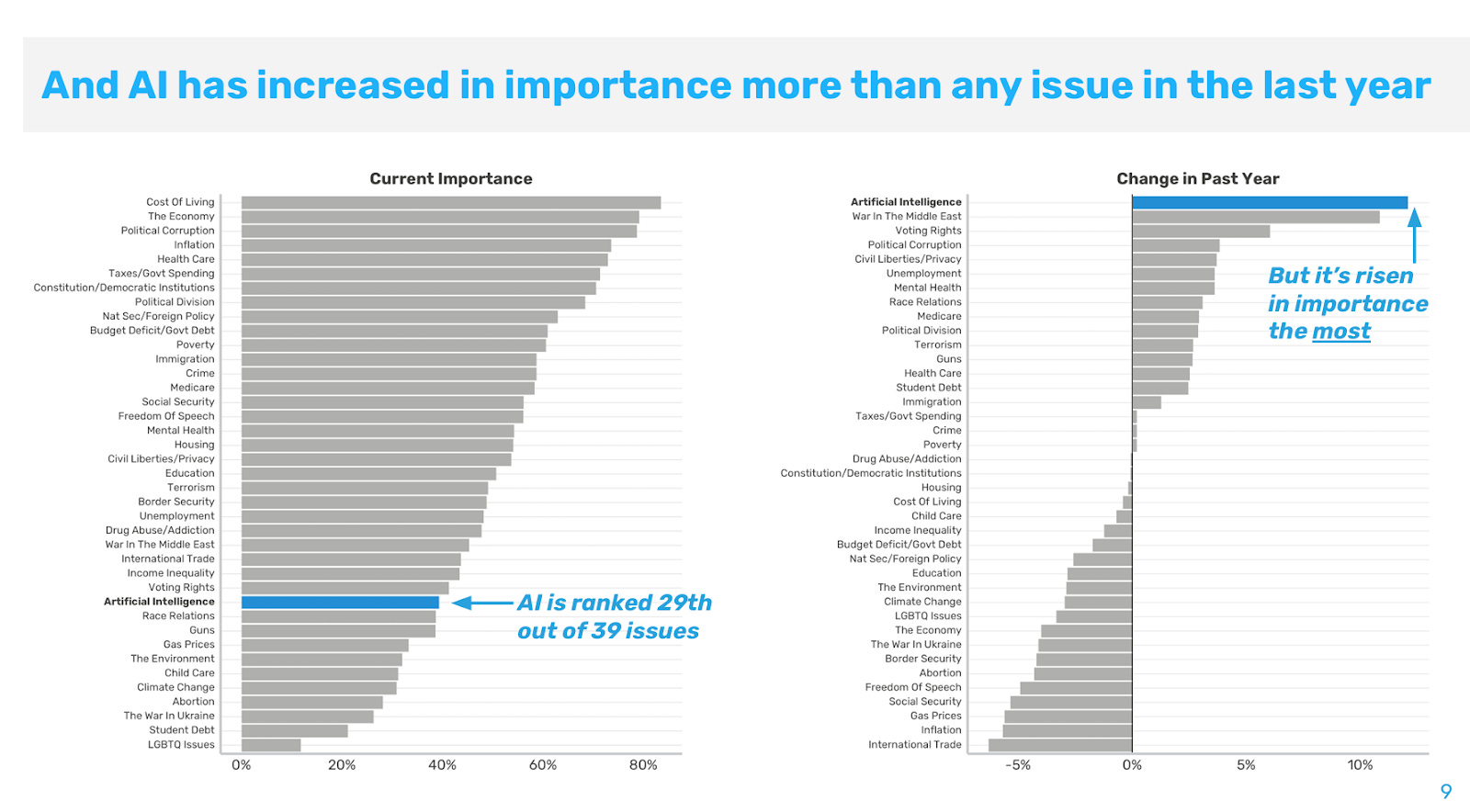
Americans think AI companies should pay for the jobs they eliminate
American voters find AI much more important than they did last year, according to a survey from Blue Rose Research.
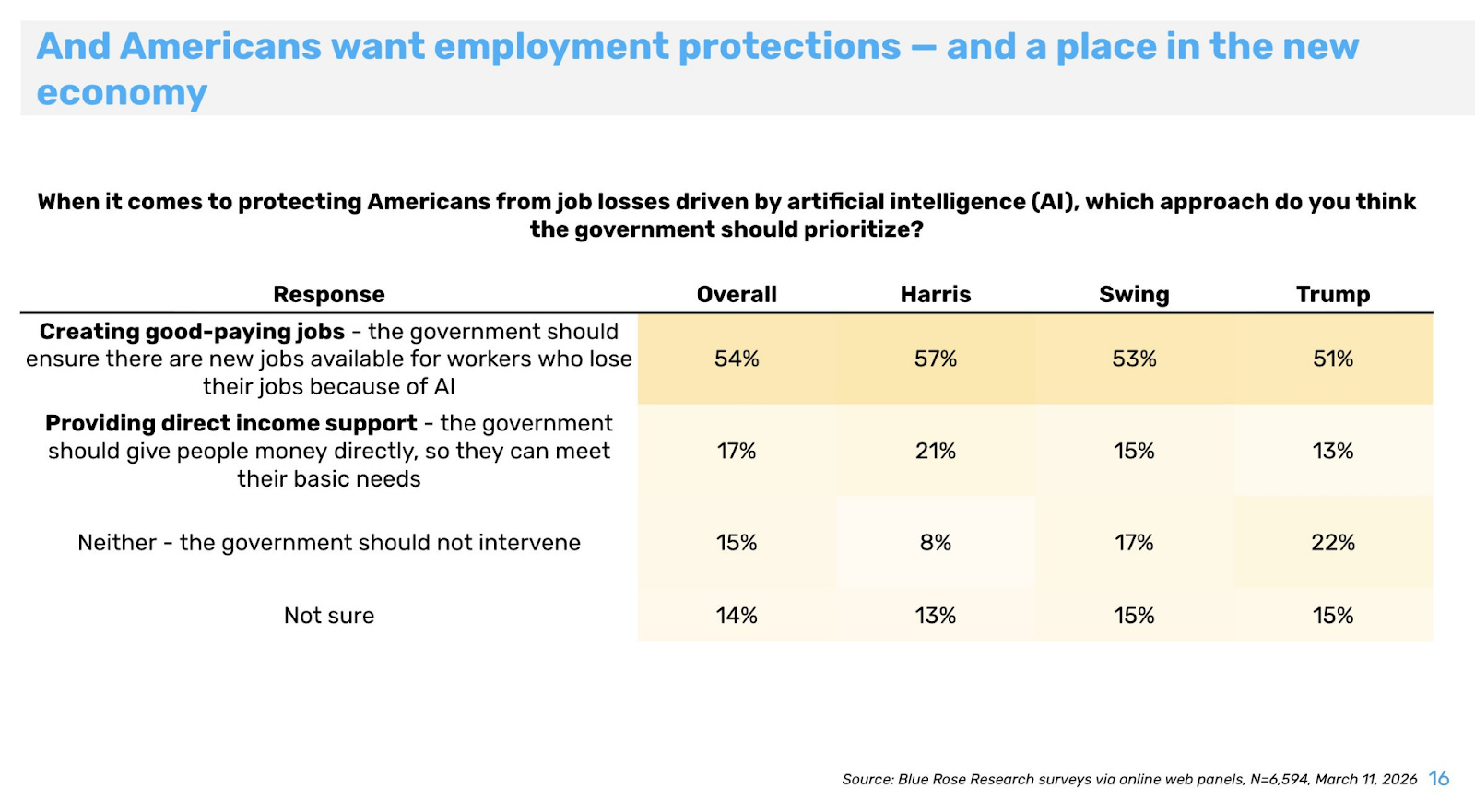
How should people who lose their jobs to AI be supported? The survey found that Americans want the government to create good-paying jobs, not just hand out money.
They also think that AI companies should be held financially responsible for the jobs they eliminate.
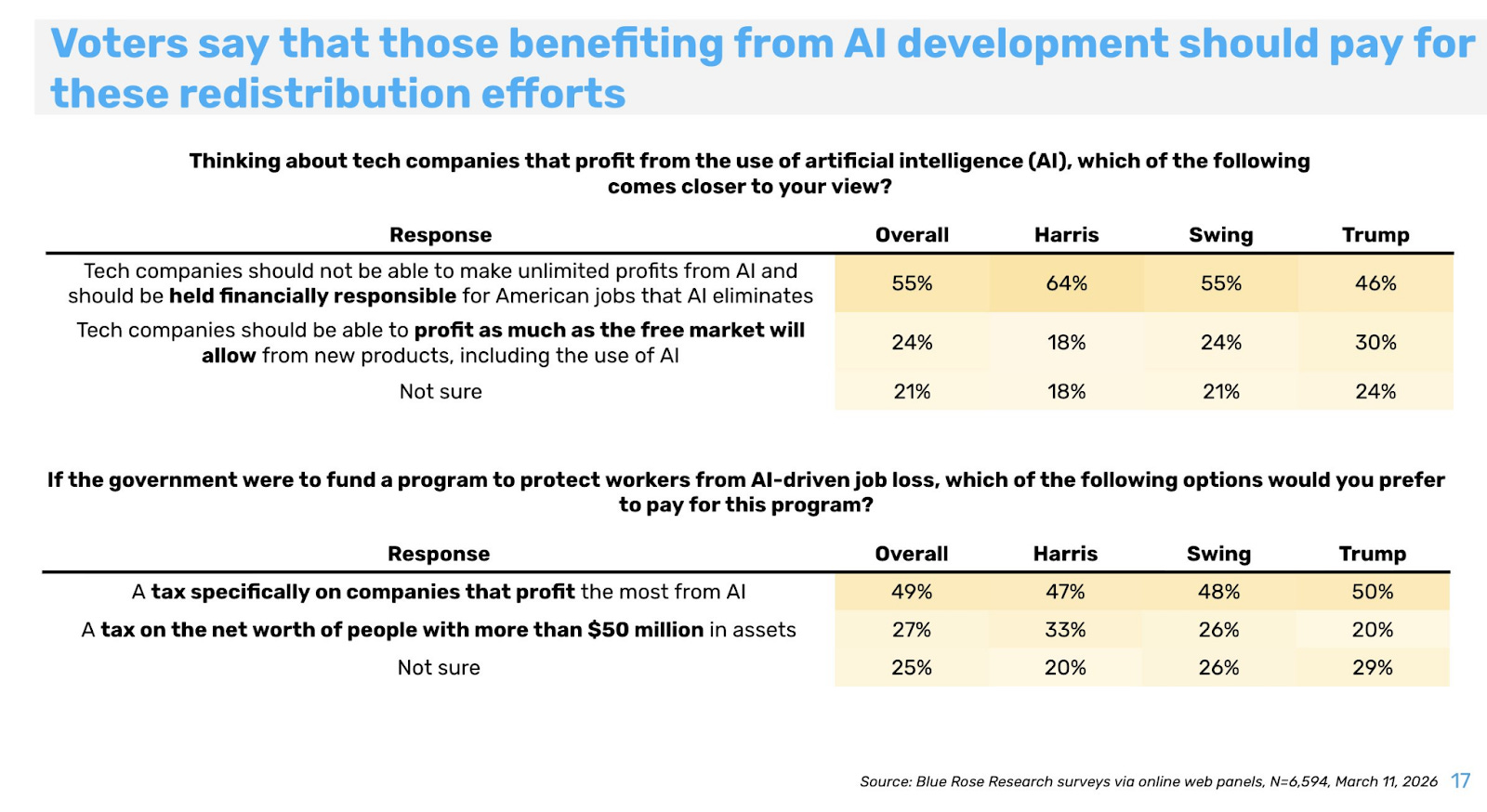
Across these questions, the differences between Democrats and Republicans are relatively small. As I’ve noted previously, AI is not yet a particularly polarizing topic among American voters.
Surging sales of electric trucks
The share of new trucks that are battery-powered is rising steeply in China.
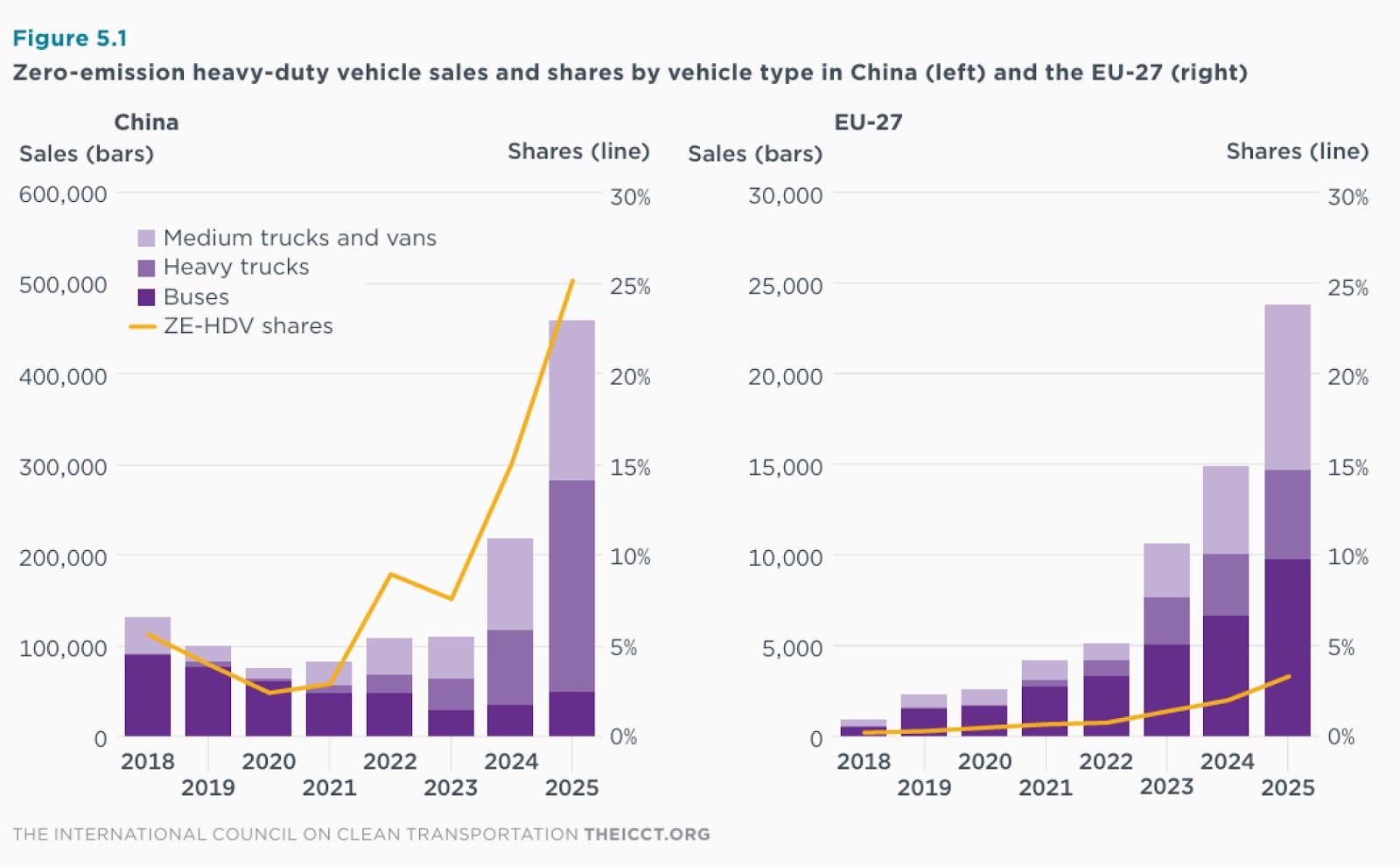
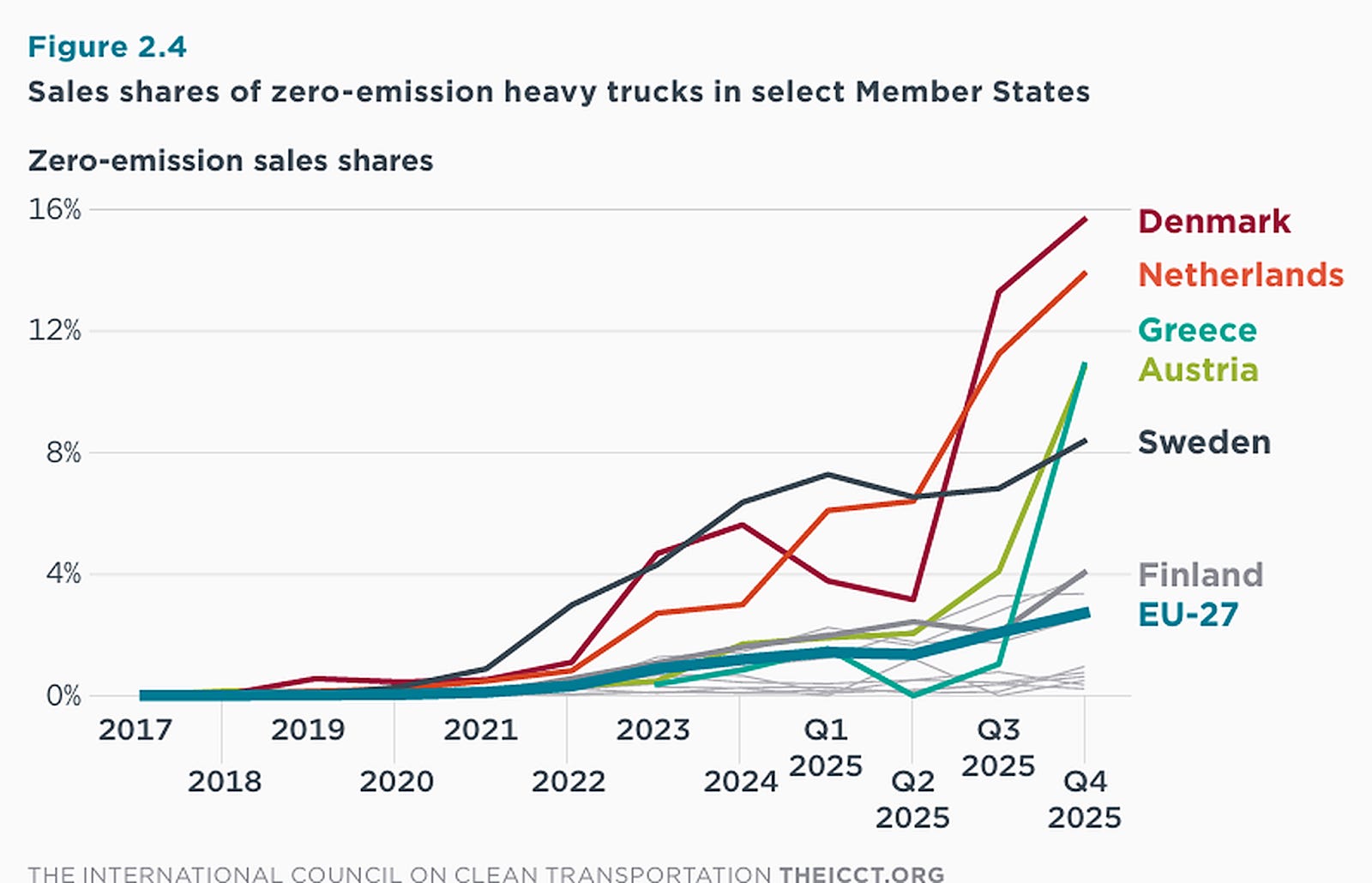
In Europe, the shift is more modest, but there are exceptions.
In brief
Alex Chalmers writes for Works in Progress on how Britain turned its fragmented electricity systems into a national grid
Denmark and Slovenia both vote on Sunday
Austin rents are falling fast thanks to a housebuilding boom
Patients quit weight-loss drug trials after figuring out they got a placebo
Regulatory reforms that could help old, sick, and poor Americans
Freelance workers are worse off relative to employees than they think
The Economist explains Iran’s drones and how they can be fought
The US may remove sanctions on Iranian oil tankers currently at sea to slow the rise in oil prices
Sure, but how do you compare the impact of millions of people (and animal) eating corn (or drinking corn syrup, or using corn in any kind of process...) with the impact of people using data centers ?
Very intuitively, it feels like if I offer the choice of shutting down all data centers, and burning all corn fields, the impact would be dramatically different. I'm really curious how an economist would estimate each effect, and how they would put the two numbers in perspective, but just putting the numbers next to each other feels like doing only half of the job at best. (If an Oracle salesperson was doing it, we would call it downright dishonest.)
But I'm struggling with the fact that I could not objectivize my concern either - and again, I do not claim your figured are wrong.
Corn farming is the go-to example for any comparison of waste.
For another example, if every car in the USA were an EV, you’d only have to use 3.5% of the land area now used for corn to provide 100% of their electricity needs.
But instead, 40% of corn grown goes to ethanol, to provide only 7% of gas car’s energy needs.