


Several of today’s stories demonstrate the immense power of negativity bias.
Americans now sympathize more with Palestinians than with Israelis
In brief: obstacles to African growth, soaring organ donations, and more
When the environment recovers, no one talks about it
Environmental reporting is one-sided: when problems arise, they get enormous attention, but when we solve them, they are all but ignored. This makes people far more pessimistic than they have reason to be. We need to look beyond the alarms of the day and see the bigger picture.
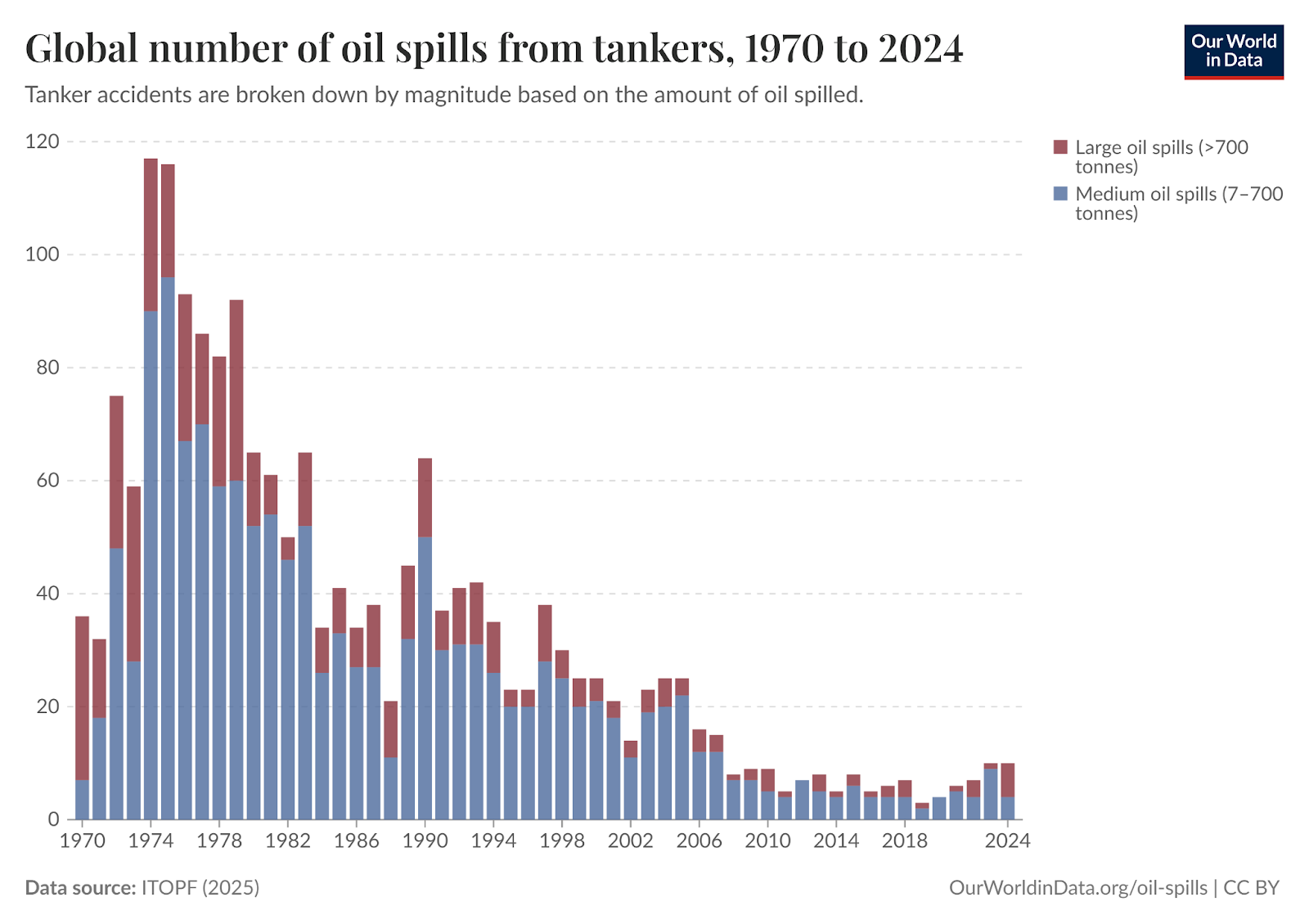
Consider oil spills: while the 1989 Exxon Valdez disaster in Alaska made headlines for years, few people know that oil spills from tankers have fallen by 90 percent from their peak.
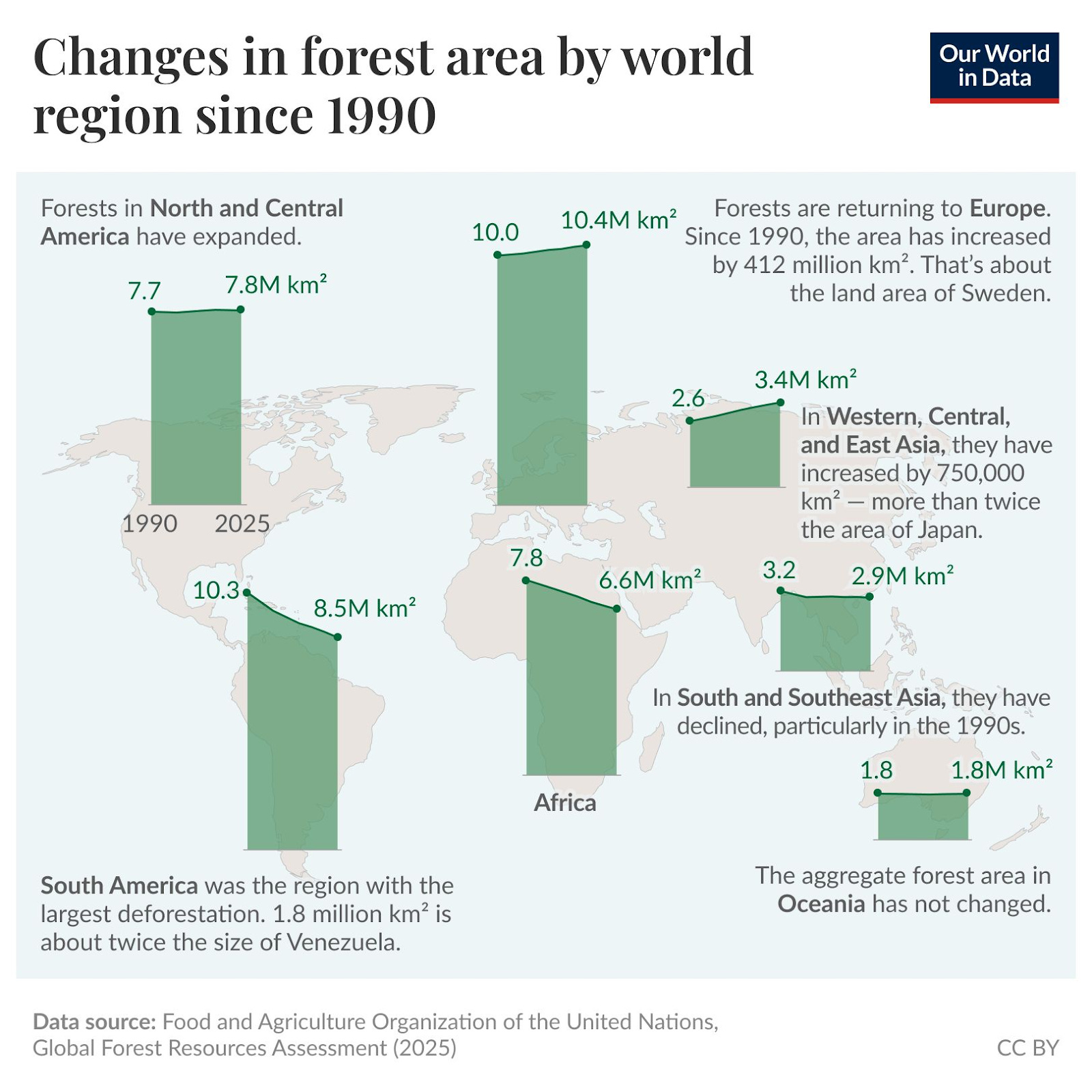
No one does more to counter overblown pessimism than Our World in Data. Max Roser’s piece on forest cover is another case in point. The world has been losing forests for thousands of years, but in recent decades, many rich countries have reversed that trend.
Economic growth is often viewed as harmful to the environment, but past a certain point, it tends to help. Part of the reason is that environmental concerns become a higher priority once our material needs are met. A similar example is the remarkable comeback of wild animals in Europe.
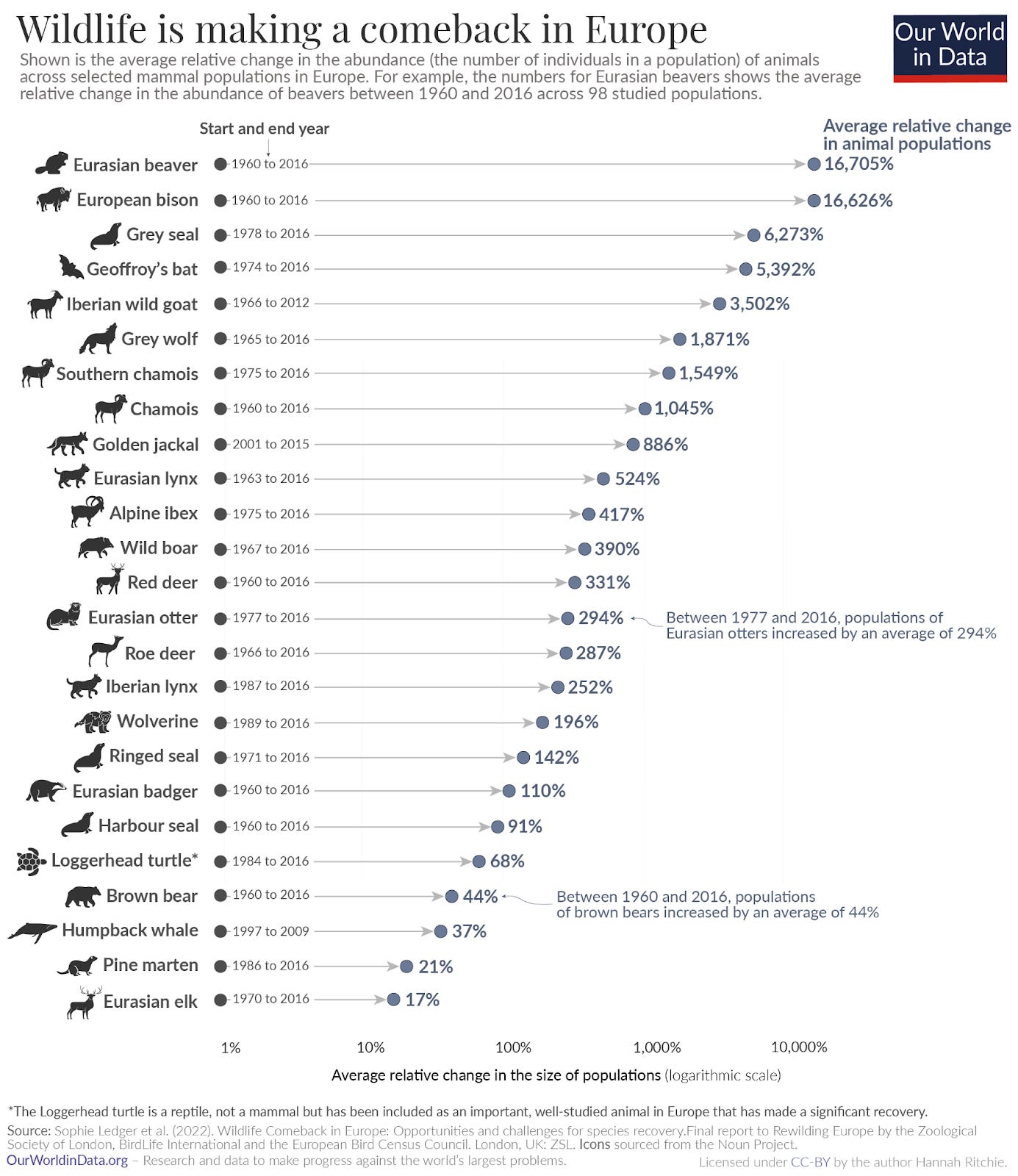
Our World in Data’s Hannah Ritchie has written a book about these kinds of environmental success stories, Not the End of the World. I highly recommend it.
Britain’s inactivity crisis is receding
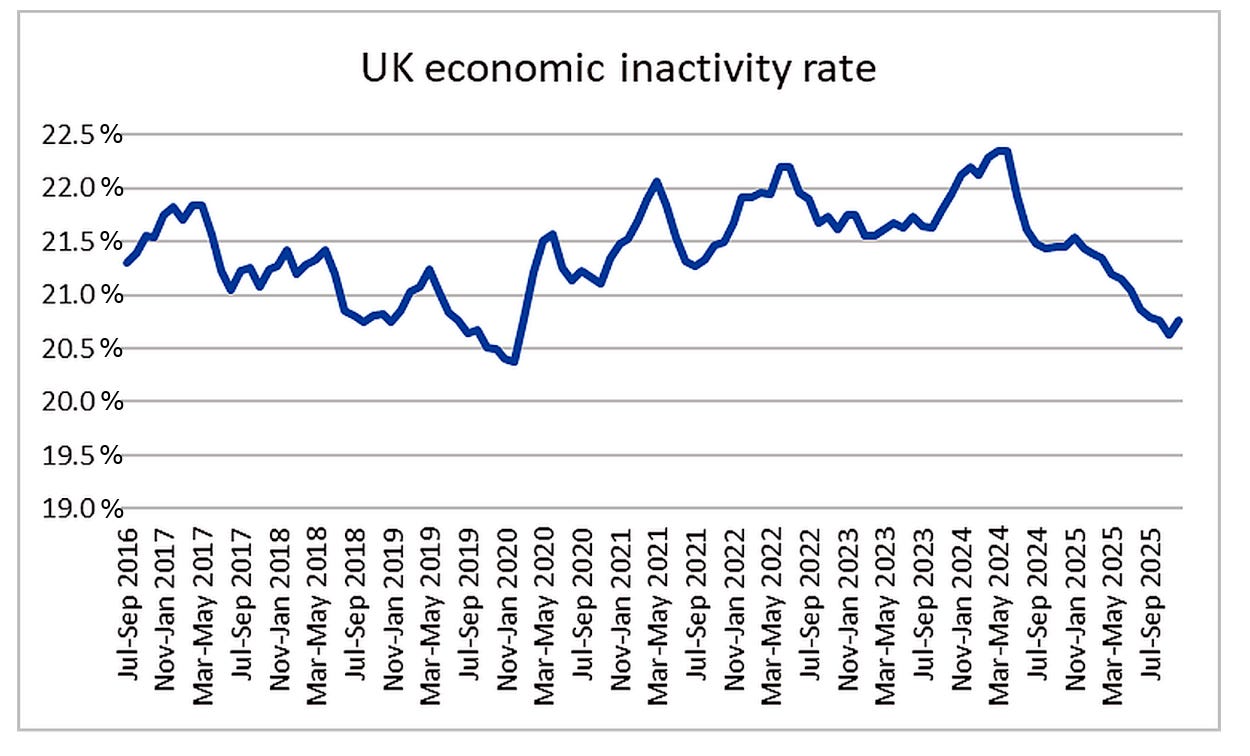
Reporting on social and economic problems has the same negative skew. A few years ago, British media couldn’t stop talking about the country’s rising economic inactivity rate, but the recent return to pre-pandemic levels has been met with almost complete silence. The Economist’s Callum Williams quote tweets an account with just 19 followers:
Unbelievable. And it’s true! The number of pieces I read a year, two years, three years ago on this. And no one has bothered to follow up except an anon???
Western power is underestimated
Geopolitical discourse is just as rife with alarmism. For years, commentators have insisted that Western democracies are losing ground to a coalition of authoritarian rivals. But whatever you think of the strikes on Iran and Venezuela, they show which side is strongest. Since Maduro was captured and Khamenei killed, their Russian and Chinese allies have remained notably passive.
Geopolitical alarmism has several sources, but I think one of them is strategic exaggeration. During the Cold War, Western hawks routinely overestimated Soviet strength to justify bigger armies. Today, Mark Rutte plays the same game as he presses member states to spend five percent of GDP on defense. Claims about what the world is like are often better understood as attempts to change it.
Pride in being an American has fallen fast
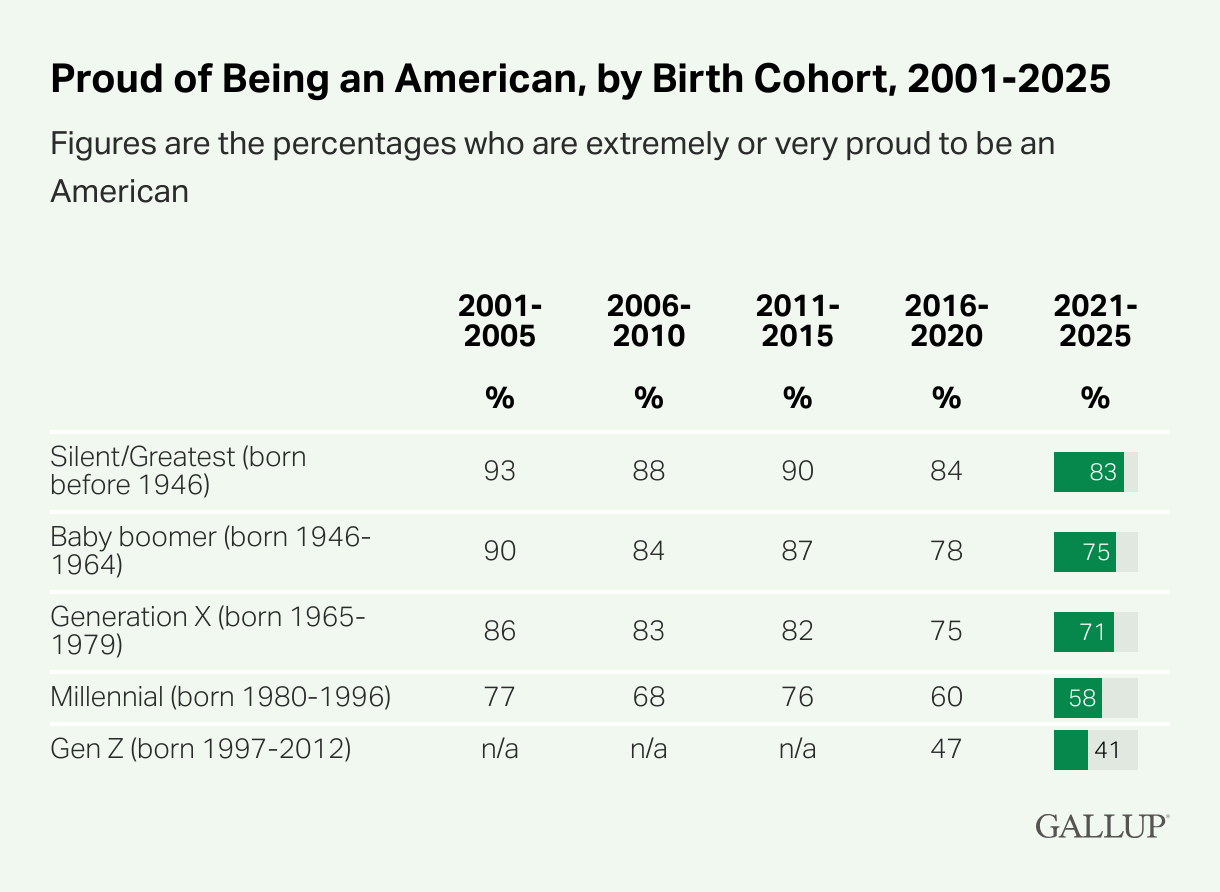
Americans used to be almost universally proud of their national identity, but that is changing. While 87 percent took pride in being an American in early 2001, that number was only 58 percent in the most recent survey. This decline is driven both by people changing their values over time and by generational replacement: old people dying and young people with different values growing up.
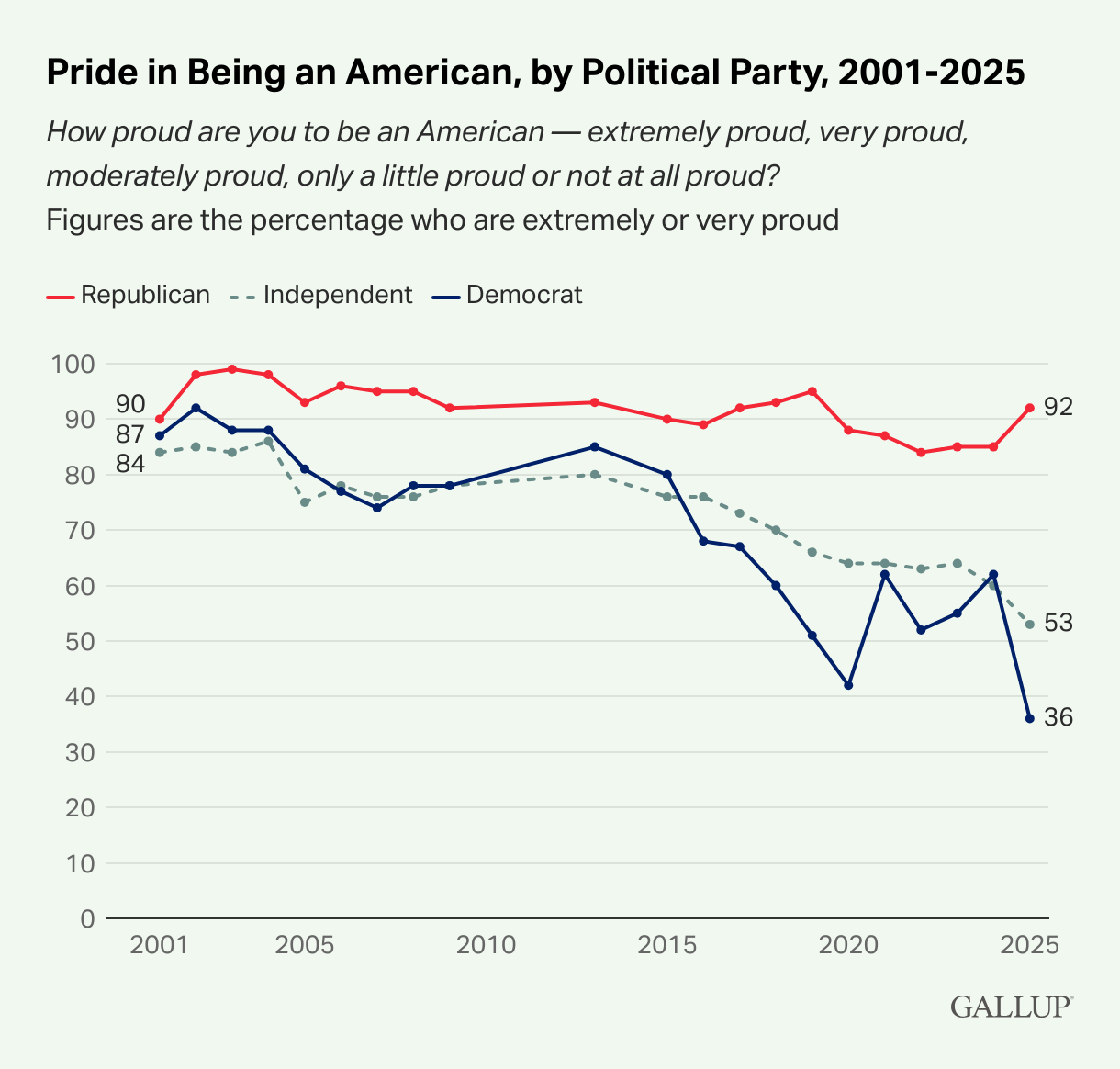
As pride in being an American has fallen, a partisan gap has opened up. The difference between Republicans and Democrats used to be negligible, but has grown to over 50 percentage points.
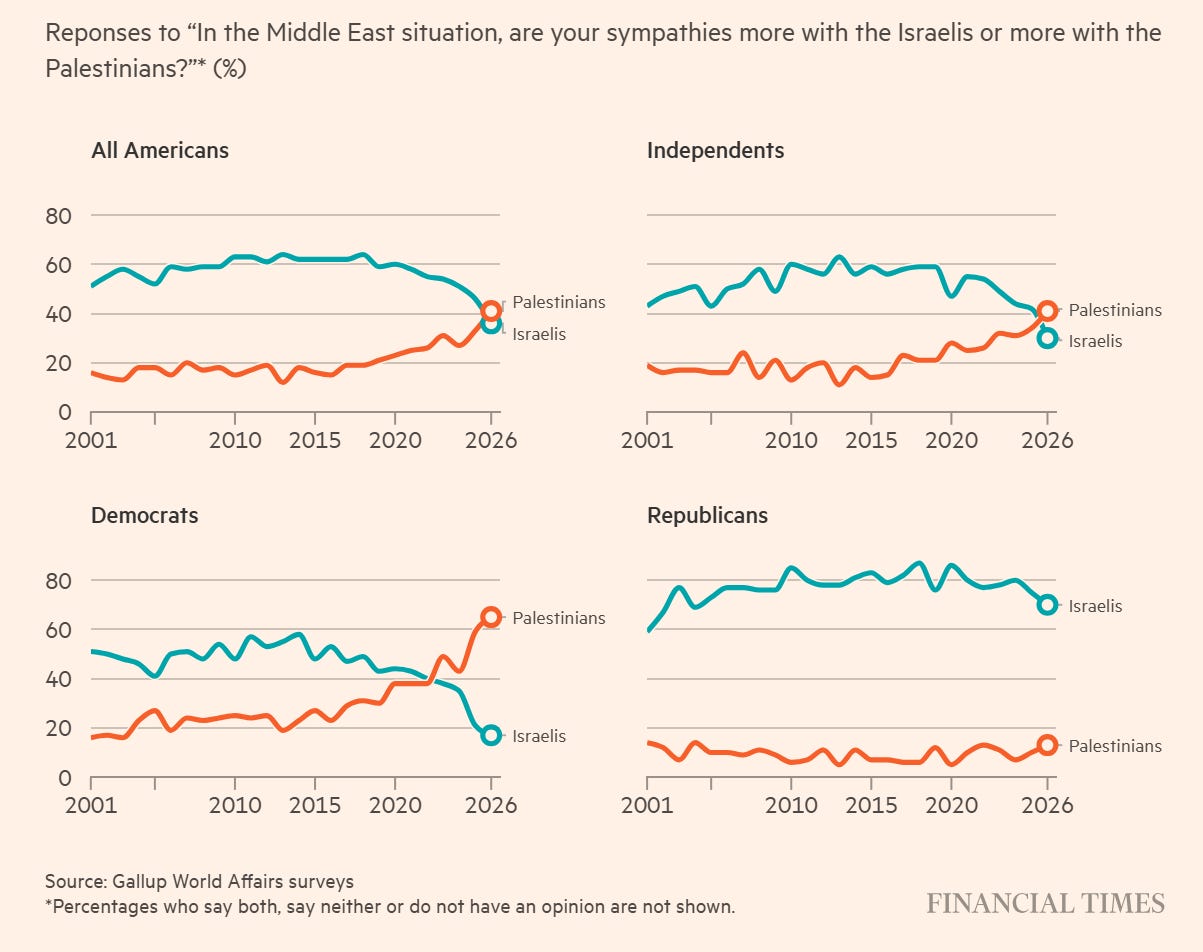
Americans now sympathize more with Palestinians than with Israelis
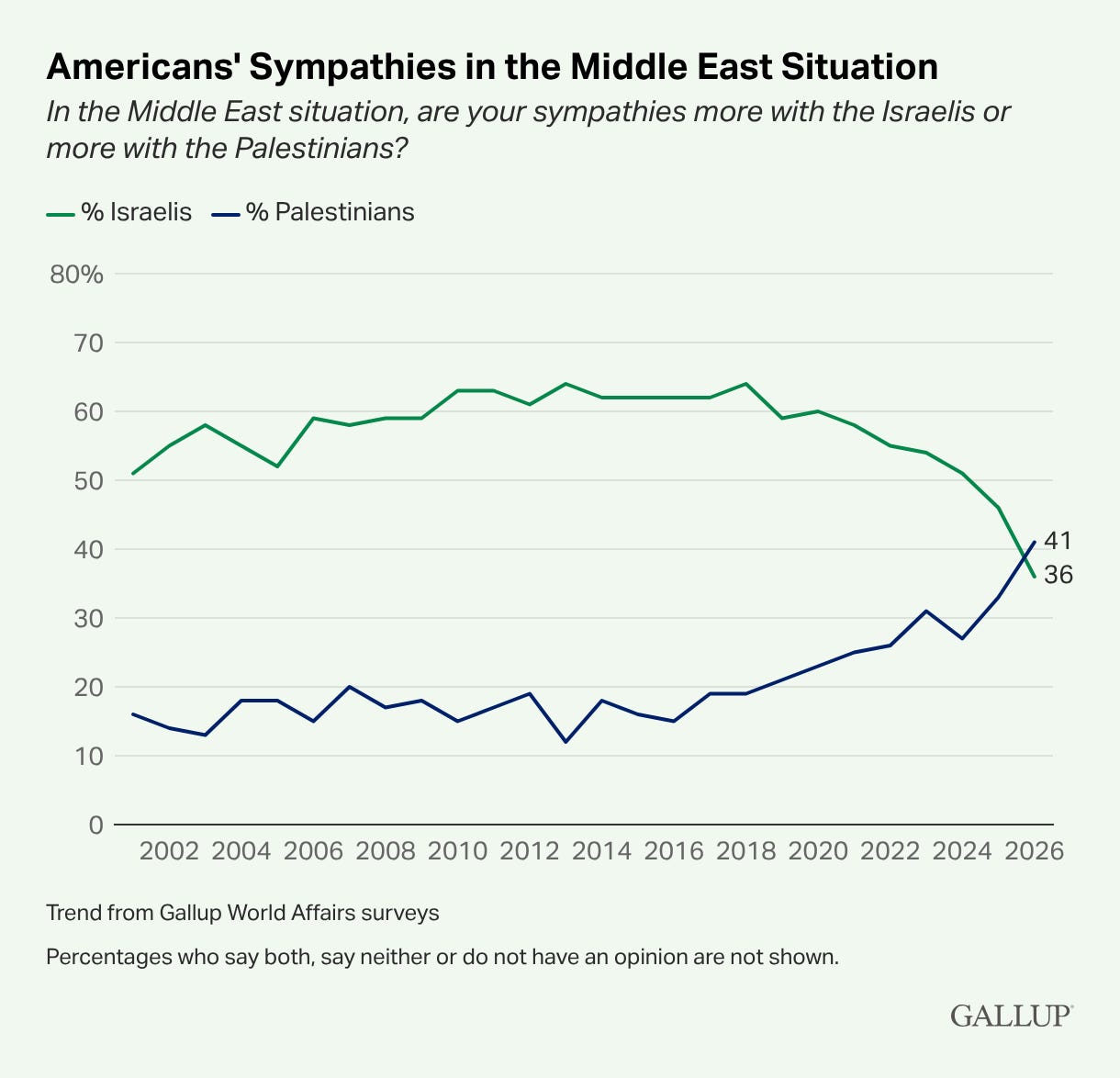
A similar pattern can be found in Americans’ attitudes toward the Israel–Palestine conflict. Until ten years ago, Americans’ sympathies were firmly with the Israelis, but in Gallup’s latest survey, the balance has tipped in the Palestinians’ favor.
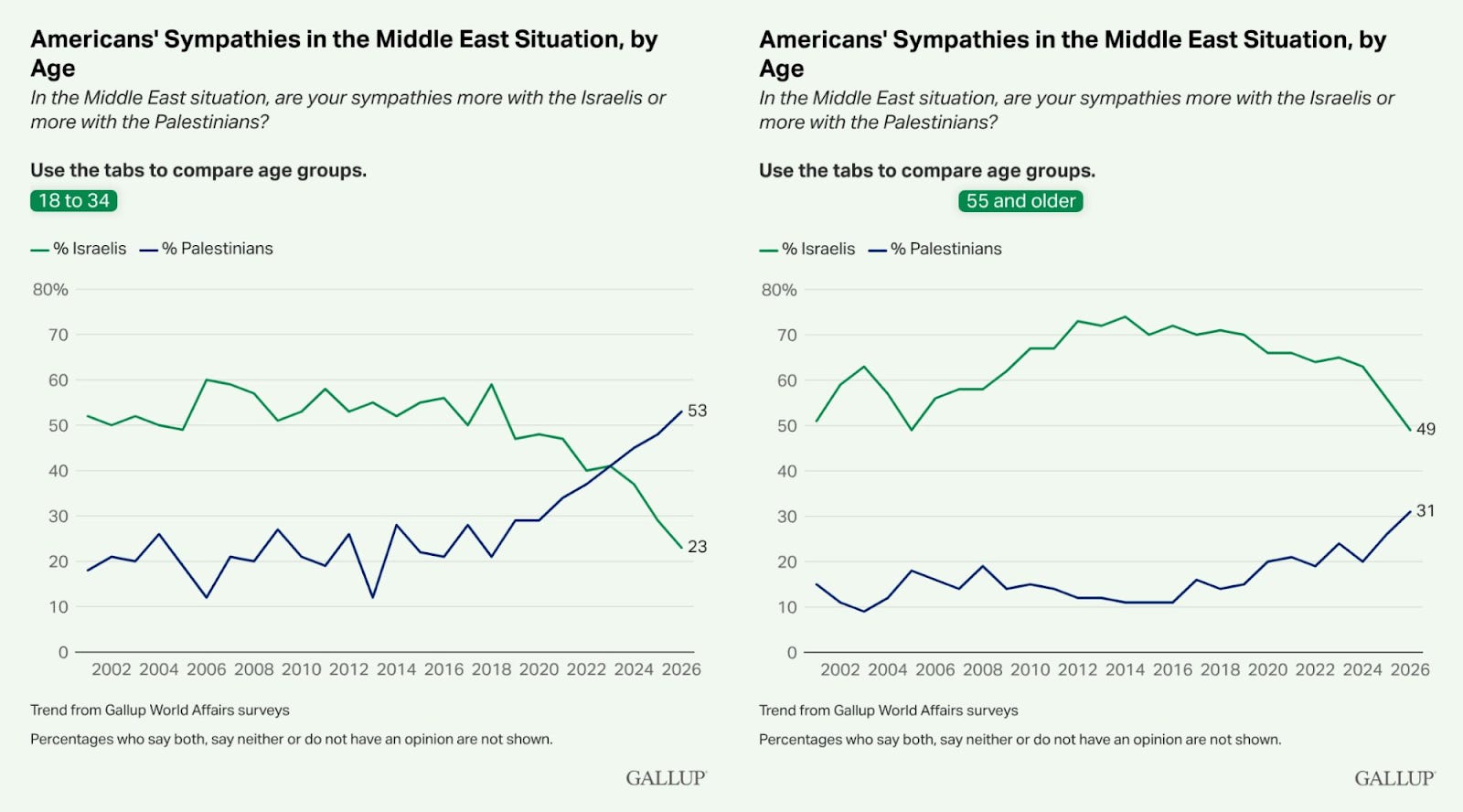
This value shift is also driven by a mix of people changing their minds and generational replacement.
The partisan pattern is another parallel between the Israel–Palestine question and pride in being an American. While Democrats’ and independents’ sympathies have shifted rapidly toward the Palestinians, Republicans’ sympathies haven’t changed.
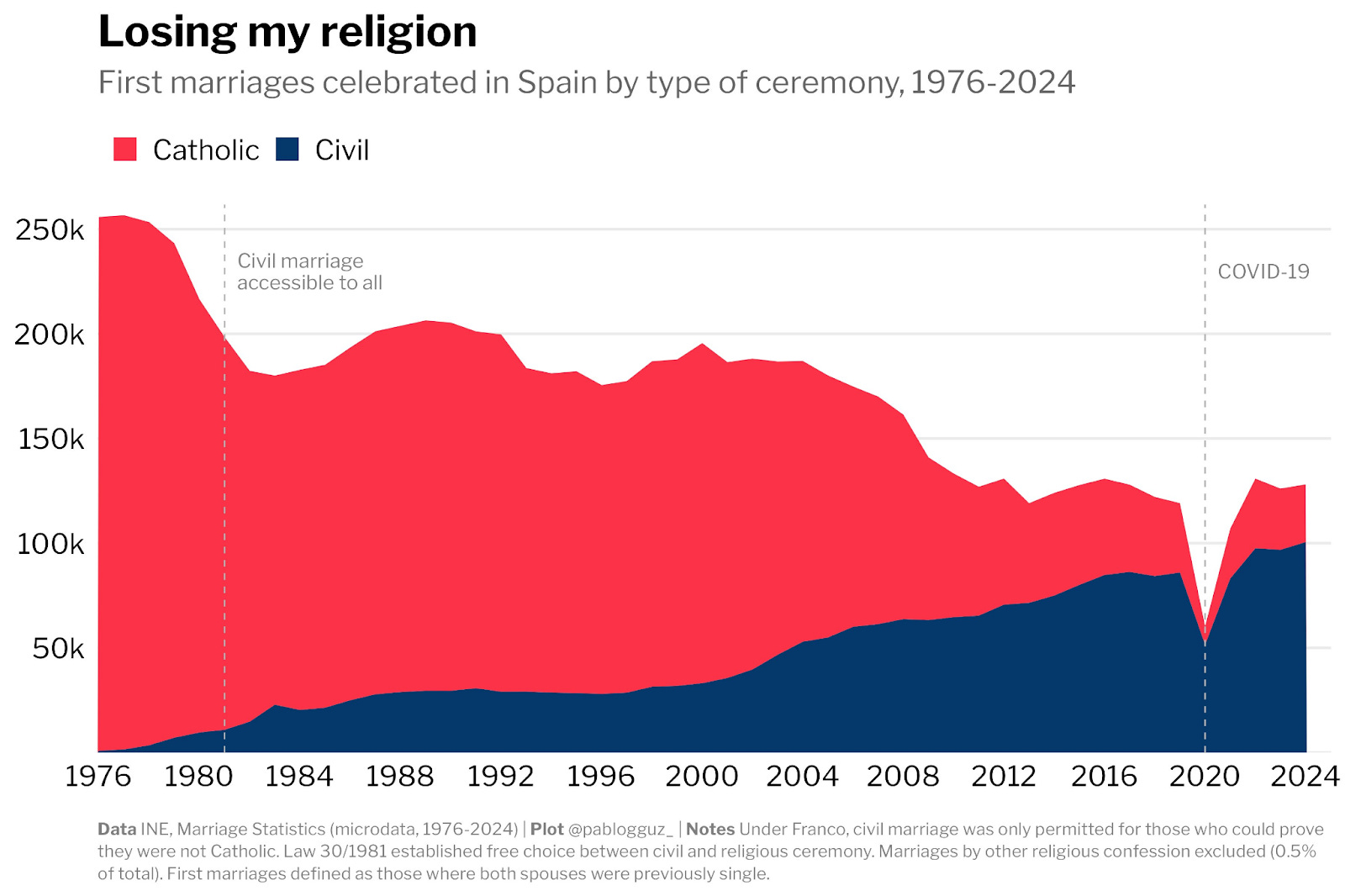
In Spain, Catholic marriages have collapsed
Under the Franco dictatorship, Spain was a deeply Catholic country where you had to prove you weren’t Catholic to have a civil marriage. But in the last 50 years, Spain has secularized rapidly. Today, only one marriage in five is Catholic.
In brief
Saarthak Gupta on why Africa will struggle to grow through manufacturing
Posthumous organ donations have nearly tripled since 2000 in the US
American software engineering job postings show signs of a modest rebound
Young computer science graduates earn a record salary premium over other graduates in the US
Saloni Dattani and Jacob Trefethen on why more people should take statins to lower their cholesterol
Since AI has to wait for clinical outcomes, it can only speed up drug trials so much
Thanks to its nuclear power, France is a major electricity exporter
Lawfare claims the Pentagon’s designation of Anthropic as a supply chain risk won’t hold up in court
If it isn’t, Sentinel estimates a 24 percent chance that the company collapses
That’s all for today. If you like The Update, please subscribe – it’s free.
Regarding marriages in Spain, that data chart does not at all support the claim made.
The chart shows that around 57 percent of new first marriages in Spain today are being launched with Catholic ceremonies and around 43 percent civil. And then based on the data shown by the chart we could estimate that at the moment somewhere around four-fifths of all first marriages currently in place in Spain (those brand-new and those not) were launched with a Catholic ceremony.
How that X poster arrived at "almost 4 in 5 are civil", is a mystery. Perhaps someone explained it in the replies which I can't access.