


Welcome to The Update. In today’s issue:
China’s growing economic sophistication pits it against the G7 countries
In brief: the Works in Progress podcast on Europe’s stagnation, how AI splits the stock market, and more
Technological resentment is not a long-term plan
Should we increase the human lifespan? Should we extend women’s fertility window? Should we automate the jobs we don’t want to do? To a surprising number of people, the answer is no. They argue that life extension is self-centered, that fertility extension crowds out social reform, and that automation is never good for workers.
I think much of their resistance is rooted in status quo bias, as it’s improbable that we’ve just happened to end up in a situation so good it can’t be improved. But I also wonder how the tech skeptics are thinking about the longer term. If current trends continue, these technologies will eventually arrive. Do they wish to stop them indefinitely?
Like capitalism, technological transformation of life is part of the modern condition: what happens by default, given human nature and the structure of society. Given that people are fairly rational and self-interested, it’s hard to avoid capitalism. And given that people can find new knowledge and accumulate it over time, it’s hard to avoid transformational technological progress.
This analogy suggests that tech skeptics have two options. Like the communists who tried to abolish capitalism, they could try to stop technologies like life and fertility extension altogether. That’s unlikely to succeed. It’s more promising to learn from the social democrats – who reformed capitalism from within – and try to shape how technological progress affects society.
People who have qualms about transformational technologies still need to develop a vision of the good life that includes them. The social democrats didn’t just grudgingly tolerate the version of capitalism that they built: they reshaped their values and grew to like it. Don’t grow resentful of the society you live in – come to terms with it and try to shape it.
China expected to close the American lead in AI by 2040
American AI systems such as ChatGPT, Claude, and Gemini are currently ahead of their Chinese competitors by a substantial margin. But will it last? In a survey conducted by the Forecasting Research Institute, experts and superforecasters predicted that by 2040, the best AI systems from China and the US will be on par.
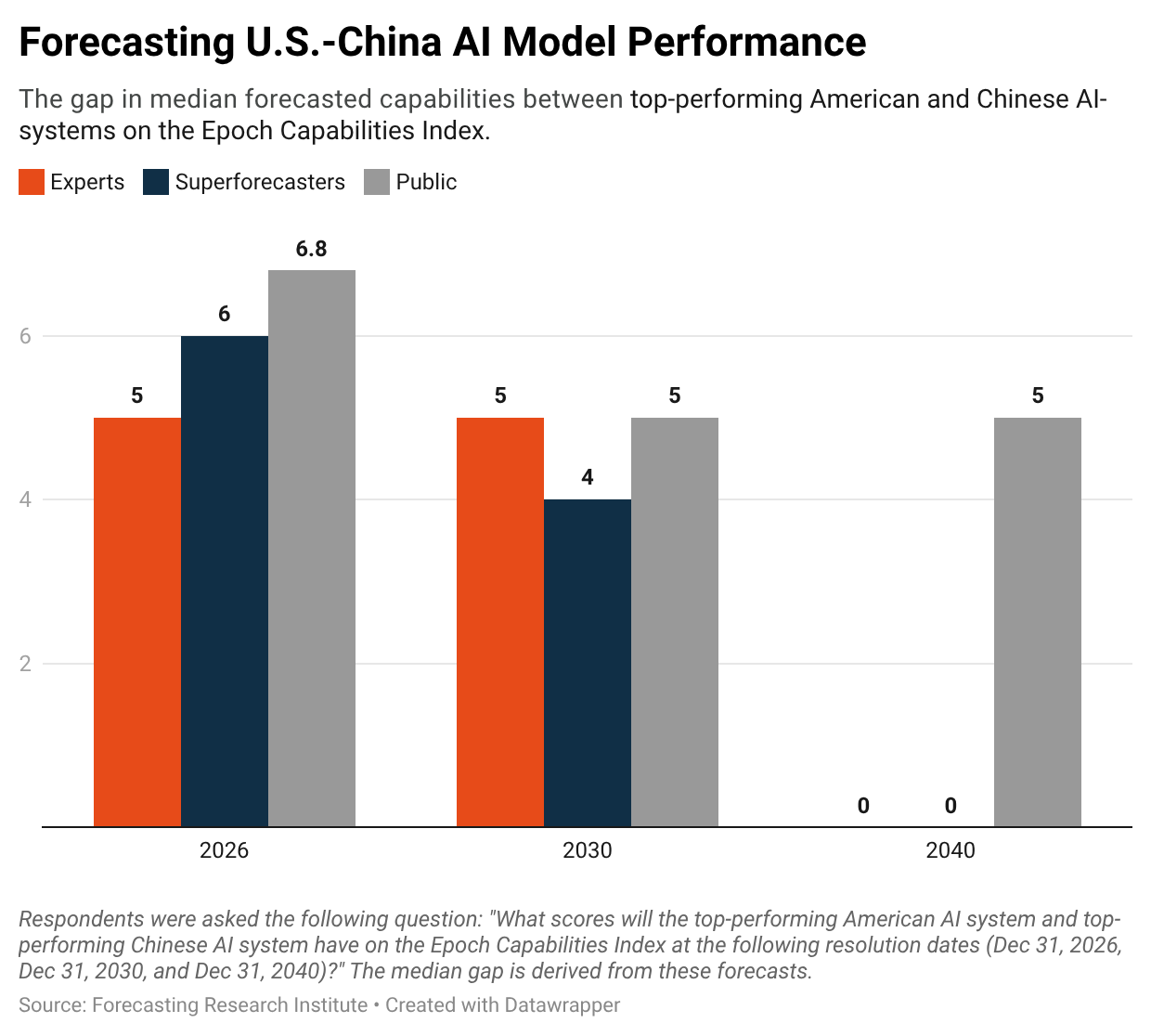
The best Chinese AI systems were nine points behind on the Epoch Capabilities Index in January 2026.
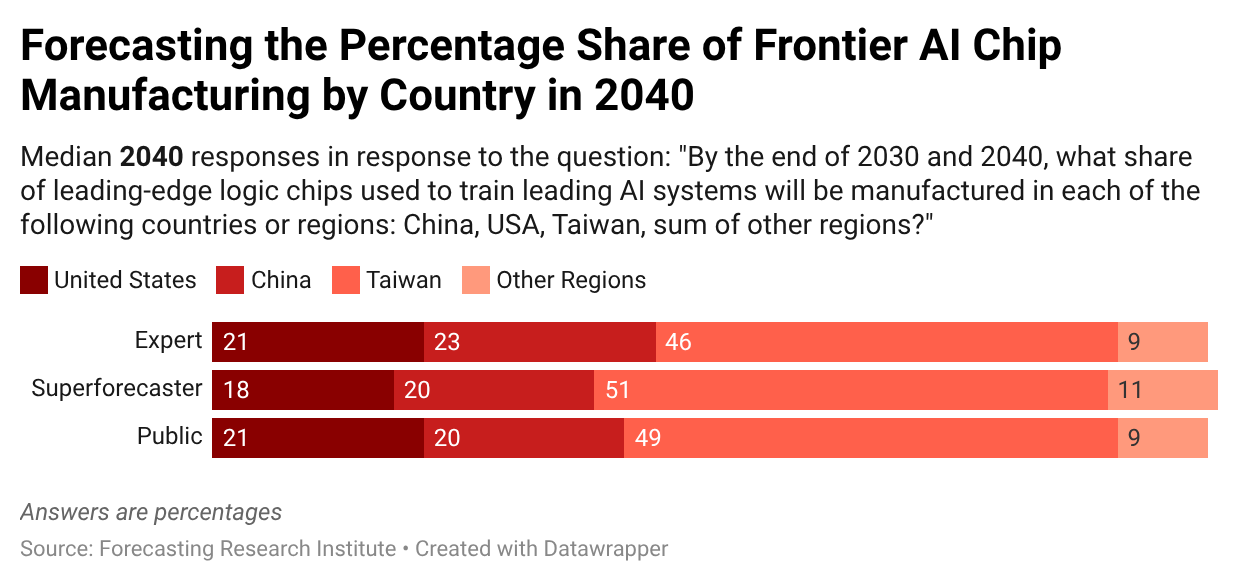
While the US has the best AI systems, more than 90 percent of the best chips for training and running AI are produced in Taiwan. As both China and the US find it strategically important to produce more chips of their own, their market shares are expected to rise. Still, the experts and forecasters predict that Taiwan will retain half the market in 2040.
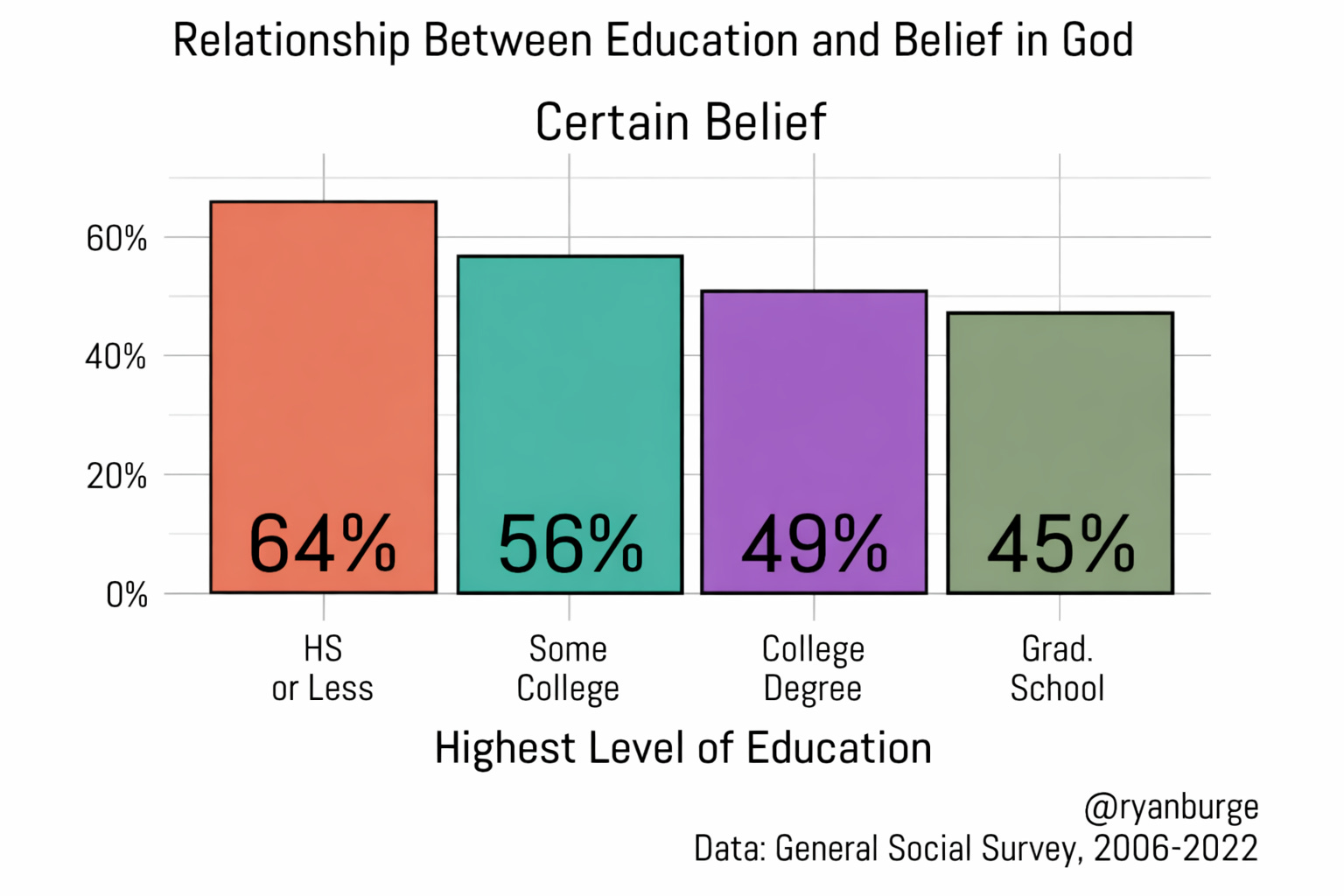
Education splits religious belief and attendance in the US
Americans with low education are more likely to be sure that God exists:
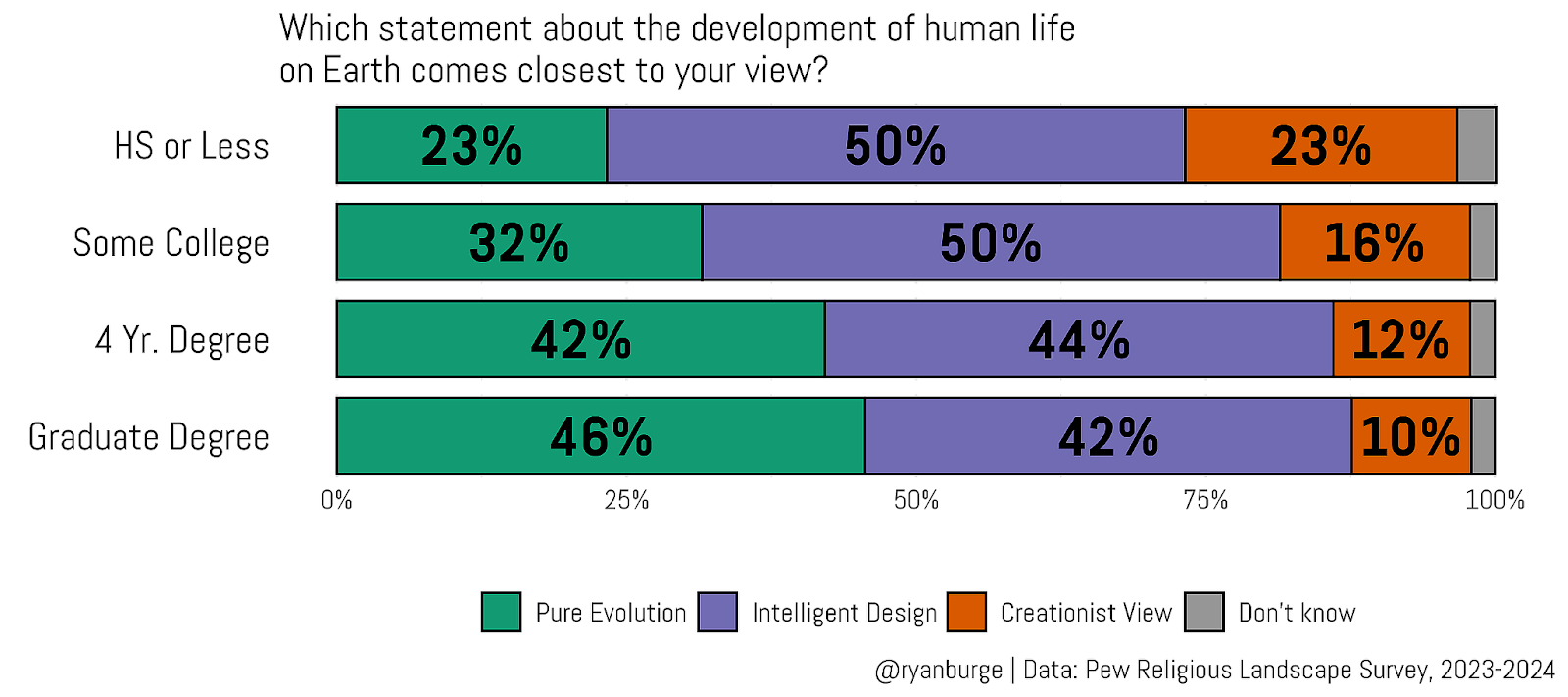
They’re also more likely to believe in creationism:
You might think these beliefs mean that Americans with low education are more likely to attend religious services. But it’s actually the other way around:
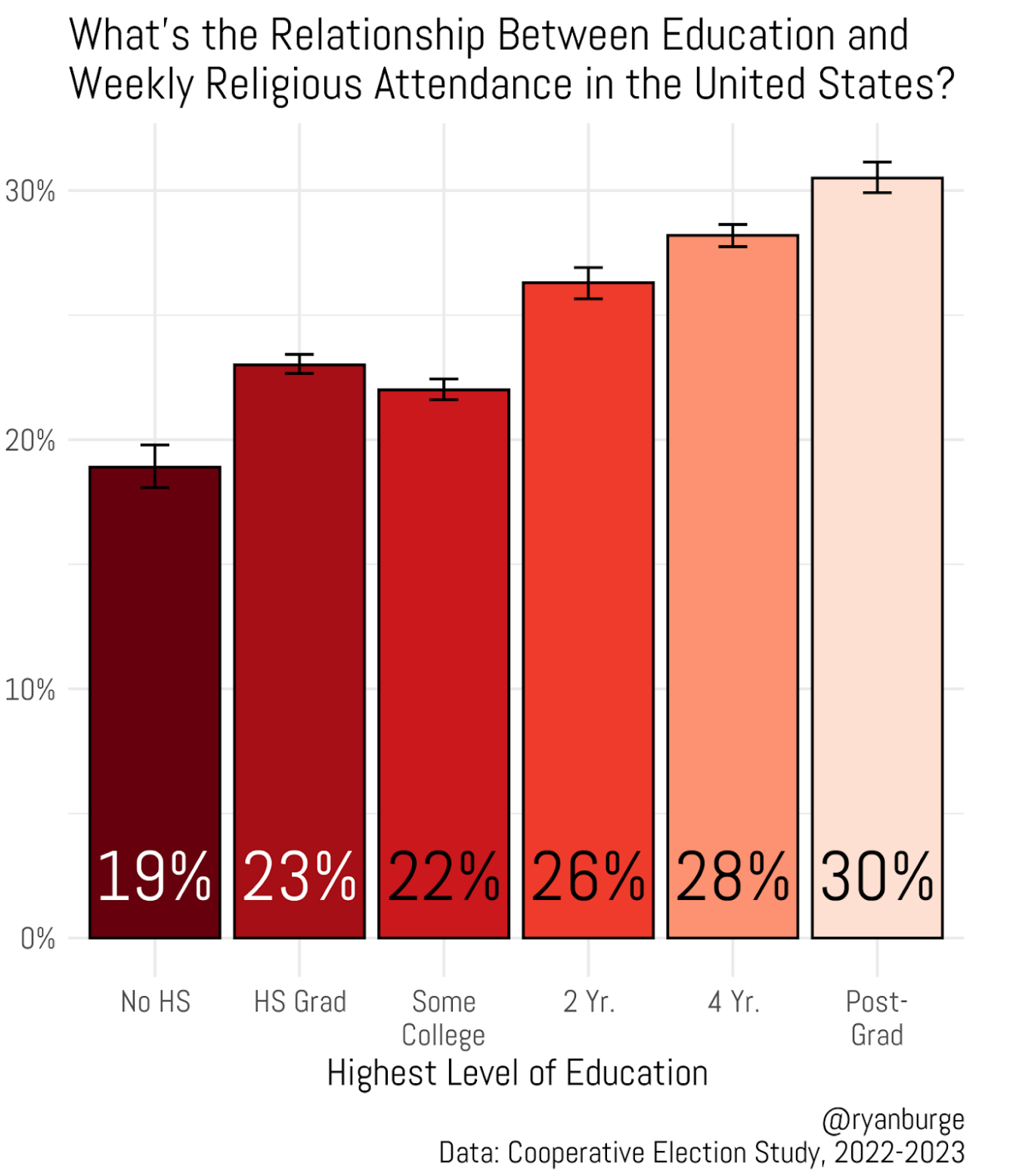
One possibility is that this reflects Americans with low education being less inclined to participate in community institutions in general.
China’s growing economic sophistication pits it against the G7 countries
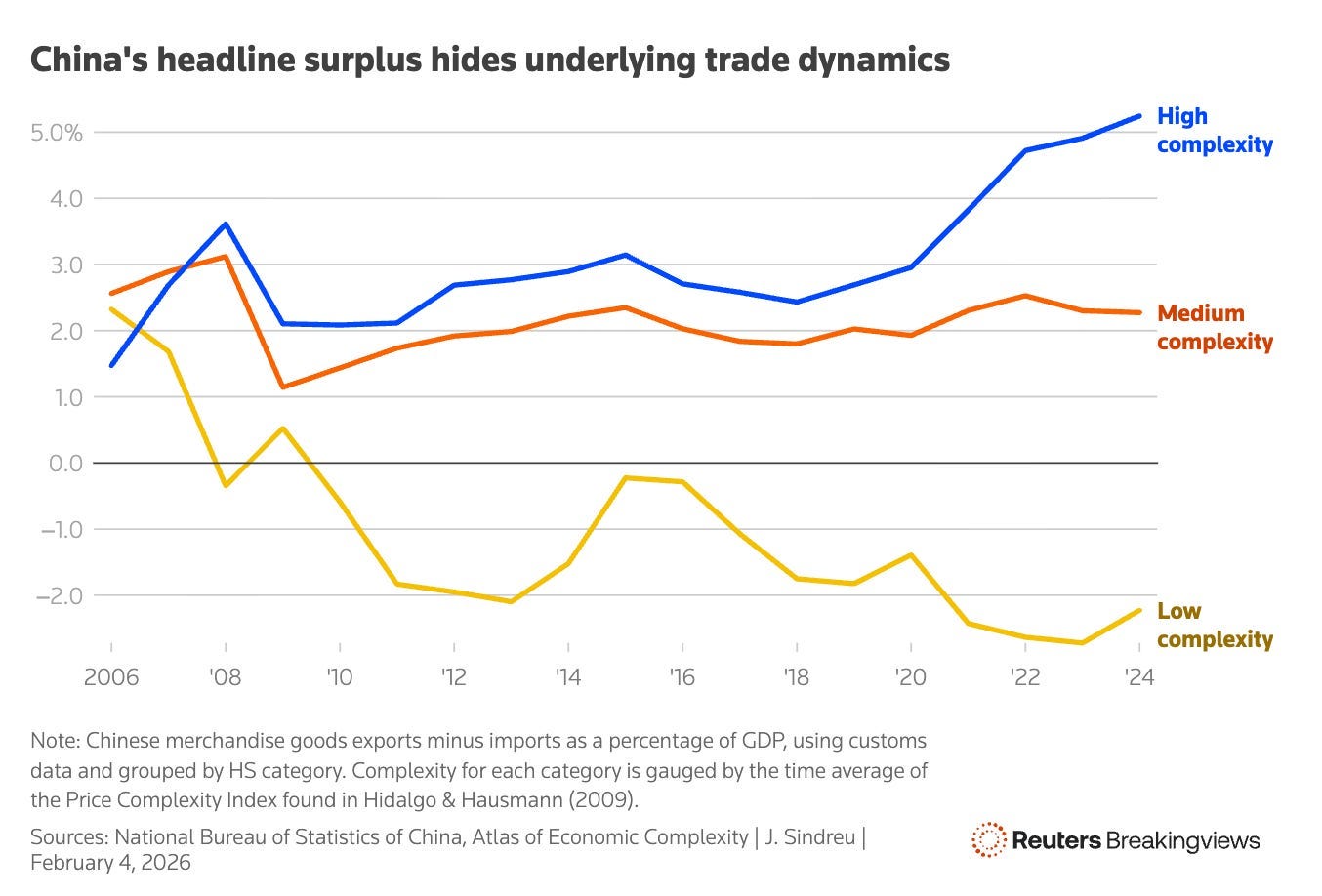
Twenty years ago, China ran a trade surplus in both basic and high-tech goods, from clothes to electronics. But since then, the basic goods balance has swung into deficit, while the high-tech surplus has surged.
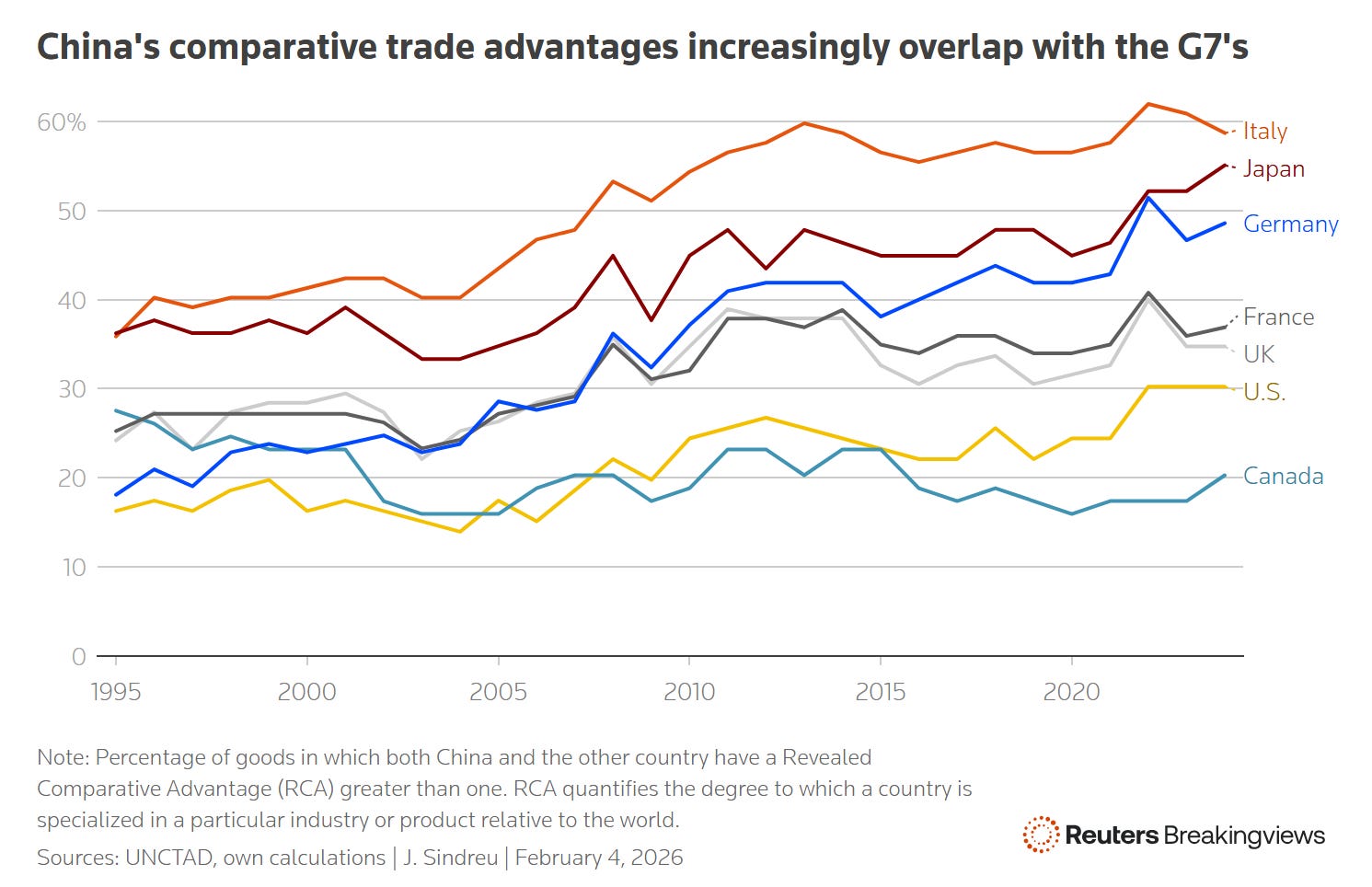
As China’s economy becomes more sophisticated, it increasingly competes with the G7 countries:
In brief:
The Works in Progress podcast on Europe’s stagnation and how to turn it around
Daniel Litt on how AI might be used for mathematics in the years to come
Study finds that AI use makes people work more intensely and for longer hours
Alan Cole wins $128,000 betting that Musk’s DOGE would fail to reduce federal spending
That’s all for today. If you like The Update, please subscribe – it’s free.
Great!
Thanks, enjoying these updates! But commenting because of a pet peeve of mine, which is reporting long time-horizon “Superforecaster” and/or “expert” predictions as if they are useful or interesting. There’s no reason to expect Superforecasters or experts to have any predictive ability for uncertain events in 2040!