


Welcome to The Update. In today’s issue:
London housebuilding lowest in the rich world
It’s looking increasingly unlikely that the British Labour government will reach its goal of 1.5 million new homes over five years. In London, housebuilding has collapsed to an extent not seen in other major cities in the developed world.
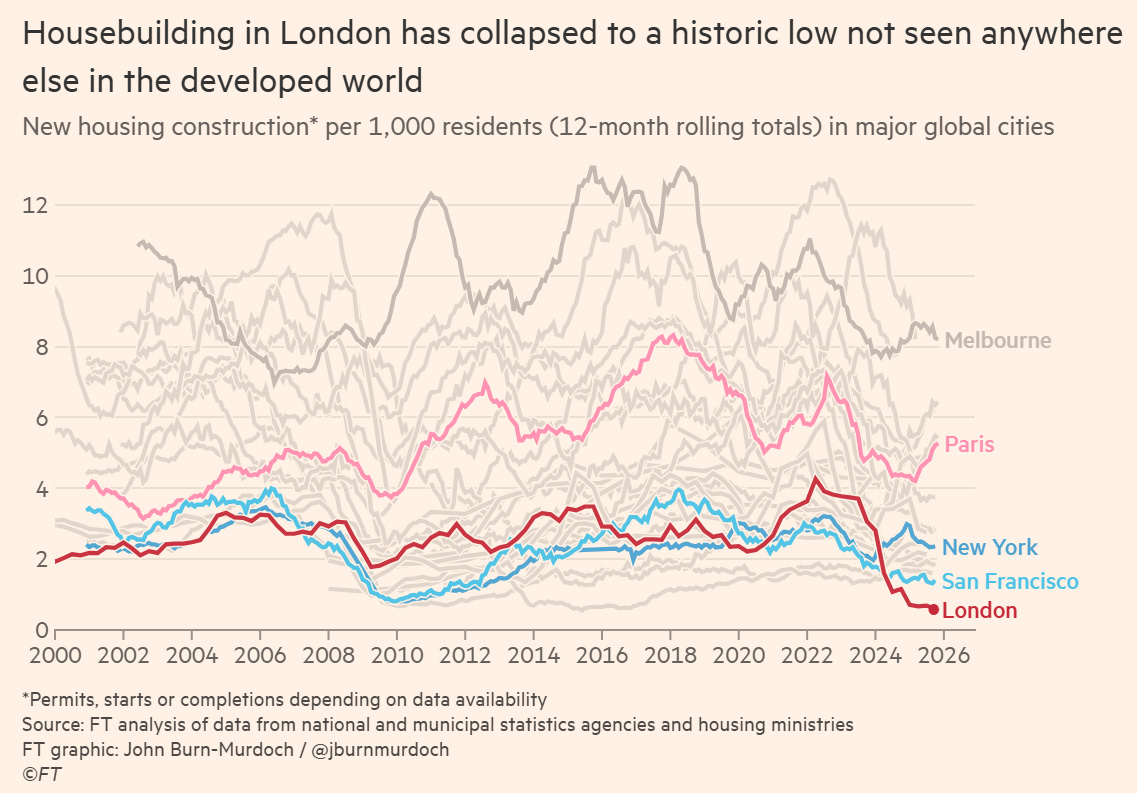
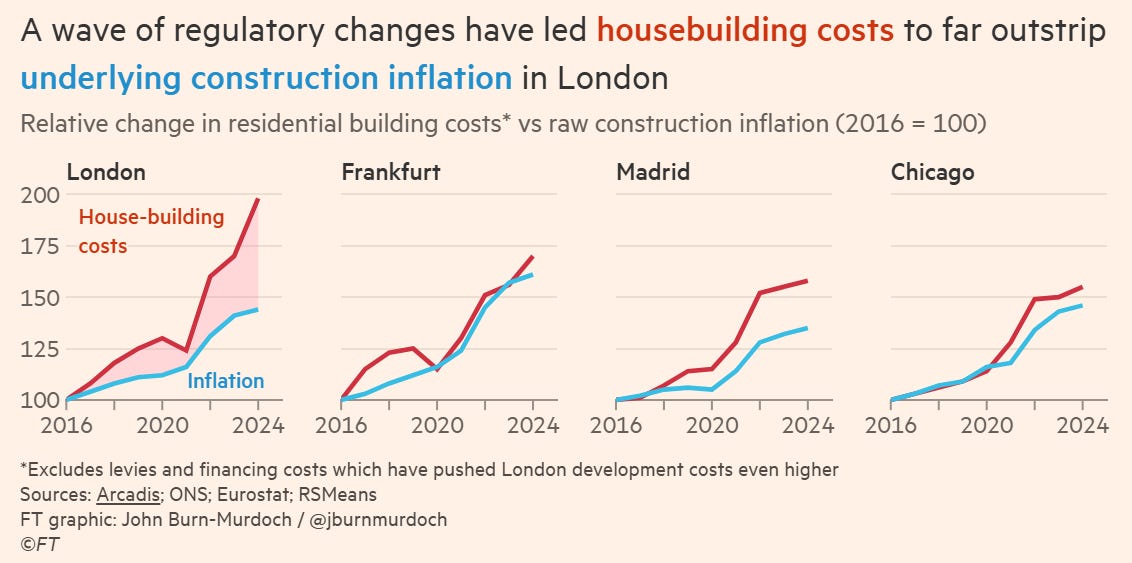
As John Burn-Murdoch writes, regulations for safety and the environment have led to spiraling building costs.
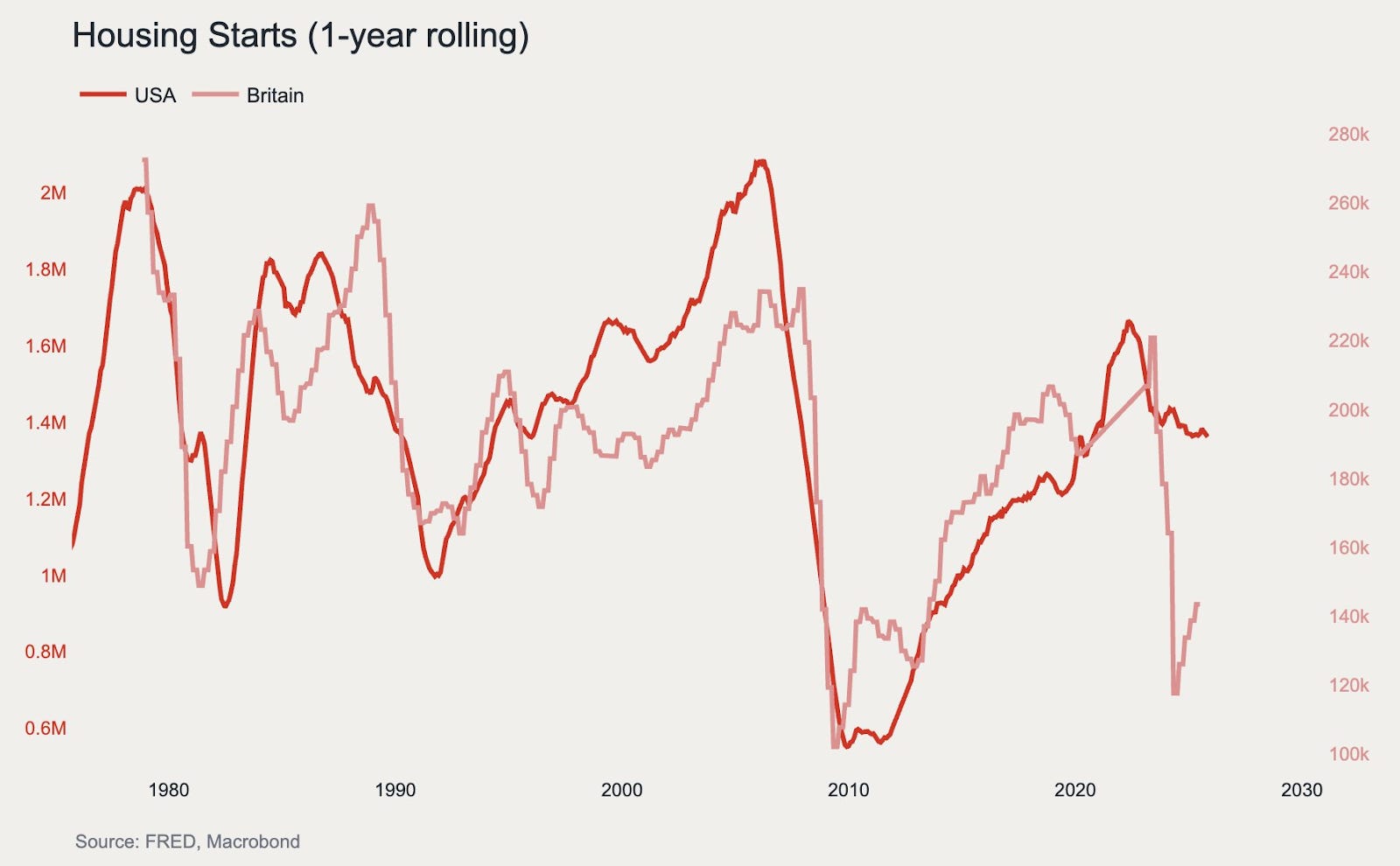
British and American housebuilding rates have been remarkably correlated over the years, but recently, they’ve diverged to Britain’s disadvantage:
I don’t doubt that the government wants to build more, but they lack a sense of urgency. 1.5 million new homes require tough tradeoffs, and in British politics, there’s a widespread unwillingness to make them.
Weight loss drugs reduce sugar prices
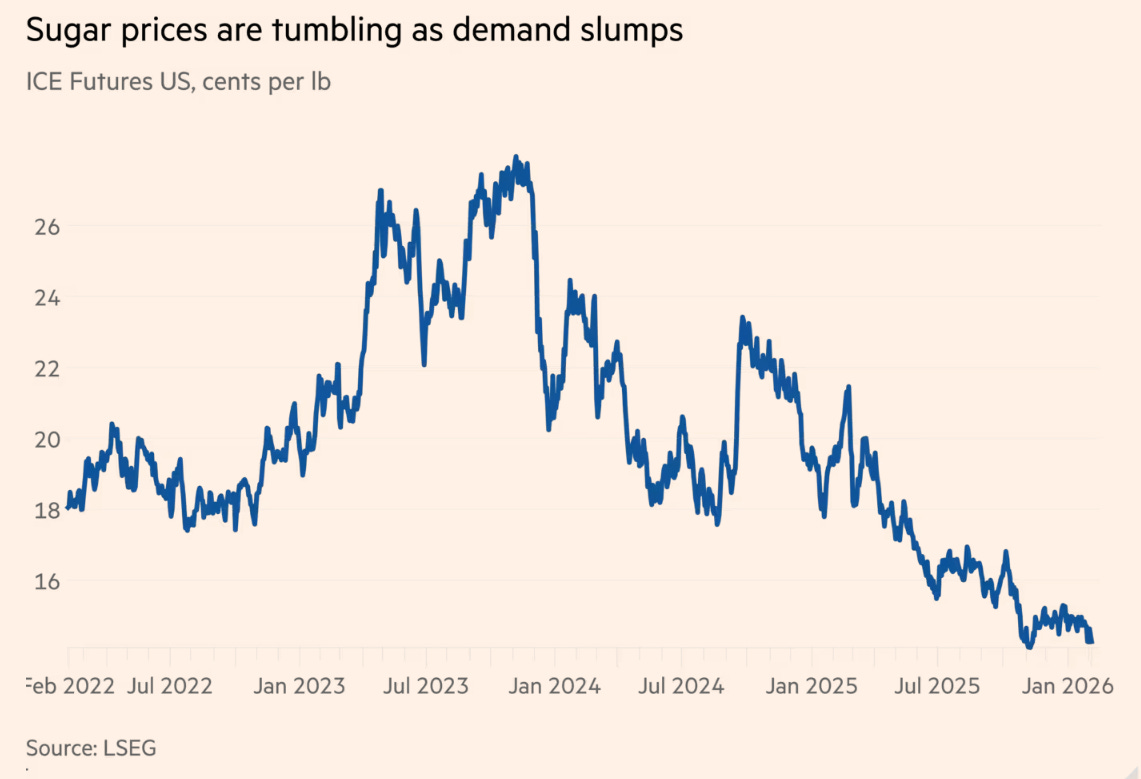
The growing use of GLP-1 weight loss drugs is driving down sugar prices, according to the Financial Times. This is exacerbated by the fact that sugar consumption is highly uneven. As analyst Stephen Geldart puts it: ‘The top-20 per cent of consumers account for around 65 per cent of sales of products like cookies and ice cream. If those “super users” end up on GLP-1 drugs, you get a non-linear reduction in sales.’
Latin America is getting less religious
Since around 1970, many Latin Americans have left Catholicism for Pentecostalism or other forms of Protestantism. But a recent Pew survey suggests that something has changed. Though the Catholic Church is still losing members, most of them are no longer leaving for other churches. Instead, growing numbers of Latin Americans are religiously unaffiliated. Over the last decade, their share of the population has roughly doubled in Brazil.
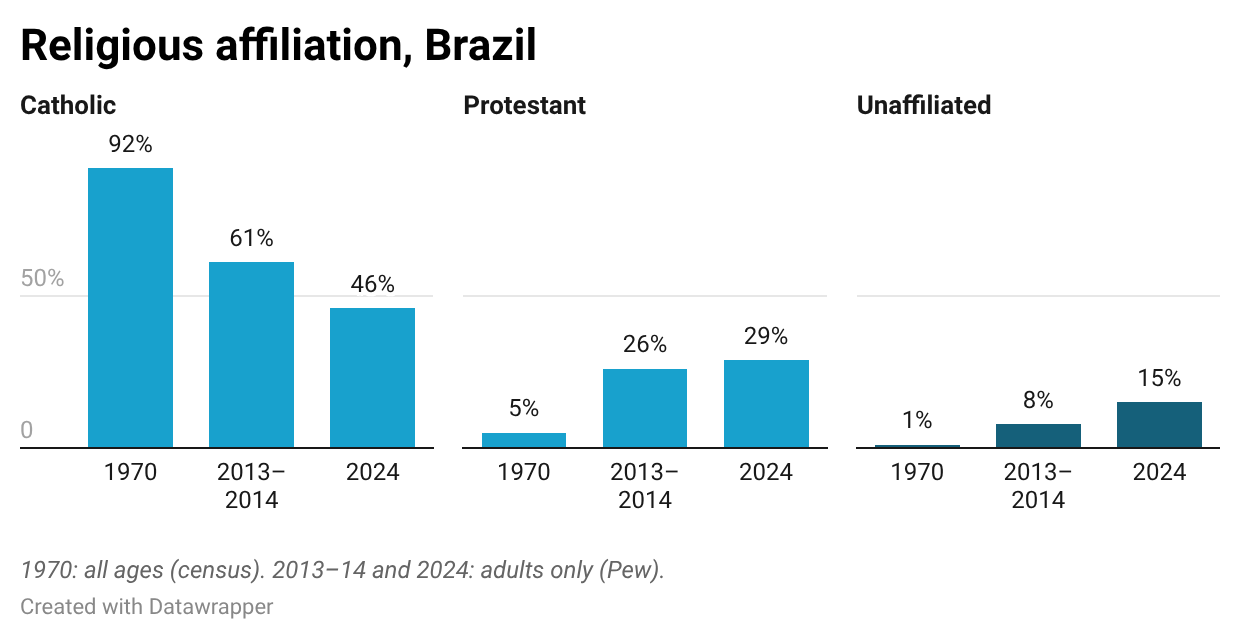
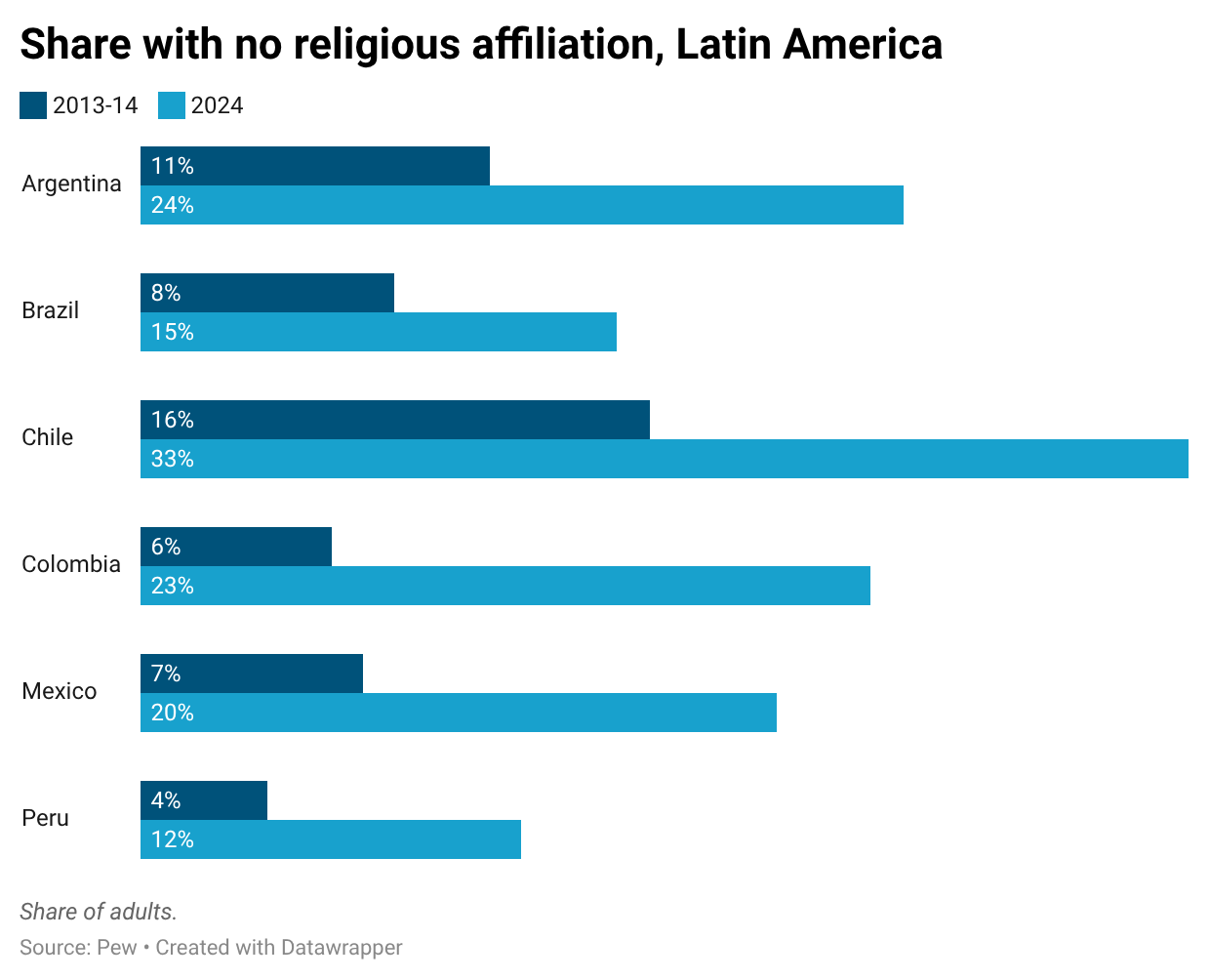
Argentina and Chile have also seen the share of people without a religious affiliation double. In Mexico and Peru, it has tripled; and in Colombia, quadrupled.
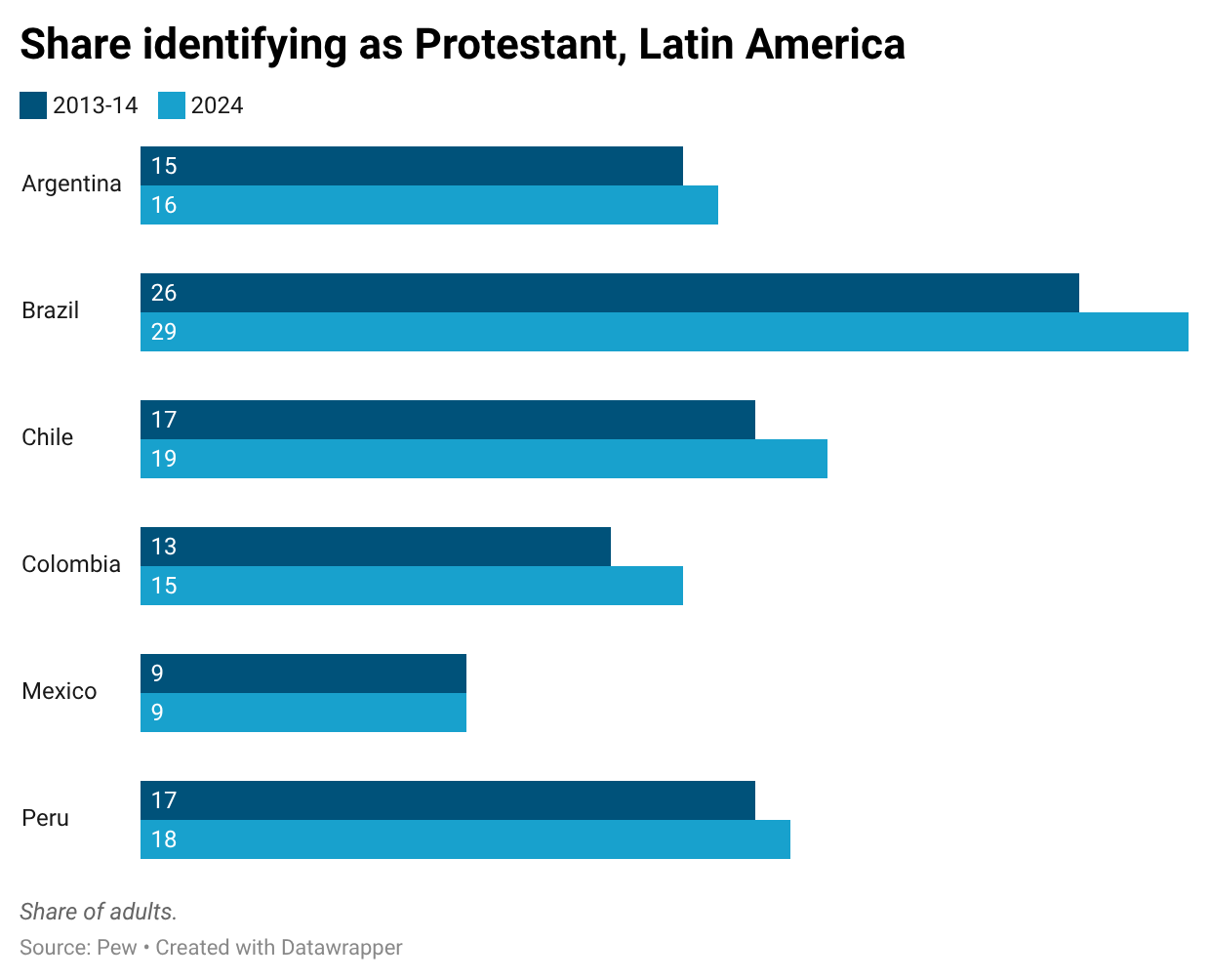
In all these countries, the share of Protestants has only grown slightly since 2013–2014.
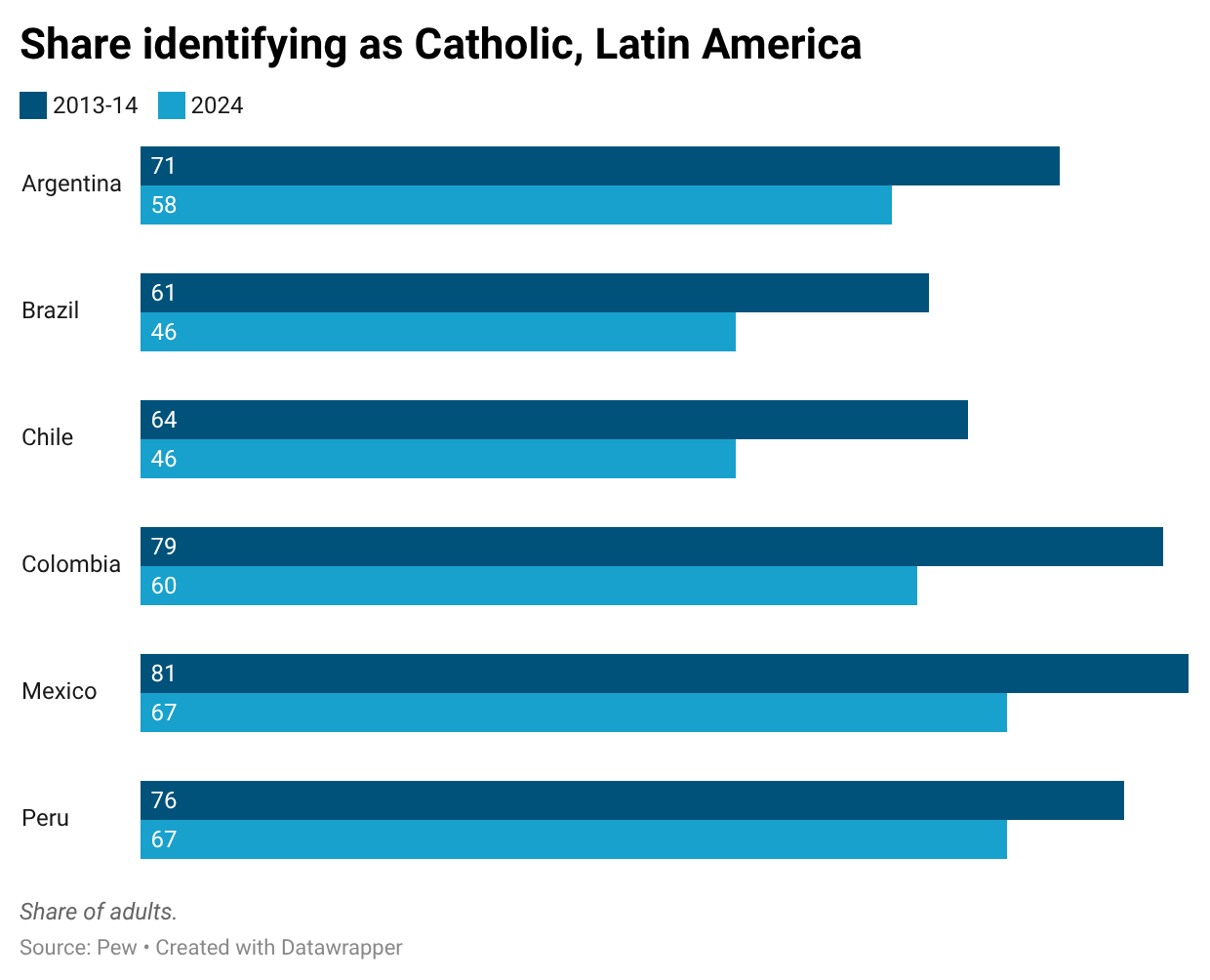
Catholics are still the majority of Latin Americans, but as their share has fallen by around one to two percentage points per year, that may not be true much longer.
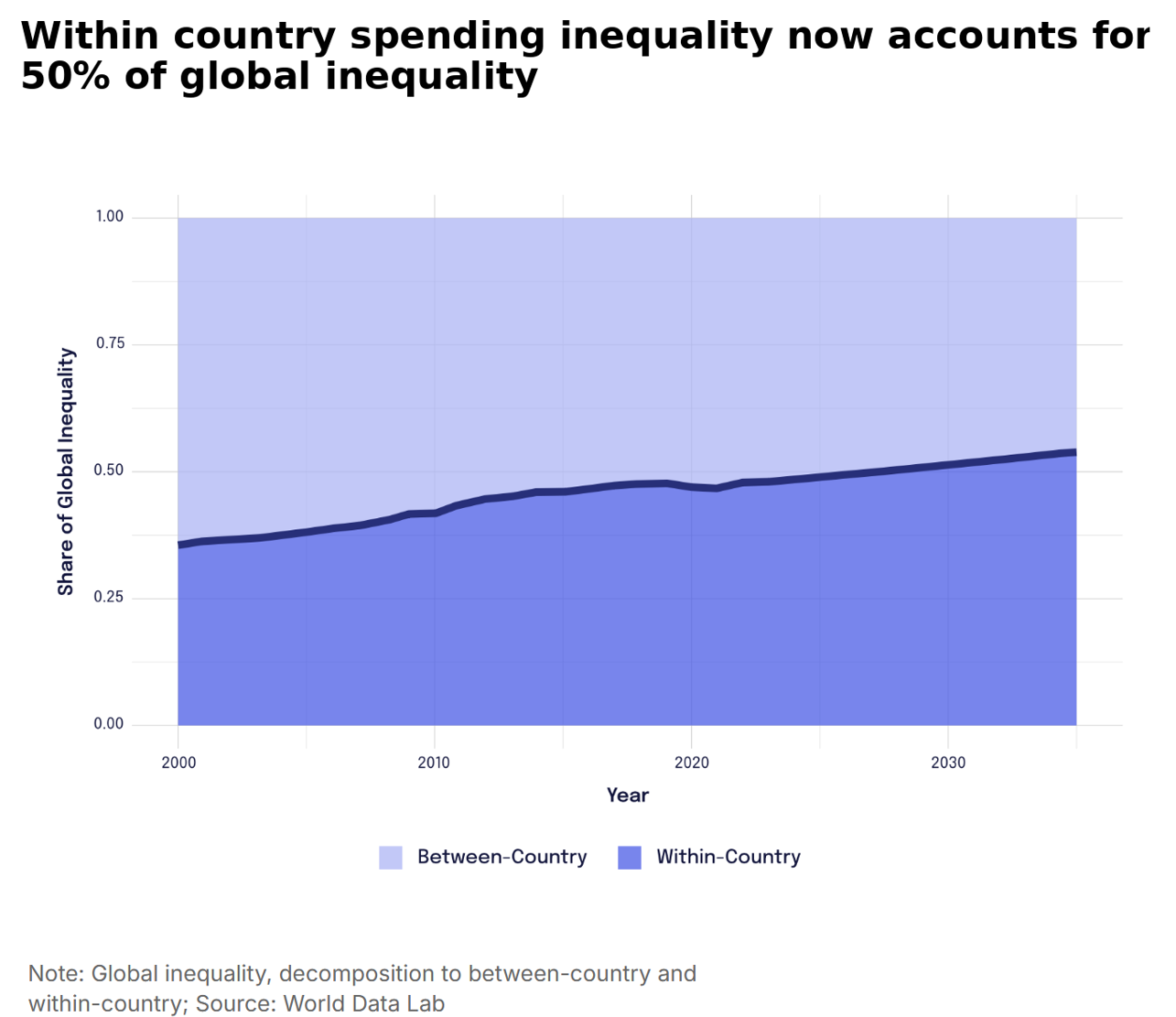
Half of global inequality is now within countries
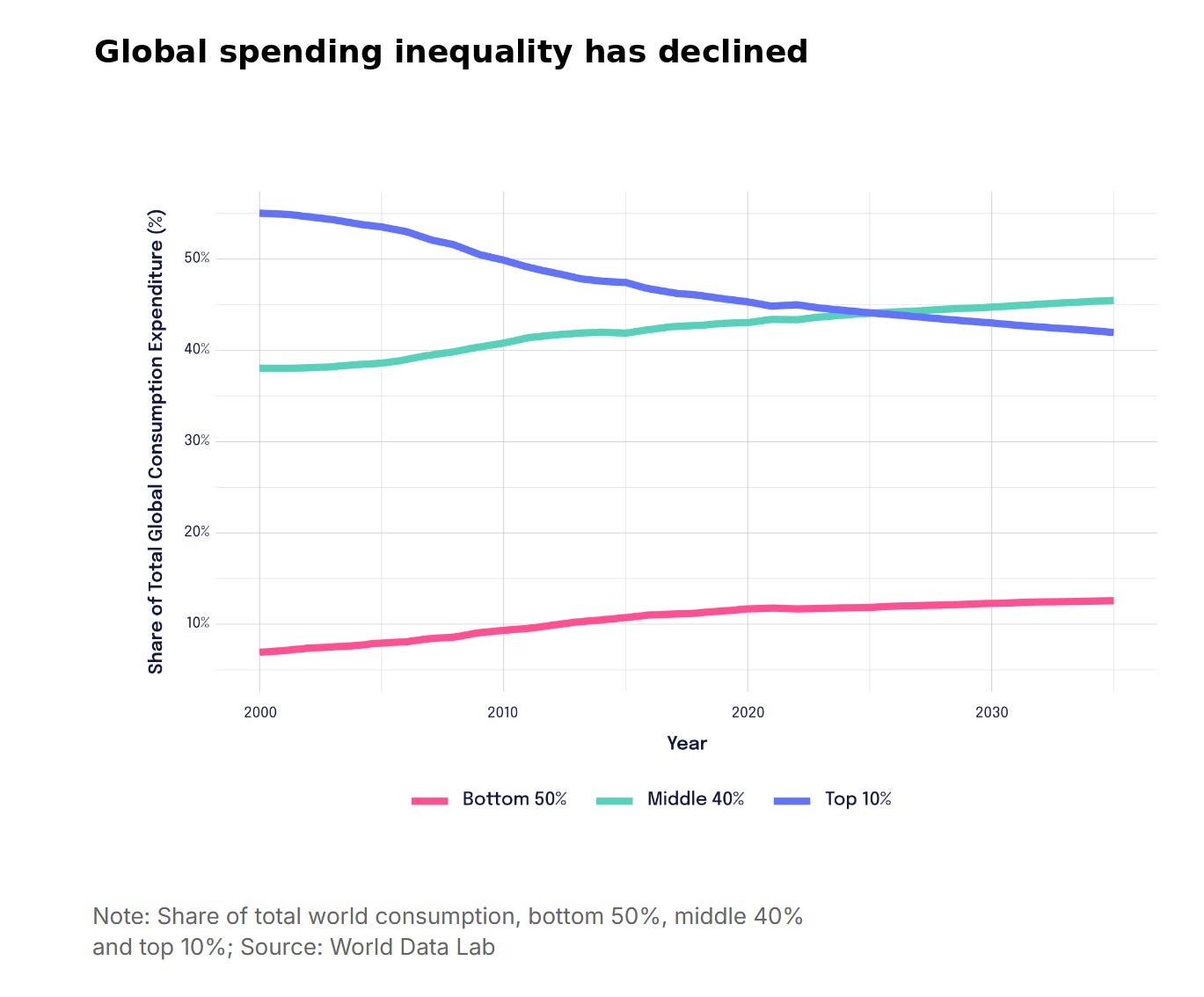
Since 2000, global spending has become less unequal, as the bottom half of the world’s population has almost doubled its share.
Adapted from Brookings.
This is driven by falling inequality between countries, as poorer countries have grown faster than richer ones (though as I’ve reported, this trend has recently slowed down). Inequality trends within countries are more mixed: for instance, the richest ten percent of Americans have increased their share of spending since 2000, whereas the opposite is true in India. As a result, inequality within countries is now as large as inequality between them.
Adapted from Brookings.
How Swedish tax reforms have driven startup growth
In recent years, American startups have left Europe far behind. What could European governments do to close the gap? Luis Garicano and Per Strömberg advise them to look at Sweden, which ranks fourth in the world for unicorns (tech startups worth more than one billion dollars) per capita. In their view, Sweden did not achieve this through subsidies or government investments, which some people advocate. Instead, an important driver has been tax reform, including letting companies that sell their startup shares postpone capital gains taxes if they reinvest in other unlisted companies. Over the years, this has created a thriving startup culture where successful founders become serial entrepreneurs or support the next generation of companies.

A bold AI prediction so far looks too bold
In April last year, former OpenAI researcher Daniel Kokotajlo and four coauthors published AI 2027, a hotly debated scenario where AI reaches superhuman levels within only a few years. Personally, I found their timelines too aggressive, but I commend their willingness to specify their views in falsifiable detail. Daniel and coauthor Eli Lifland have just evaluated their first set of predictions, finding that they overestimated AI progress on coding test scores and other quantitative metrics in 2025. They now expect slightly slower progress in the coming years than previously.
But there was a notable exception: OpenAI revenue. Though AI 2027 did better than other forecasters on this type of metric, it was still somewhat too conservative. It’s an interesting pattern: as I’ve argued before, we may intuitively overestimate how much impact AI needs to have for leading companies to generate enormous revenue.
The comeback of San Francisco
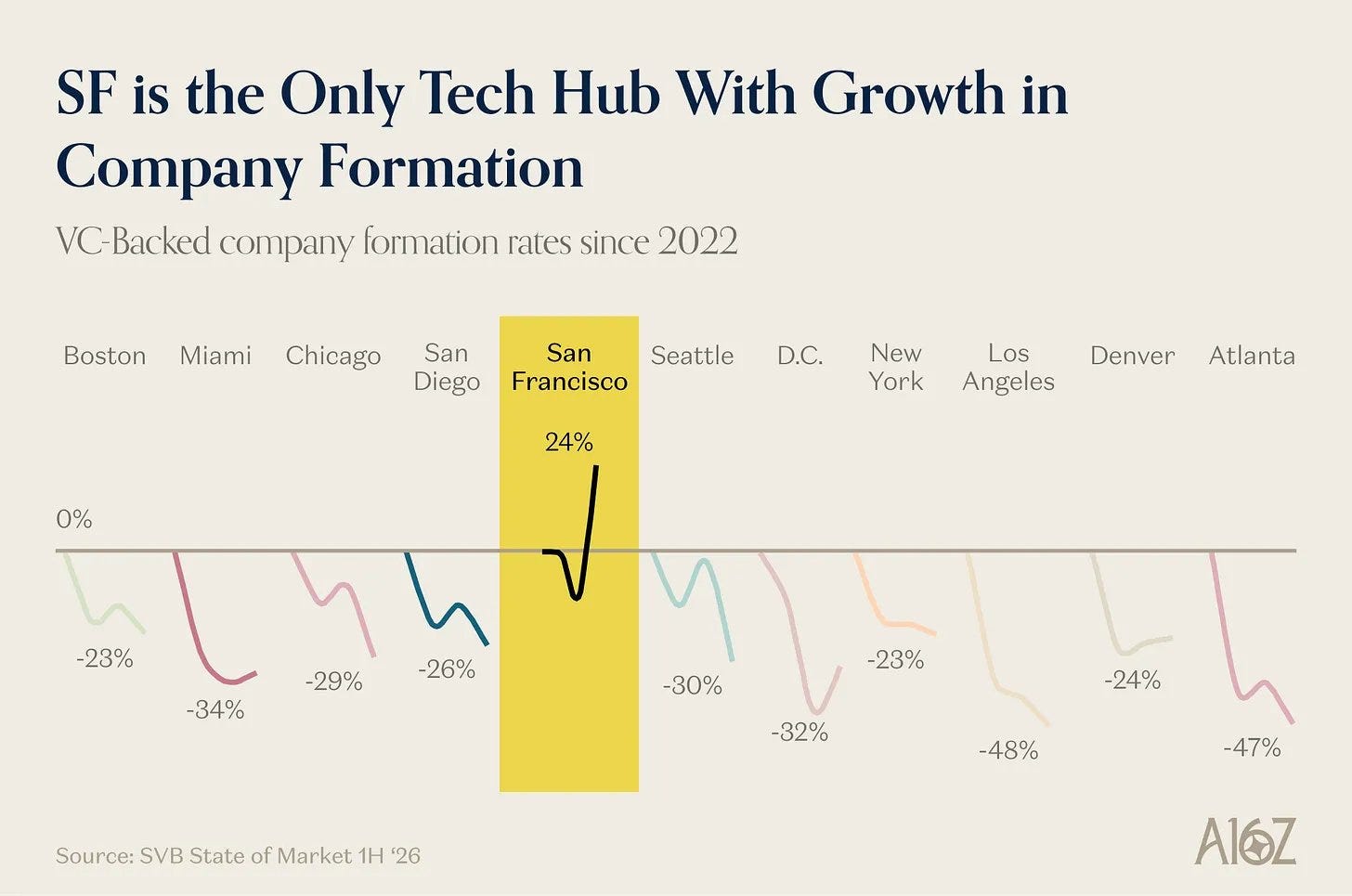
A few years ago, many tech people were talking about leaving the San Francisco Bay Area for cities with lower taxes and housing costs, like Miami. But since then, the number of companies backed by venture capitalists has grown markedly in San Francisco, while it’s fallen in every other major American tech hub. San Francisco has its problems, but benefits from the AI boom and what economists call agglomeration effects: proximity to others in the same field. It’s hard to dethrone the top hub.
In brief
Americans bear almost 90 percent of tariff costs, says New York Fed study
The case for grouping LLMs with automated cotton spinning, not space travel
After decolonization, people hoped for faster growth than we’ve actually seen
Why we often can’t tell if change stems from aging, generational shifts, or the era itself
Why didn’t the ancient Greeks invent Dungeons and Dragons?
An idea behind its time? Anton Howes has some thoughtful reflections
That’s all for today. If you like The Update, please subscribe – it’s free.