


Welcome to The Update. I’m experimenting with the format to maximize the signal.
In today’s issue:
The centuries-long shift to better jobs continues in the age of AI
While AI hasn’t replaced radiologists, it is improving cancer detection
Mandatory retirement of professors should be about contribution
Americans are moving from Democratic states to Republican states
Cuba has only 15–20 days of oil left after Venezuelan and Mexican imports dry up
Big Mac prices suggest that Asian currencies are undervalued
Wind and solar now produce more electricity than fossil fuels in the EU
Just the links: how to find a husband, almost no replies on Moltbook, and more
The centuries-long shift to better jobs continues in the age of AI
The period since the Industrial Revolution has seen a steady improvement in the quality of jobs. Not only have workers moved from agriculture to manufacturing to services – typically to better pay and less strenuous work – they have also upgraded within these sectors. For instance, secretary jobs have shrunk as a share of service employment in recent years, while consulting jobs have expanded.
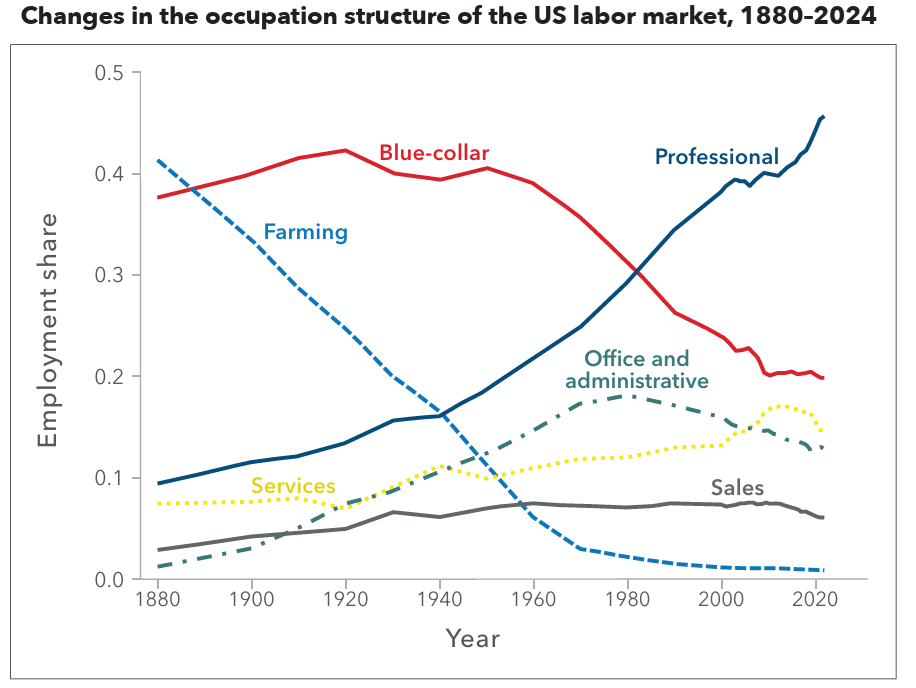
Source: ‘Technological Disruption in the US Labor Market’
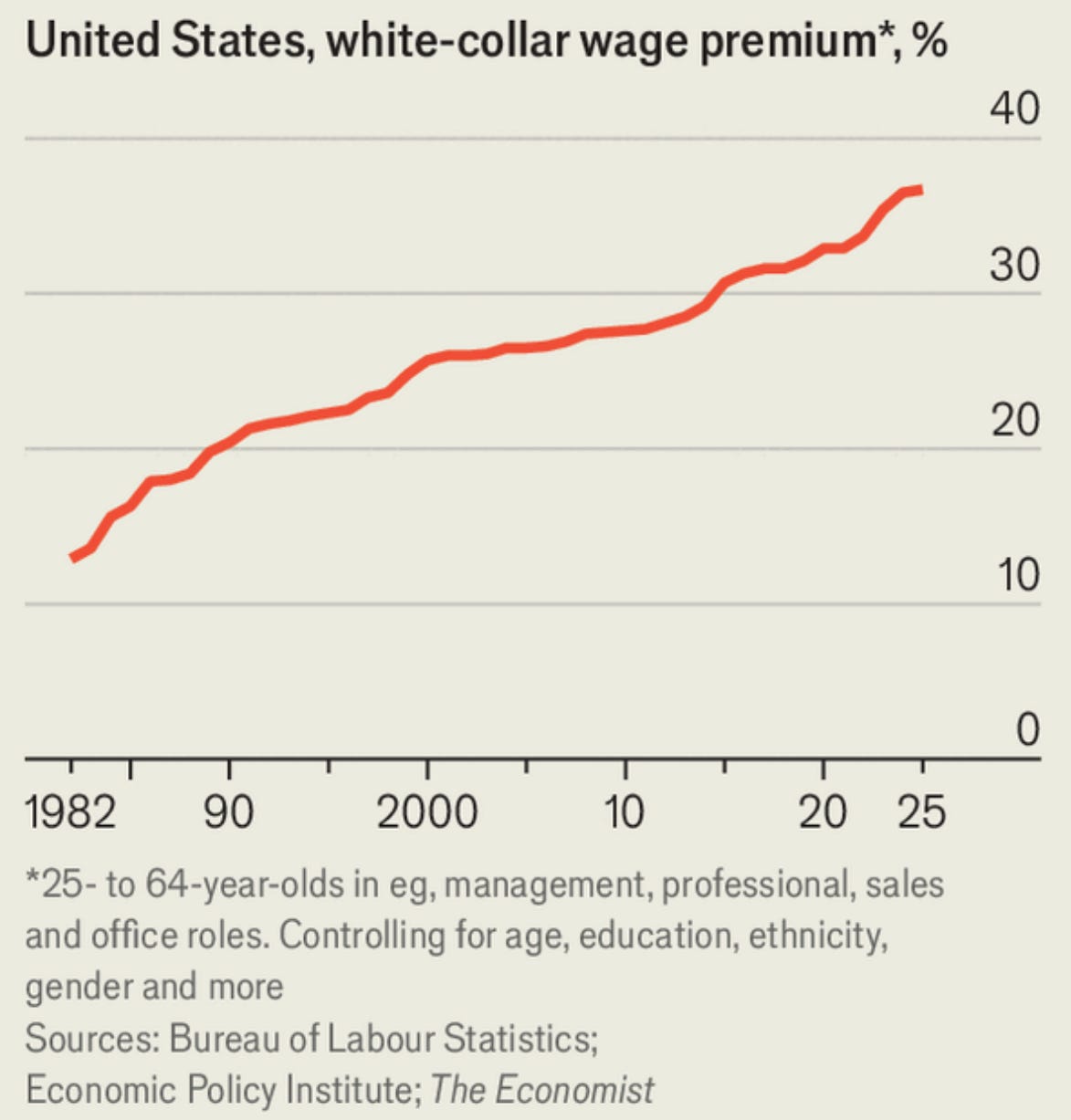
Recent predictions suggest that AI will put a stop to this trend. Many of them come with thinly veiled schadenfreude: finally, it’s the well-paid office workers who will suffer. But if so, we’re not seeing it yet. The Economist shows that the wage gap between white-collar and blue-collar workers continues to rise much as it has for many decades.
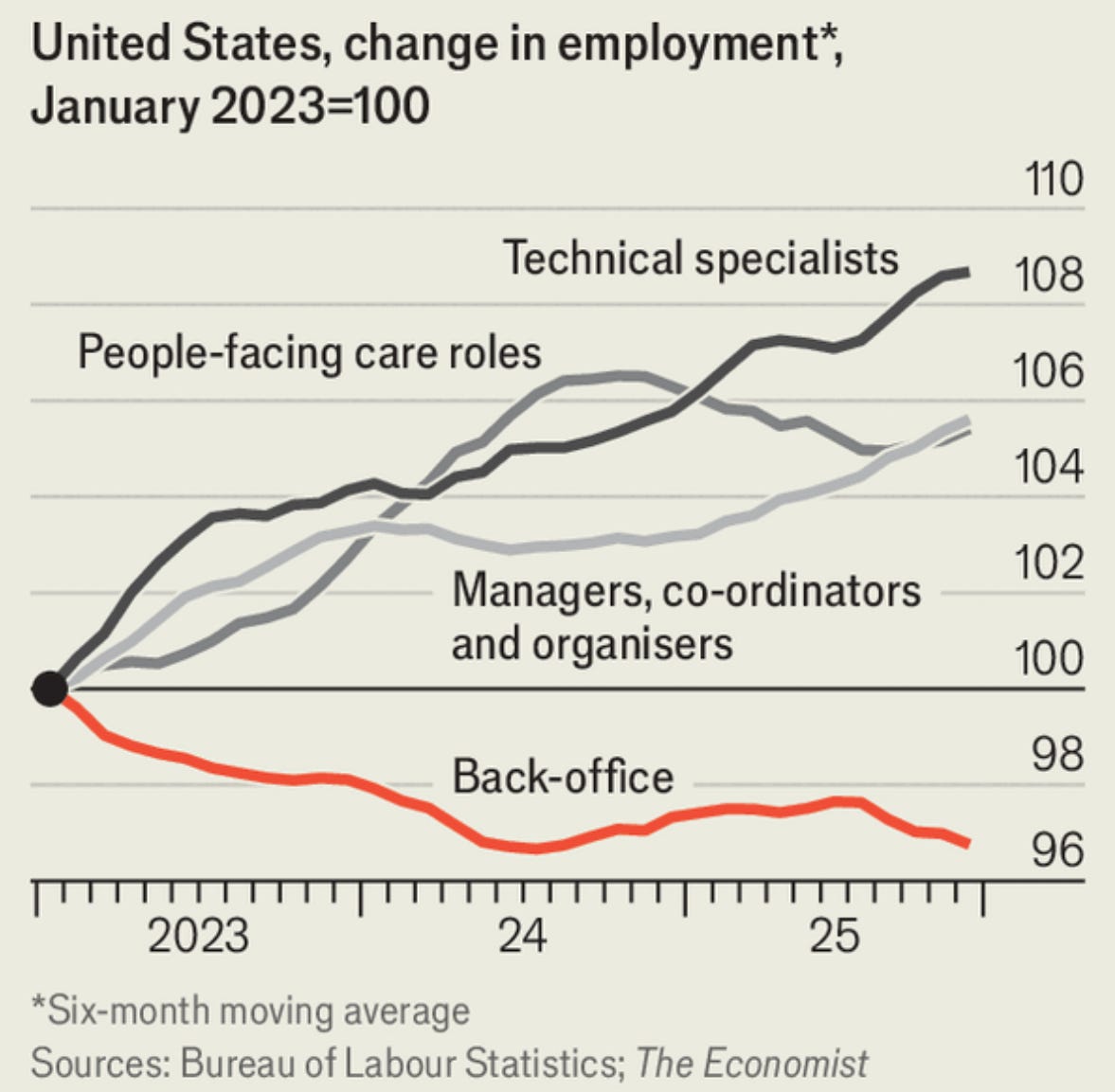
And within the white-collar category, the more advanced jobs fare better. Routine back office jobs are down, whereas jobs for managers, technical specialists, and other complex roles are up.
Claims that long-running automation trends were breaking were common even before the rise of LLMs. Keller Scholl and Robin Hanson tested these claims in 2019 and found them wanting: the types of US jobs most susceptible to automation didn’t change from 1999–2019. It’s true that AI may eventually change this, but near-term predictions of disruption often underweight historical trends. Patterns that have held up for hundreds of years typically reflect strong underlying forces.
While AI hasn’t replaced radiologists, it is improving cancer detection
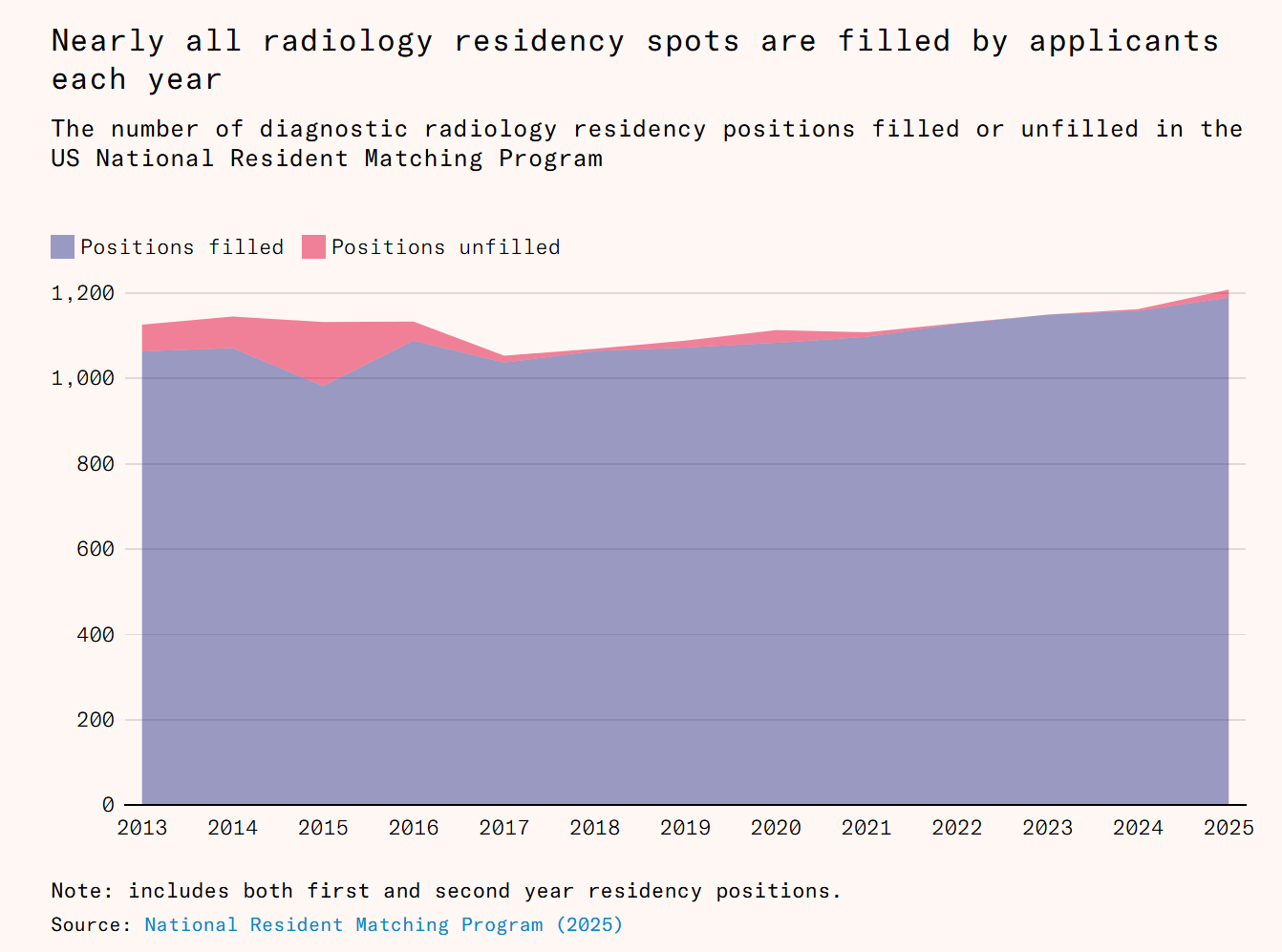
Radiology is a good example of how we often overestimate how quickly advanced jobs will be automated. Geoffrey Hinton’s 2016 advice to stop training radiologists hasn’t aged well, as demand for them has continued to grow. But AI is, in fact, increasingly used in radiology – for instance, to read breast cancer scans. A Swedish randomized controlled trial found that replacing one of two radiologists with AI improved detection rates. Applying this across all screenings would reduce total radiologist workload at breast centers by 4.5 percent, according to a recent Norwegian study.
Mandatory retirement of professors should be about contribution
According to Harvard’s latest data, 37 percent of tenured professors at the Faculty of Arts and Sciences are over 65, and 44 percent of retirements occur at 75 or older. Many other universities without mandatory retirement also have high proportions of older faculty.
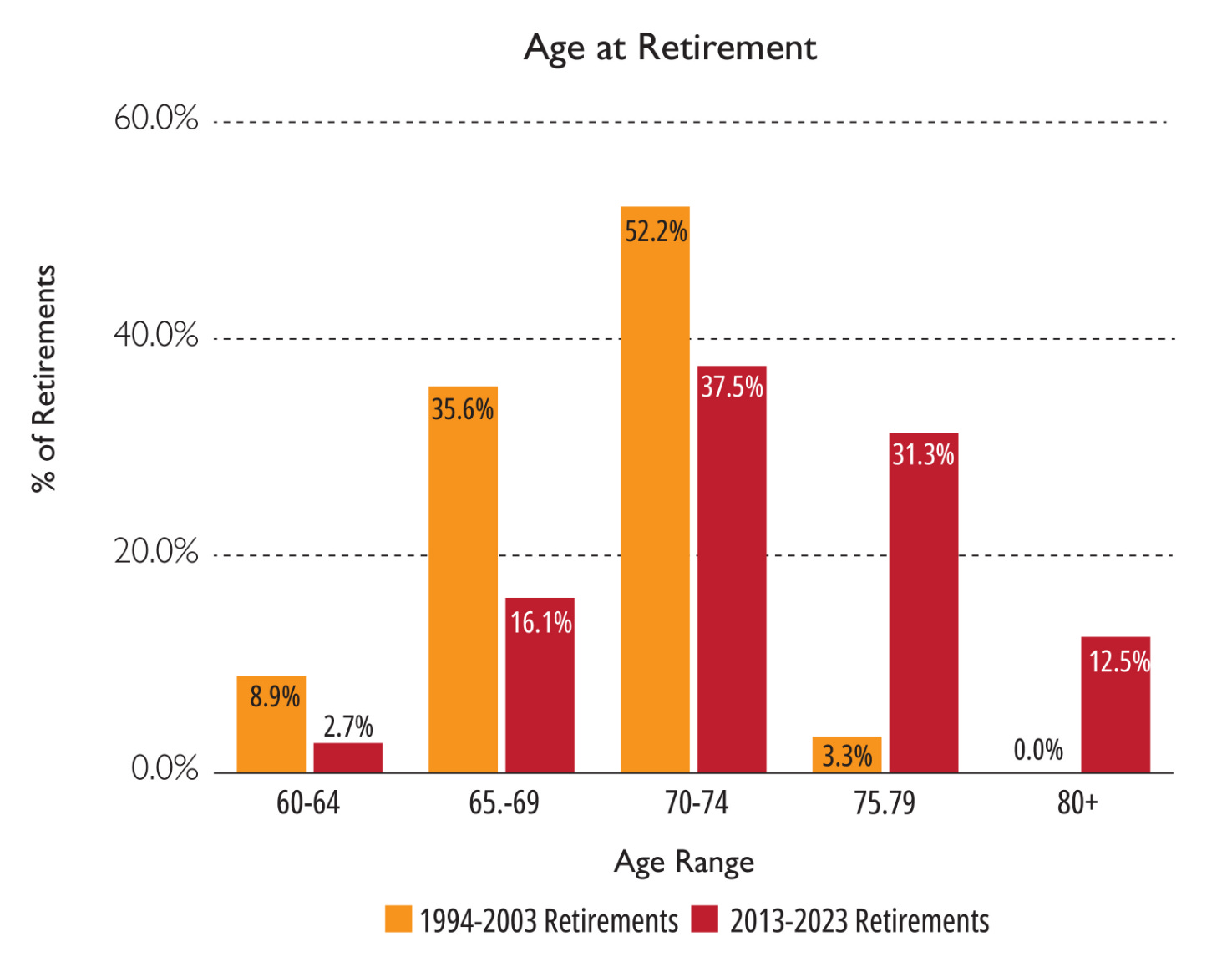
Should they be forced to retire to help younger researchers get a job? As Nature notes, many think so. Others find this ageist, arguing that older professors have a right to keep working.
I think both sides in this debate have the wrong perspective. Academia doesn’t exist to give jobs to academics, but to provide value for students and wider society. Consequently, older professors should only have to retire if they provide less value than their younger replacements.
Mark Rutte exaggerates Russian strength
A few months ago, NATO Secretary General Mark Rutte said that if Sweden doesn’t raise its defense budget to five percent of GDP, it should start teaching Russian in school because ‘you need to learn that language then’. Now he says that ‘if anyone thinks that the European Union or Europe as a whole can defend itself without the US, keep on dreaming’. I don’t think he believes these claims himself. Russia has struggled to defeat a country with a tenth of the EU’s population and a much smaller share of its GDP. You might argue that Rutte has good political reasons for what he says, but that doesn’t make it true.
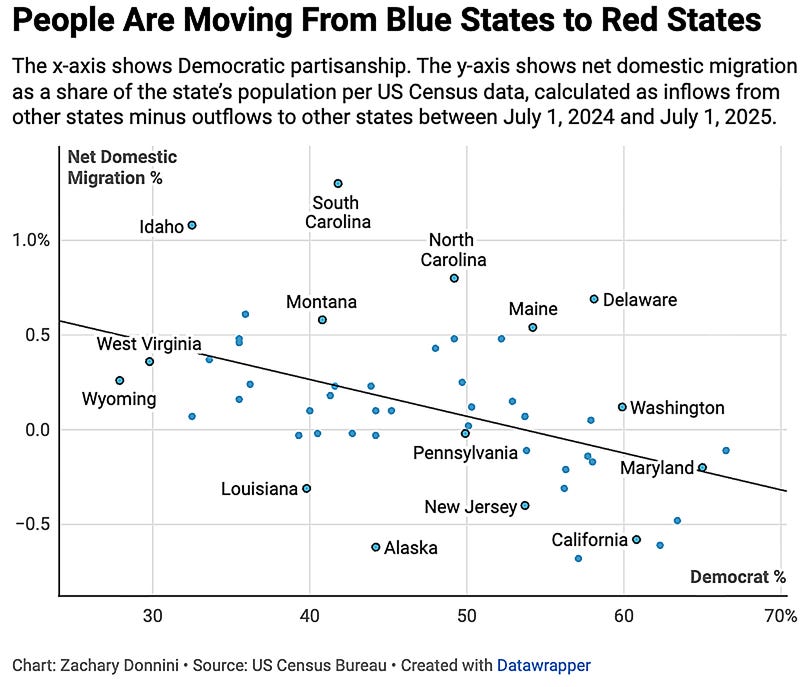
Americans are moving from Democratic states to Republican states
Chart on a theme from my last newsletter.
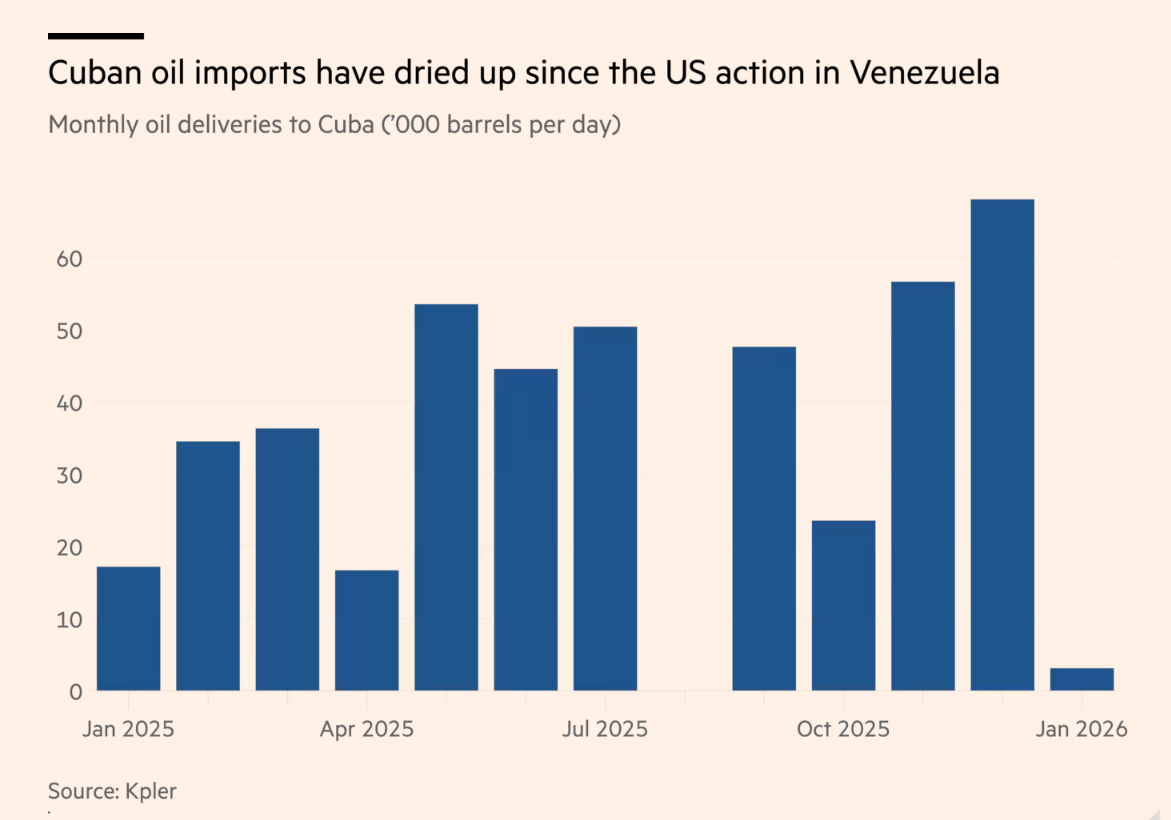
Cuba has only 15–20 days of oil left after Venezuelan and Mexican imports dry up
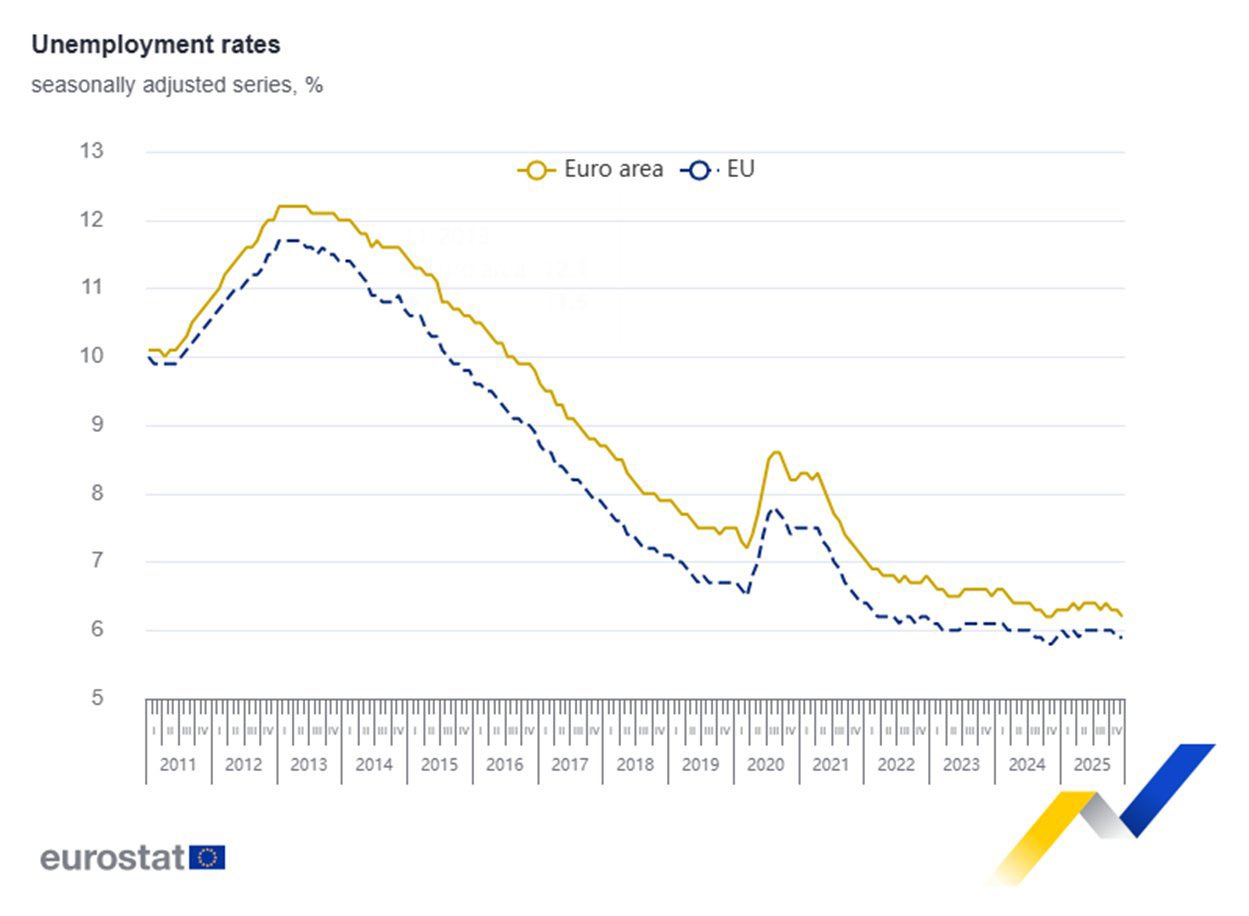
Eurozone unemployment has never been lower
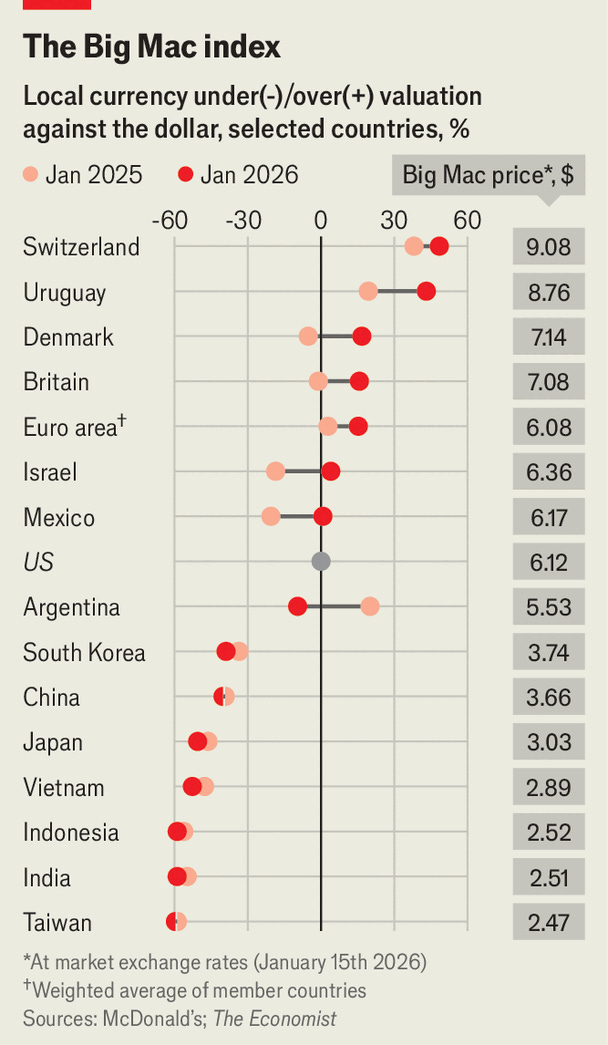
Big Mac prices suggest that Asian currencies are undervalued
Implies that traveling in Asia is cheap.
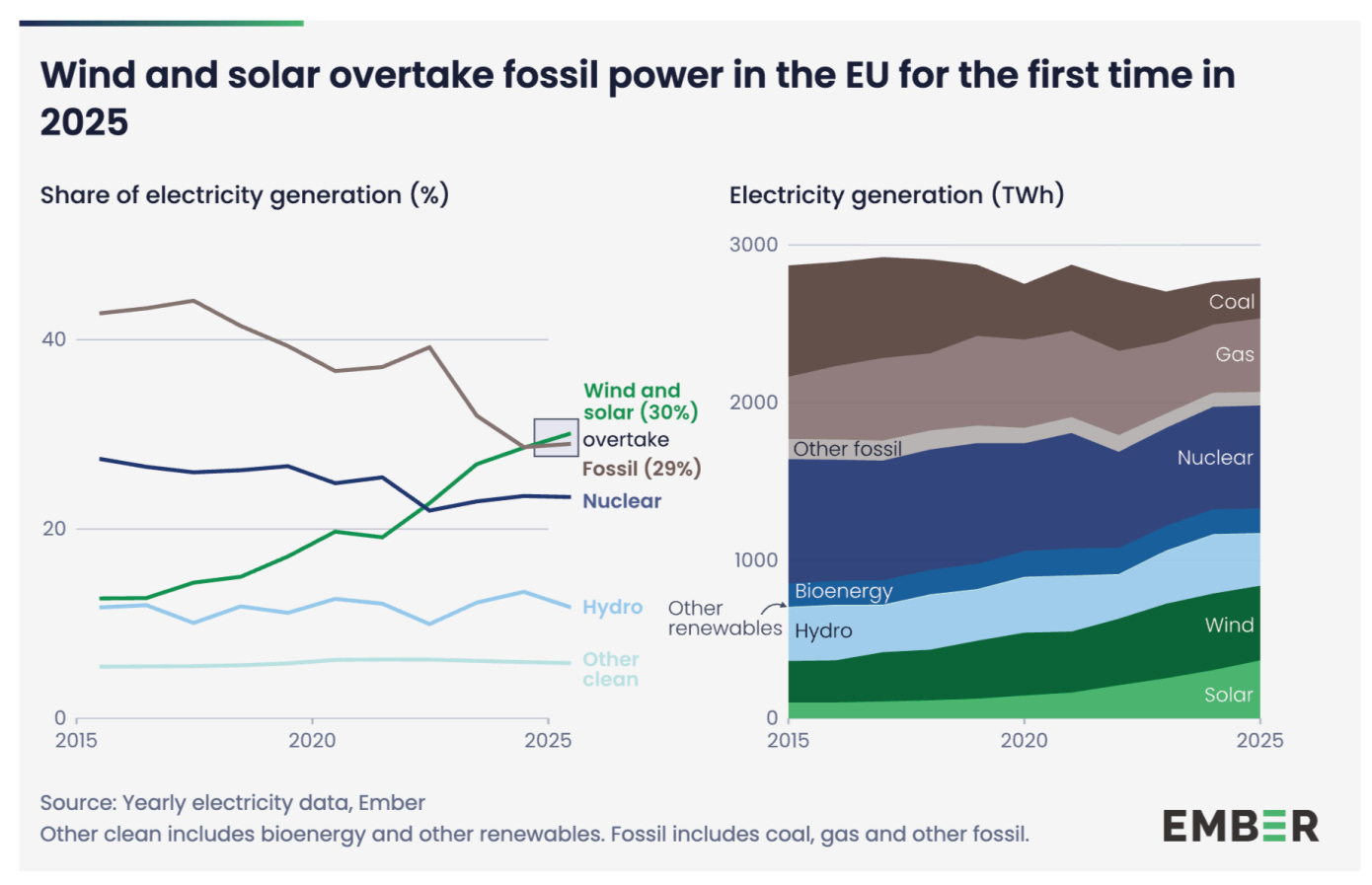
Wind and solar now produce more electricity than fossil fuels in the EU
Just the links
The Works in Progress podcast on why nuclear power got so expensive
Aria Schrecker on how to find a husband and why you should want one
Almost no comments get replies on Moltbook, the social network for AI agents
The drugs and supplements that aren’t properly tested, and a proposal to fix it
New VoxDev podcast on economic issues in developing countries
What Coefficient Giving’s Abundance and Growth Team are reading
That’s all for today. If you like The Update, please subscribe and share with your friends.
Good to see fossil fuel's contributing to electricity generation decrease. But shouldn't we want to see increasing electricity generation? It's a decade of horizontal, and electricity is still only a quarter of all energy consumption in the EU..
I think there is a problem with your reference to the Norwegian radiologists study.
You say that "Applying this across all screenings would reduce total radiologist workload at breast centers by 4.5 percent". Given the change is from using two human radiologists to one, this seems a very small reduction. It is so small for a couple of reasons.
First, the researchers assume that reviewing a scan takes only one minute - I'm not an expert, but this seems a remarkably short average time. This article, for example, suggests significantly longer time - https://pubmed.ncbi.nlm.nih.gov/38852330/
Second, the researchers seem to assume that AI could not do anything else apart from reviewing a scan. But it obviously could do other things, such as all the admin around writing up the assessment, notifying patients and other medics, arranging follow ups etc. So the time savings from using AI should be a lot more than 4.5%.
Of course, within a few years (or less), if it is not there already then AI will be superior to even the best human radiologist at reading a scan.