


Welcome to The Update. In today’s issue:
Alarmist pension projections ignore later retirements
In the debate about our demographic future, people often refer to pessimistic projections about the ‘old-age dependency ratio’. The OECD reports that in its member countries, this ratio has increased from 19 percent in 1980 to 31 percent in 2024, and is projected to reach 52 percent by 2060. Given how much governments spend on old people, this suggests an economic disaster.
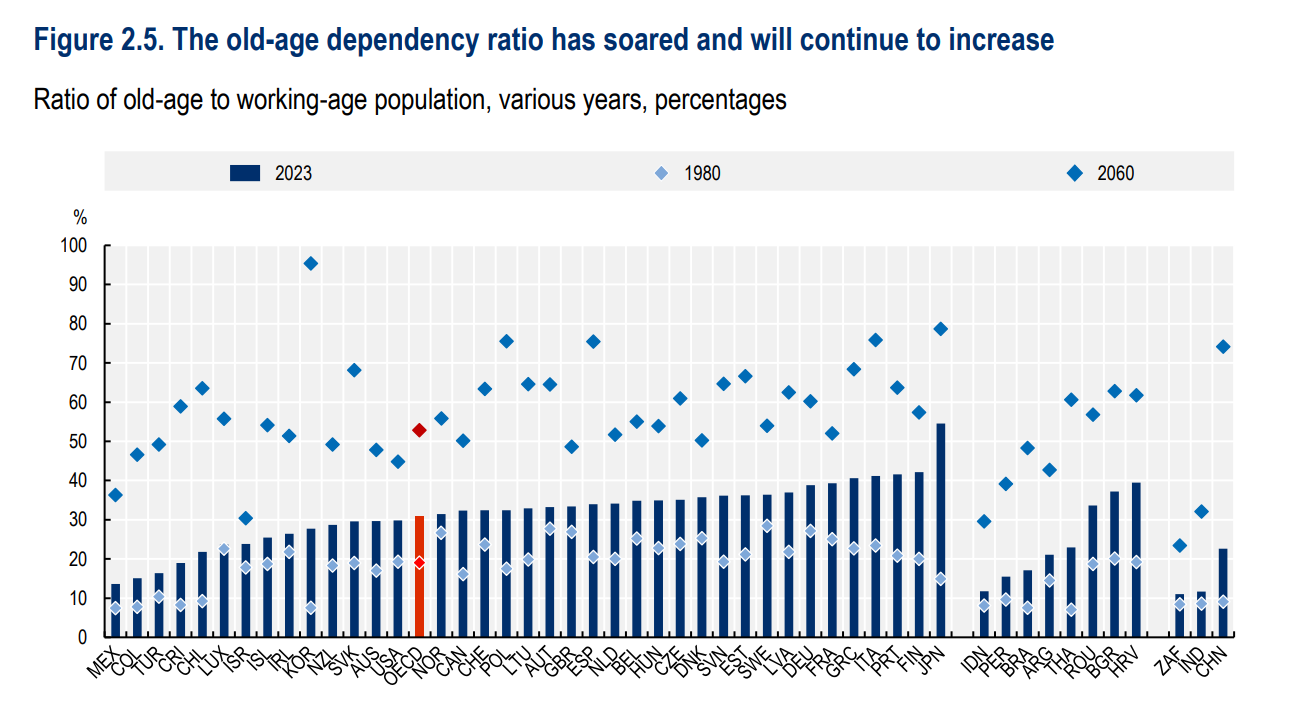
But what does the term ‘old-age dependency ratio’ mean? It sounds as if it’s the ratio of retirees to the workers they are dependent on, but actually, it’s purely defined in terms of age. The OECD’s definition is the ratio of people who are 65 or older to people between 20 and 64. It is insensitive to when people retire.
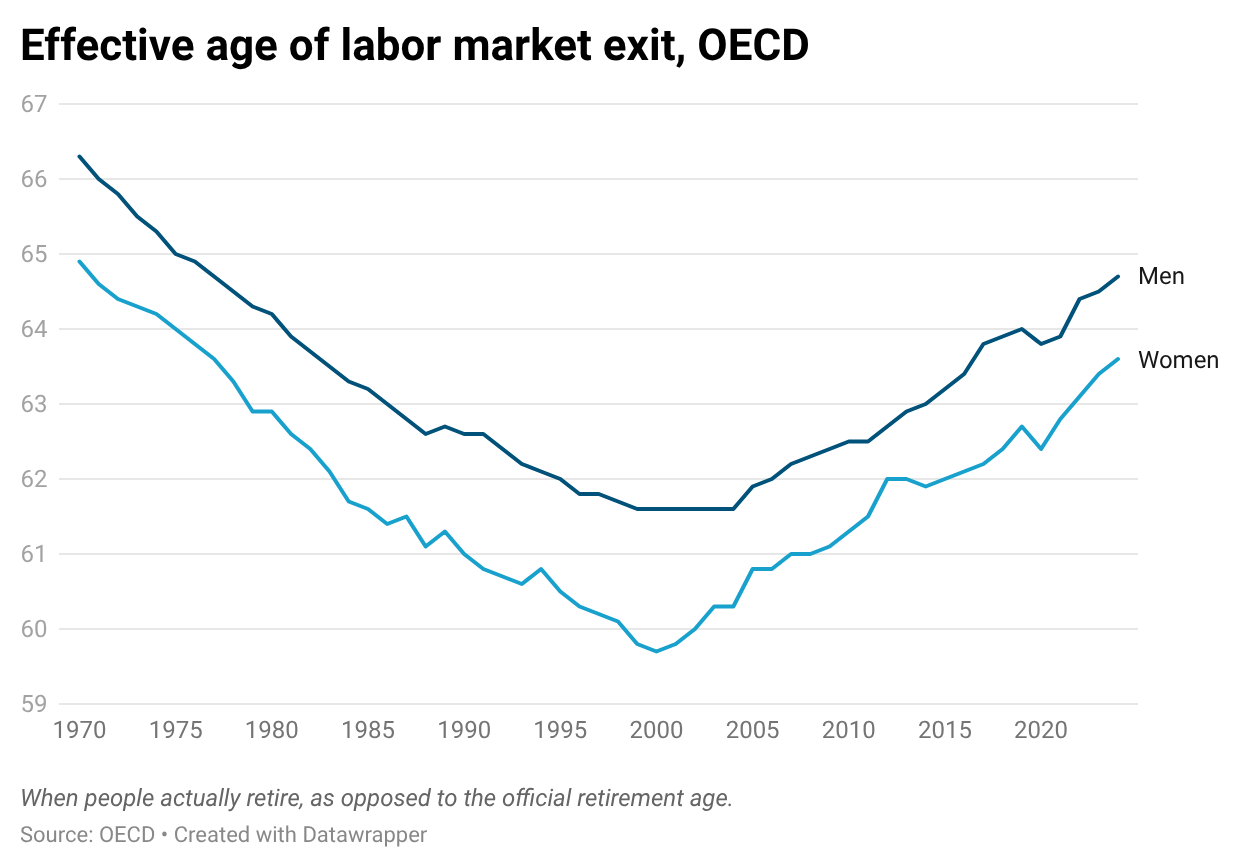
It’s this choice of definition that makes the projections seem so catastrophic. Since the turn of the millennium, people have been retiring later. Once we consider that, the situation looks less dire.
Of course, life expectancy has also increased.
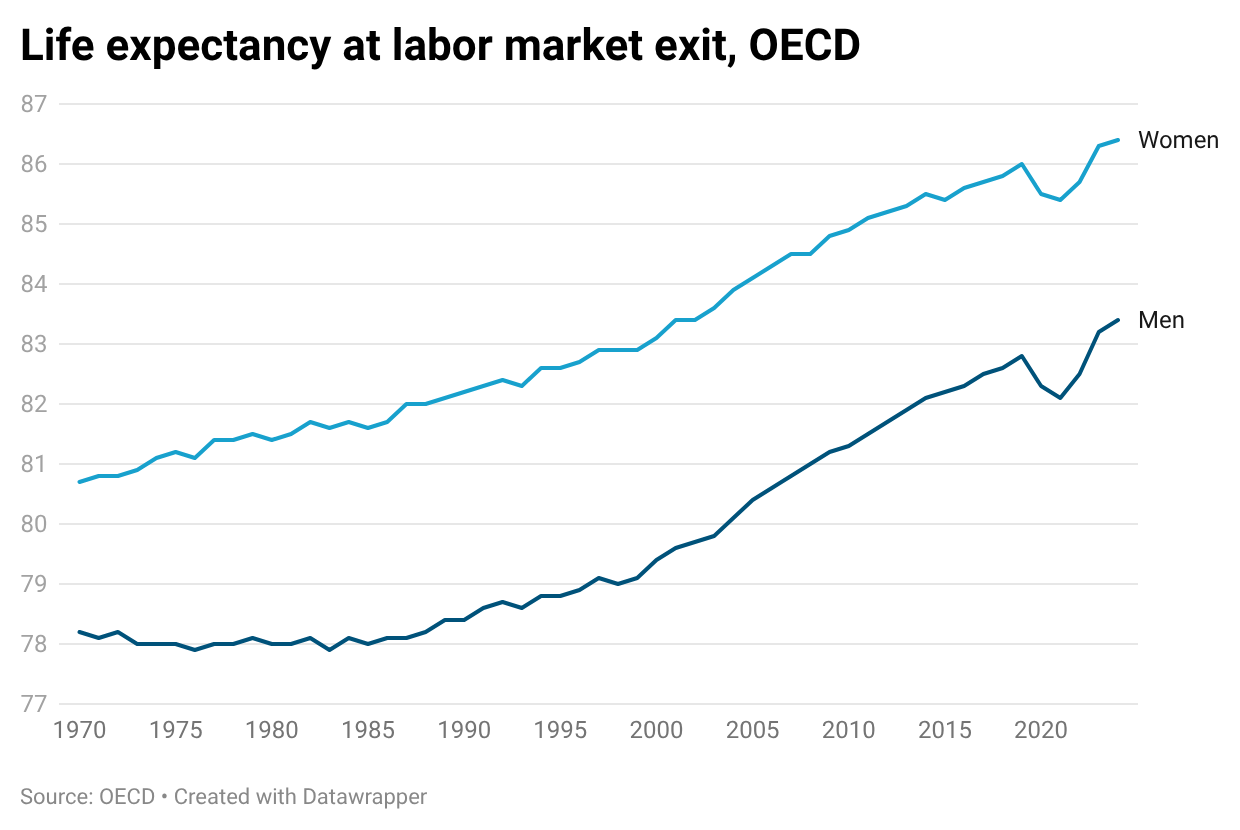
But these two trends have roughly offset each other, leaving the expected number of years in retirement relatively stable after 2000.
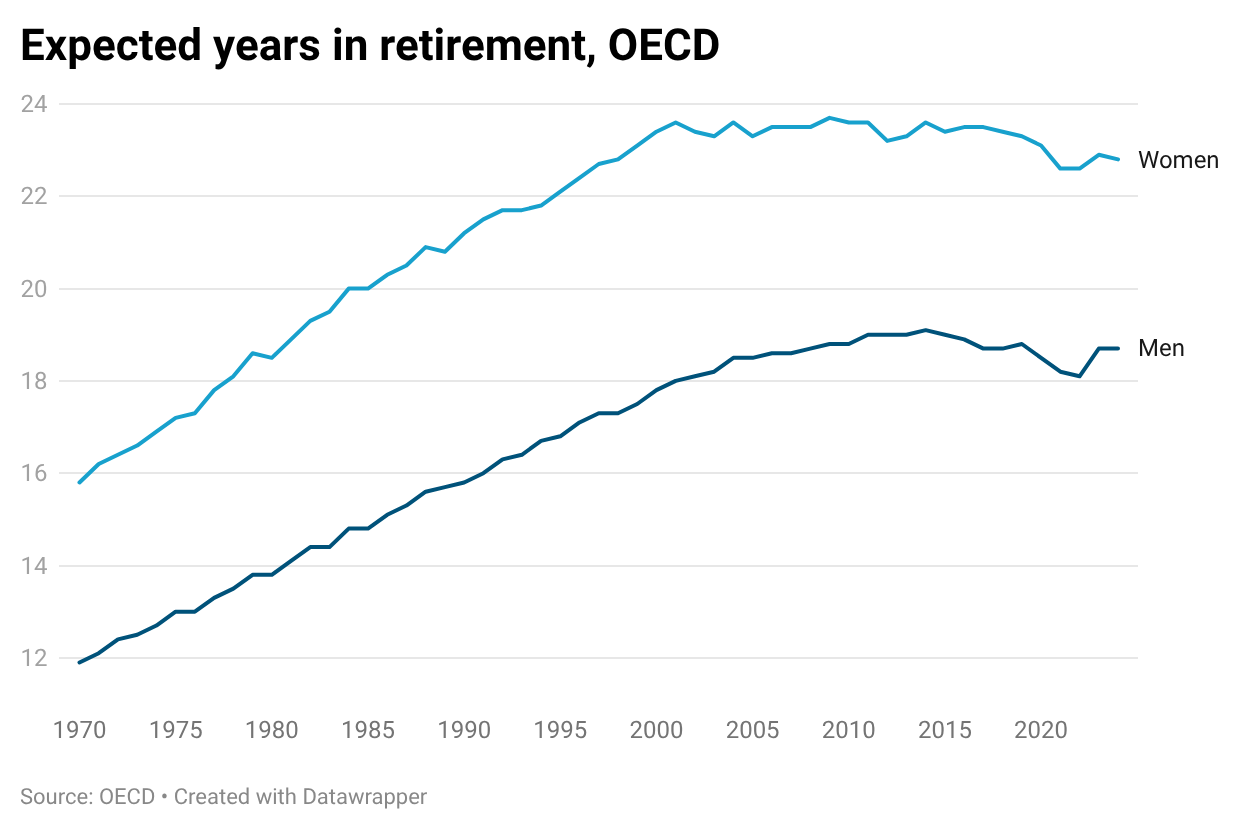
And the share of adult life spent in retirement has actually gone down.
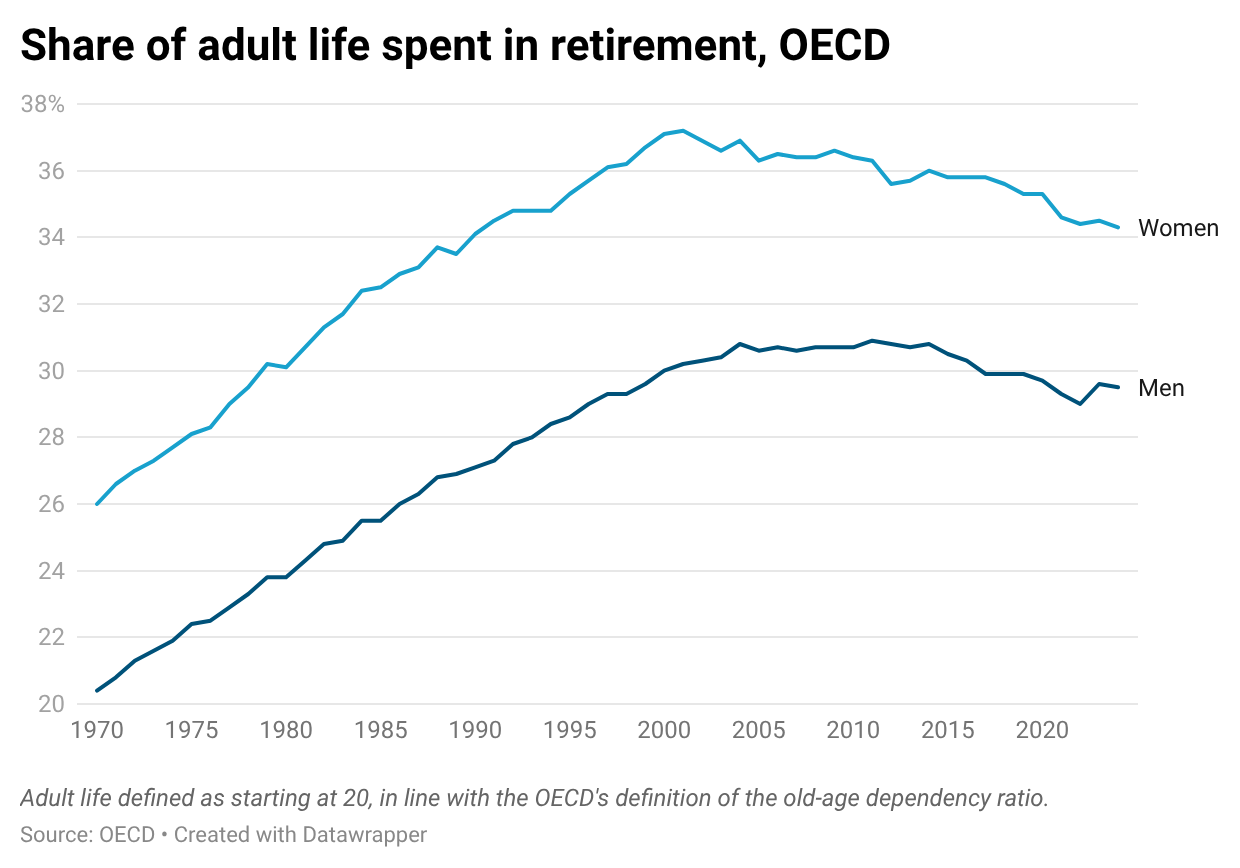
This doesn’t mean that there is no pension crisis – there definitely is. But projections that suggest people will keep retiring at the same age are overly alarmist. We clearly can incentivize people to keep working, and we shouldn’t assume we’ll suddenly stop.
What stands in the way of AI shopping agents?
Andrey Fradkin and Alex Imas write about AI agents that could make purchases for you on online platforms. Besides helping the individual consumer, this would increase competition between retailers, as it would steer traffic to those that offer the best value. But currently, two obstacles stand in the way:
The internet wasn’t built for AI agents, and today’s interfaces often confuse them. Platforms could fix this, but many of them have little incentive to do so, since their ads – typically a major source of revenue – don’t sway AI agents the way they sway human shoppers.
The law wasn’t written for AI agents either, and it’s often unclear whether they have the legal right to act on your behalf. To the extent that platforms don’t want agents, they can often use current legislation to block them.
Andrey and Alex suggest that we need legal reform: subject to reasonable conditions, users should have the right to let AI agents make purchases on their behalf. This would also give platforms an incentive to solve the technical problem, on pain of losing customers to competitors.
(Disclosure: this newsletter is supported by Works in Progress, which is part of Stripe, which works on enabling agentic commerce.)
Why we overestimate the power of misinformation
The philosophers Dan Williams and Henry Shevlin interview the psychologist Sacha Altay about the impact of misinformation in traditional media, on social media, and via AI. Sacha argues that we don’t fall for misinformation as easily as conventional wisdom suggests (at least not if misinformation is defined as literal falsehoods) and that the media consequently don’t actually spread that much misinformation. On the same note, he expects AI misinformation to have a more limited impact than many people fear.
In my view, we often think of other people as more passive than they really are – as if they are sleepwalking through life. That probably plays a role here. We see people as passively absorbing information others feed them – whereas in fact, they are both skeptical and selective. This tendency to underrate human agency appears in many domains, and I think it’s a major driver of pessimism.
Minnesota killing predicted to lead to government shutdown
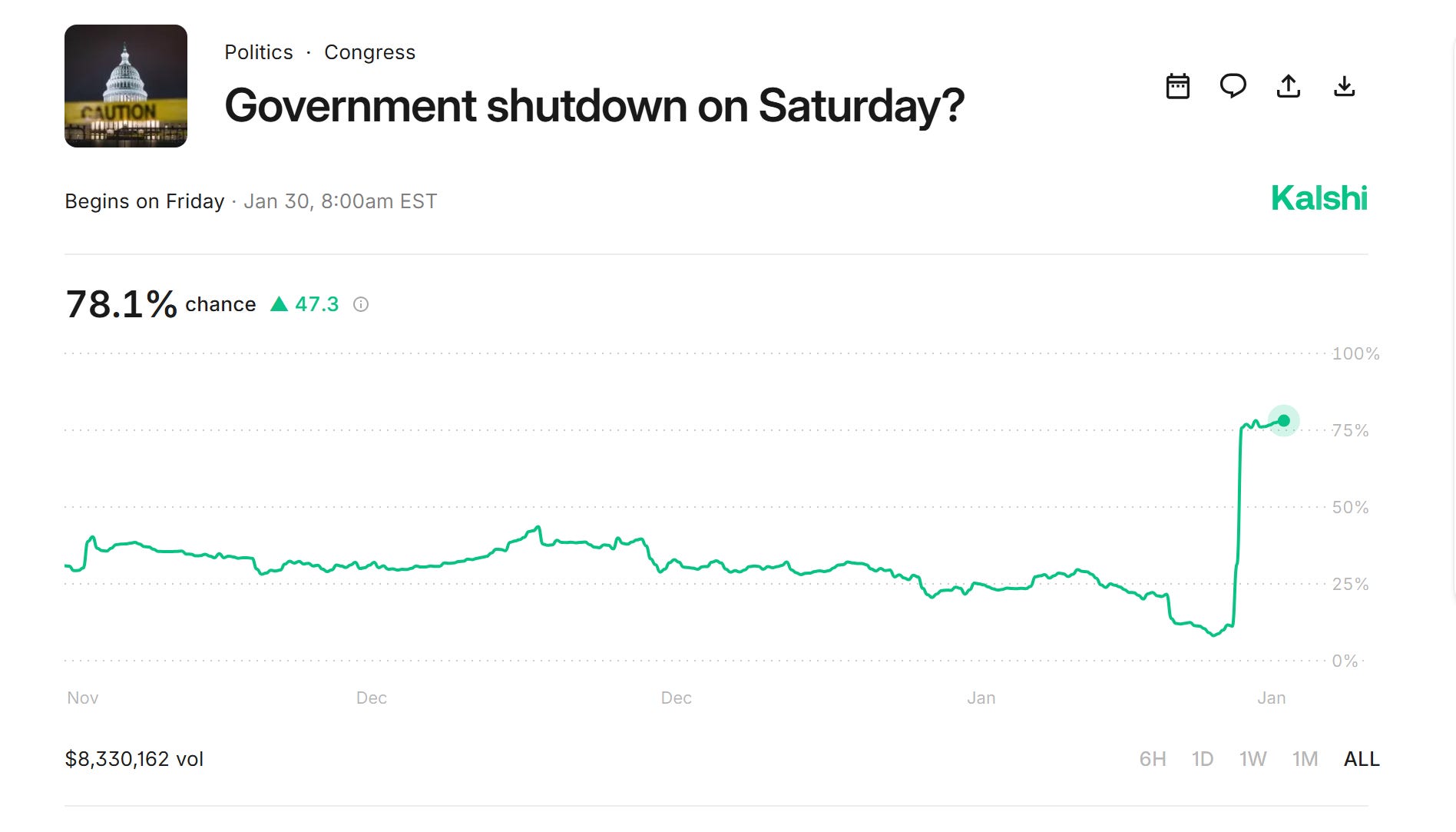
After US Border Patrol agents shot and killed protester Alex Pretti in Minneapolis on Saturday, Senate Democrats announced they will vote against a bill that includes funding for the Department of Homeland Security (DHS), the Border Patrol’s parent department. Since Republicans don’t have enough votes to pass the bill on their own, this could lead to a partial government shutdown, where nonessential operations at DHS and other departments included in the bill would have to pause. The announcement led bettors on the prediction platform Kalshi to sharply raise their estimates of the probability of a shutdown.
Trump’s gains among new groups have been more than reversed
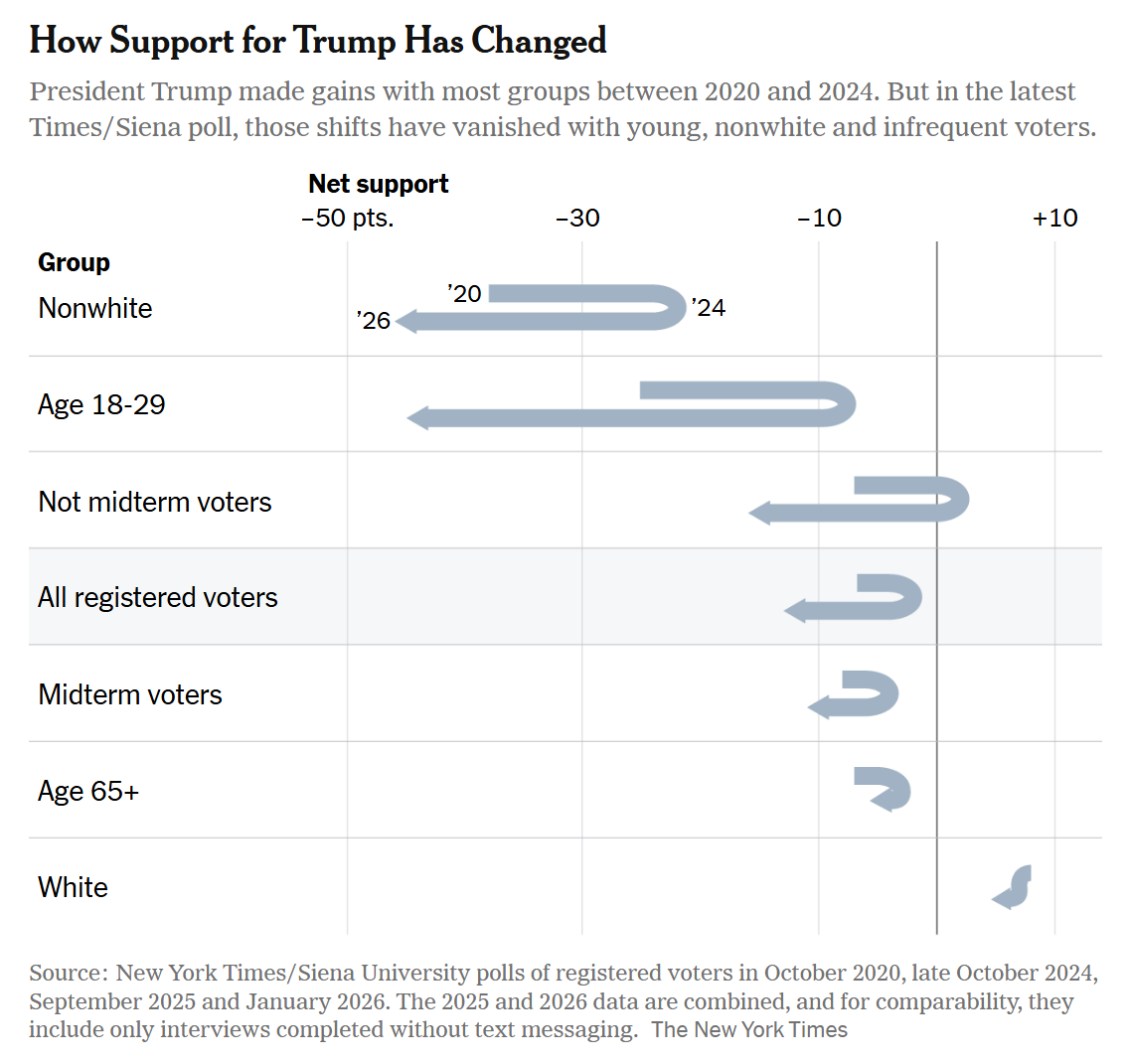
In the 2024 election, support for Donald Trump surged among less engaged voters as well as groups that tend to oppose him, such as young and nonwhite voters. But a Siena poll commissioned by the New York Times finds that these trends have since more than reversed. Trump is polling poorly among all groups, but particularly among those with whom he gained ground in 2024.
The eastern surge and southern stagnation in the EU
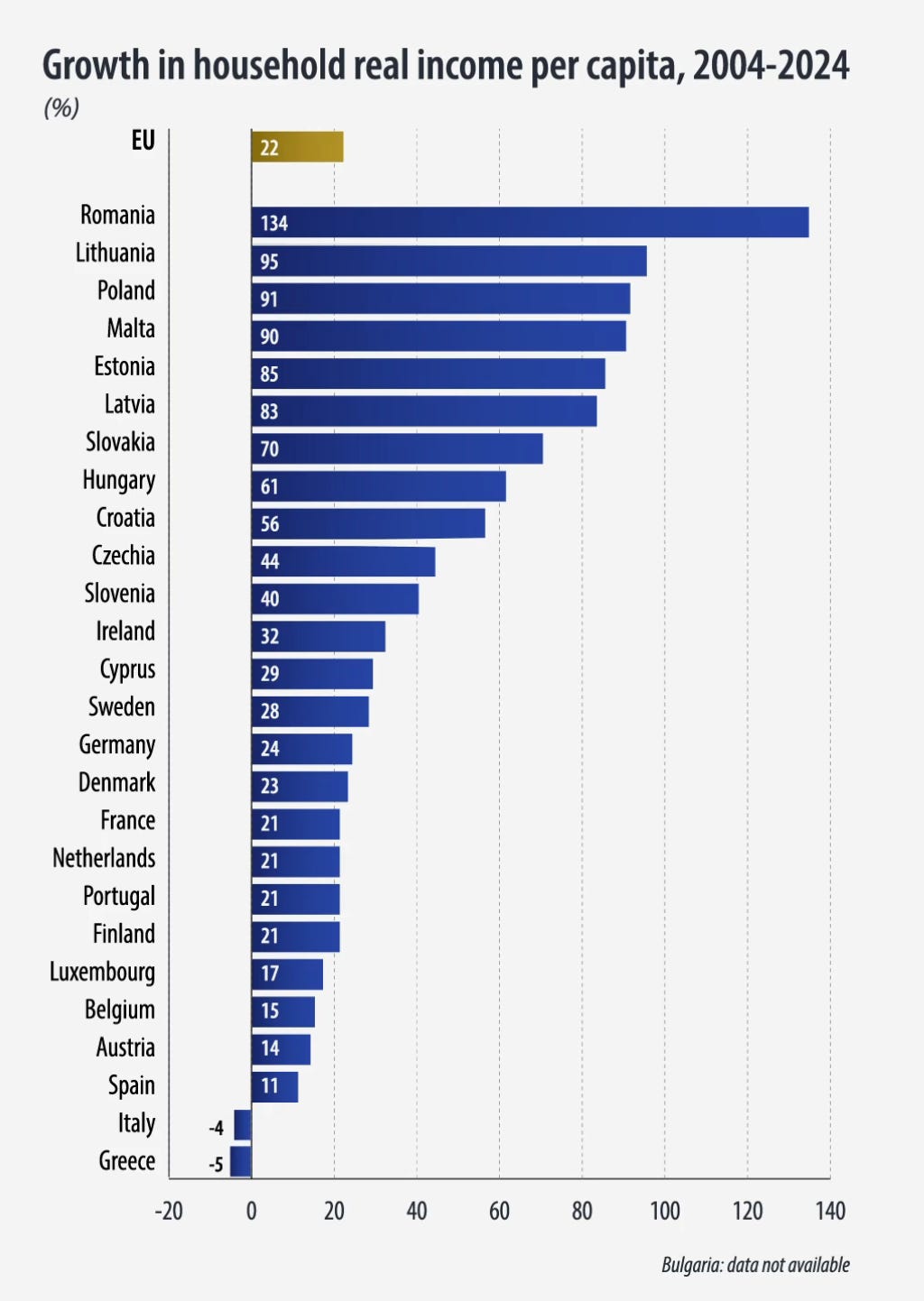
EU countries have seen dramatically different economic trajectories over the last two decades, as a recent Eurostat infographic shows. While formerly communist countries in the east have grown rapidly, southern countries have stagnated or even shrunk.
In brief
I’ve previously called for more methodological discussions about the limitations of METR’s AI evaluations, which measure AI capabilities by how much time a human expert would need to spend on tasks the AI can complete. Now METR researcher Thomas Kwa has written a detailed list of these limitations – including the huge confidence intervals in the time estimates and the differences between the tasks METR tests and typical real-world tasks.
The Institute for Progress has announced a request for proposals for projects that ‘accelerate science, strengthen security, or adapt institutions in anticipation of widespread advanced AI’. Published proposals are awarded a $10,000 honorarium, and successful referrals earn a $1,000 bounty. There’s no deadline, but early submissions are prioritized.
That’s all for today. If you like The Update, please subscribe and share with your friends.