


Welcome to The Update. In today’s issue:
Every generation contributes to the pension crisis, not just current retirees
American voters are skeptical of the efforts to acquire Greenland
In brief: OpenAI tests ads, McKinsey allows AI in work tests, and new Inkhaven Residency announced
Every generation contributes to the pension crisis, not just current retirees
The cost of pensions, healthcare, and other support for retirees is increasing in Western countries. Many governments are trying to reform underfunded systems, but have faced stiff resistance. In France, plans to raise the retirement age from 62 to 64 have been suspended after years of wrangling. In the UK, the triple lock raises pensions at an unsustainable rate, but so far no government has dared to touch it. In the US, Social Security and Medicare are projected to run short of funds to pay full benefits in 2033 – and yet the same paralysis prevails.
Why is this? The most common explanation is that there are lots of old people, and they vote. But I don’t think that’s the whole truth. In the UK, support for the triple lock is by no means exclusive to current retirees.
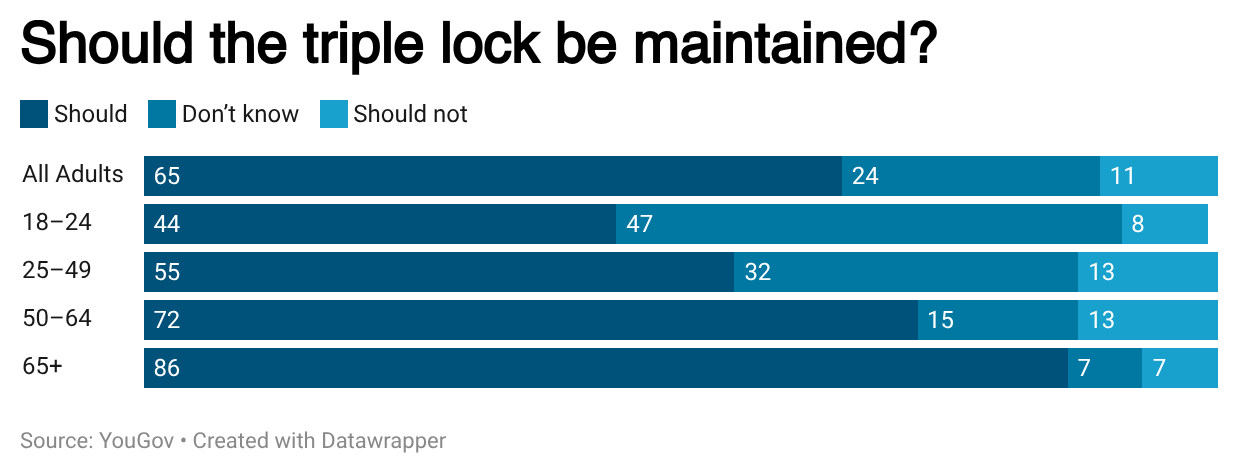
Reducing payouts to pensioners – or making them grow more slowly – is one of the main strategies to make the system more sustainable. Another is to raise the retirement age, which both cuts pension costs and increases tax revenue, as people who otherwise would have retired keep working. This reform could do much to solve the pension crisis – and it’s actually more resisted by people who haven’t yet retired than by current retirees.
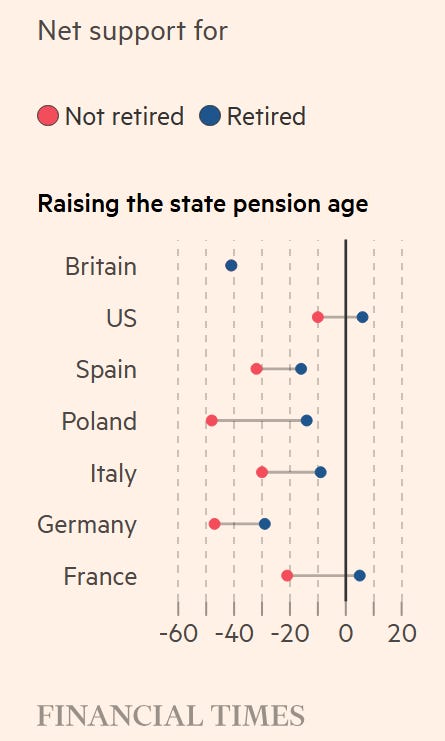
You might say it’s not particularly surprising that current retirees are less opposed to this reform, since it wouldn’t affect them. That’s true – but I’ve rarely heard this fact mentioned in the debate on spiraling pension costs. It doesn’t fit the narrative that it’s just the fault of the old.
There are no doubt several reasons people who are still working support generous pension spending, including solidarity with older relatives. But one neglected factor is that they will eventually benefit from it themselves, since they’ll also be old one day. This logic is part of why governments direct so much more money to the old than to the young. Spending on the young won’t give us the same type of future benefits, since we’ll never be young again.
London housebuilding at its lowest since World War II
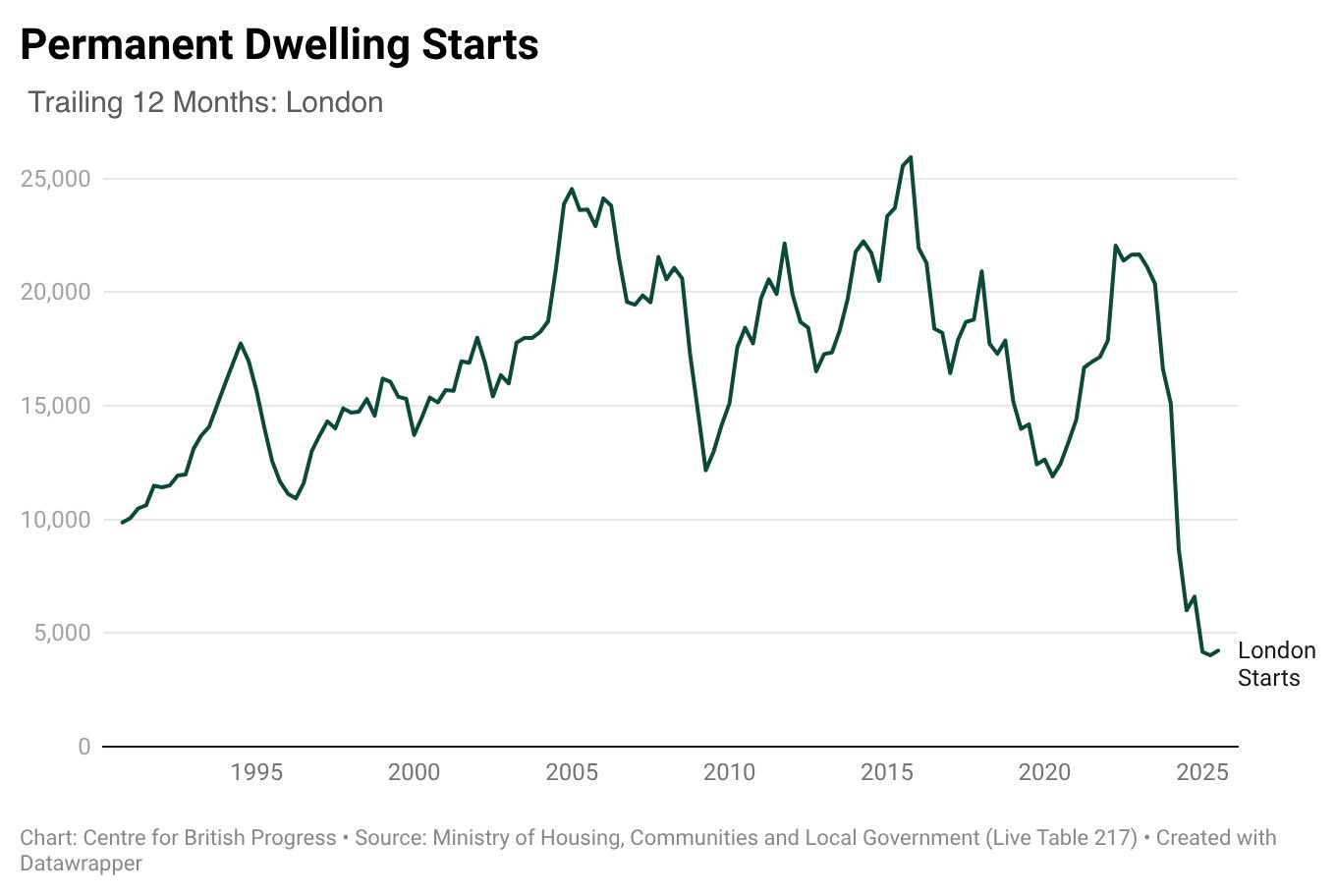
Despite high demand for housing, London housebuilding has plummeted and is now at its lowest since World War II, according to David Lawrence of the Centre for British Progress. David argues that costs are driven up by the Building Safety Levy – enacted after the Grenfell fire – and the Future Homes and Buildings Standards, aimed at energy efficiency.
Update on Iran
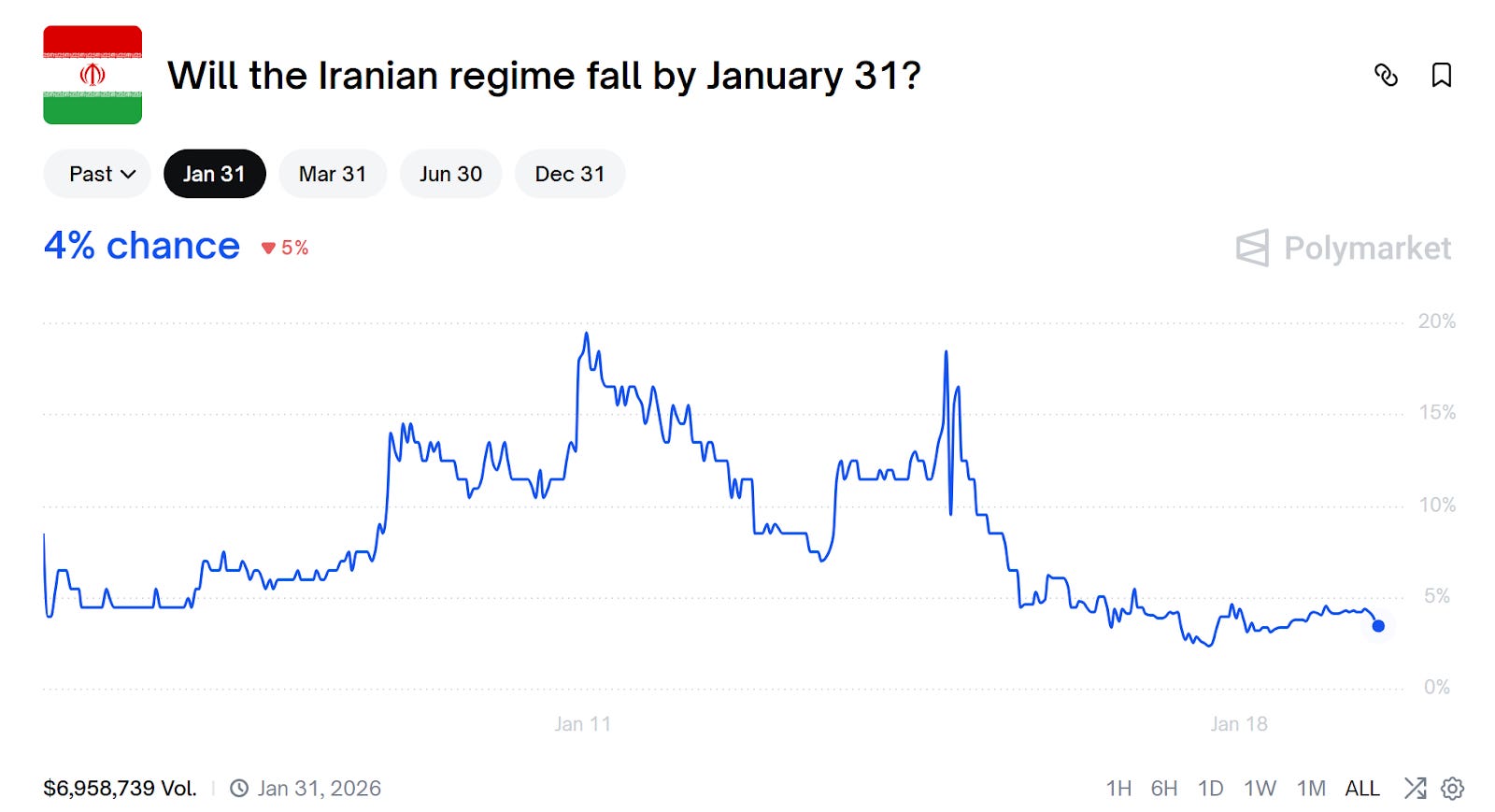
After the brutal repression of the protests in Iran, the chance of regime change has declined. On 11th January, the Polymarket prediction market estimated a 19.5 percent probability that the regime would fall in January, but today that number is down to 4 percent. The estimate that the regime will fall this year is 35 percent, down from a peak of 53 percent last week.
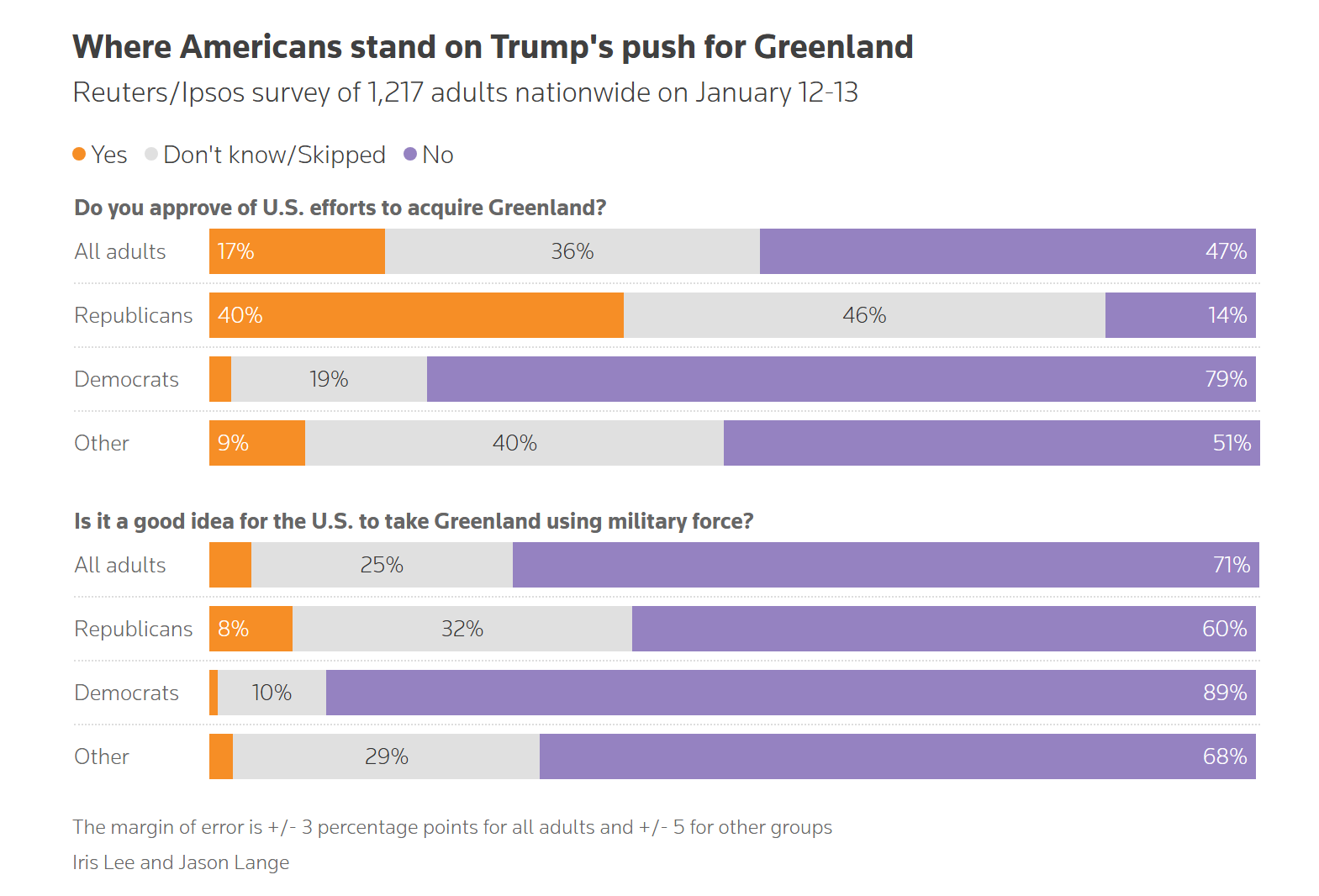
American voters are skeptical of the efforts to acquire Greenland
Donald Trump has reiterated his claims to Greenland, and on Saturday said that he would introduce a new 10 percent tariff against eight European countries that recently sent military personnel to the island: Denmark, Norway, Sweden, Finland, Germany, the UK, France, and the Netherlands. But his efforts to acquire Greenland are not particularly popular among American voters. In an Ipsos survey commissioned by Reuters, only 17 percent of respondents approved of these efforts. Even fewer – 4 percent – thought it would be a good idea to take Greenland by military force.
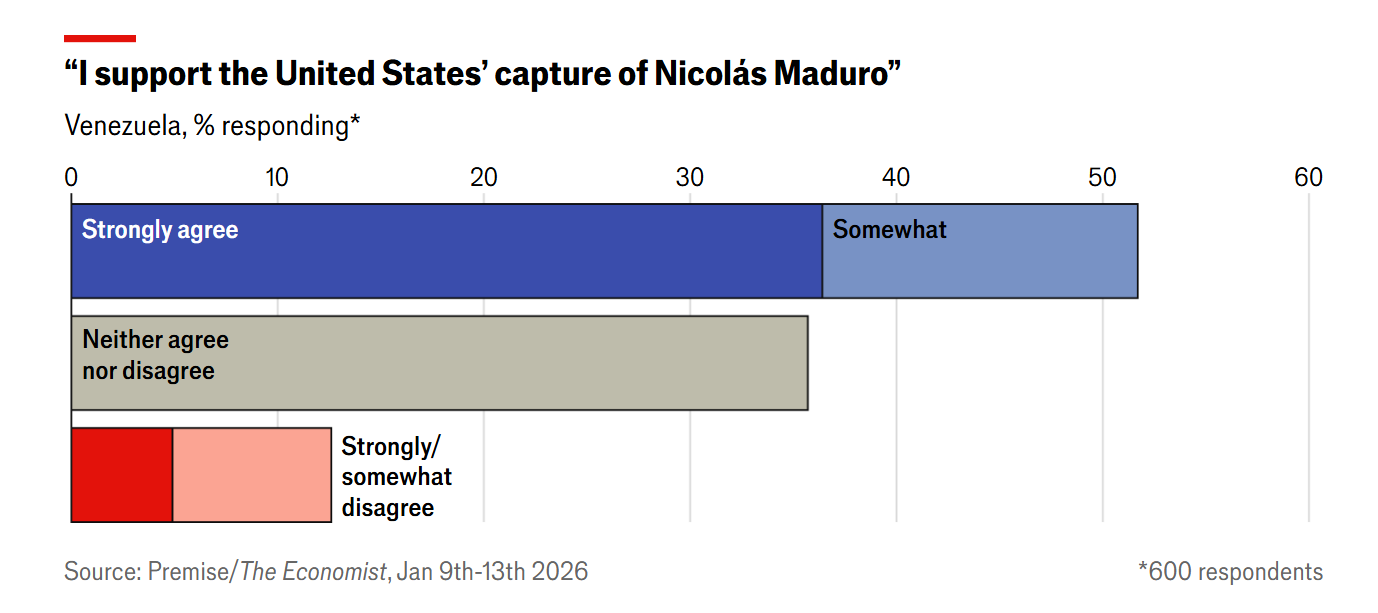
Venezuelans support the capture of Maduro
What do Venezuelans think about the US capture of Nicolás Maduro? The Economist recently commissioned the American pollster Premise to survey that and a series of related questions. It turns out that a majority of Venezuelans support the capture, and only a small minority oppose it.
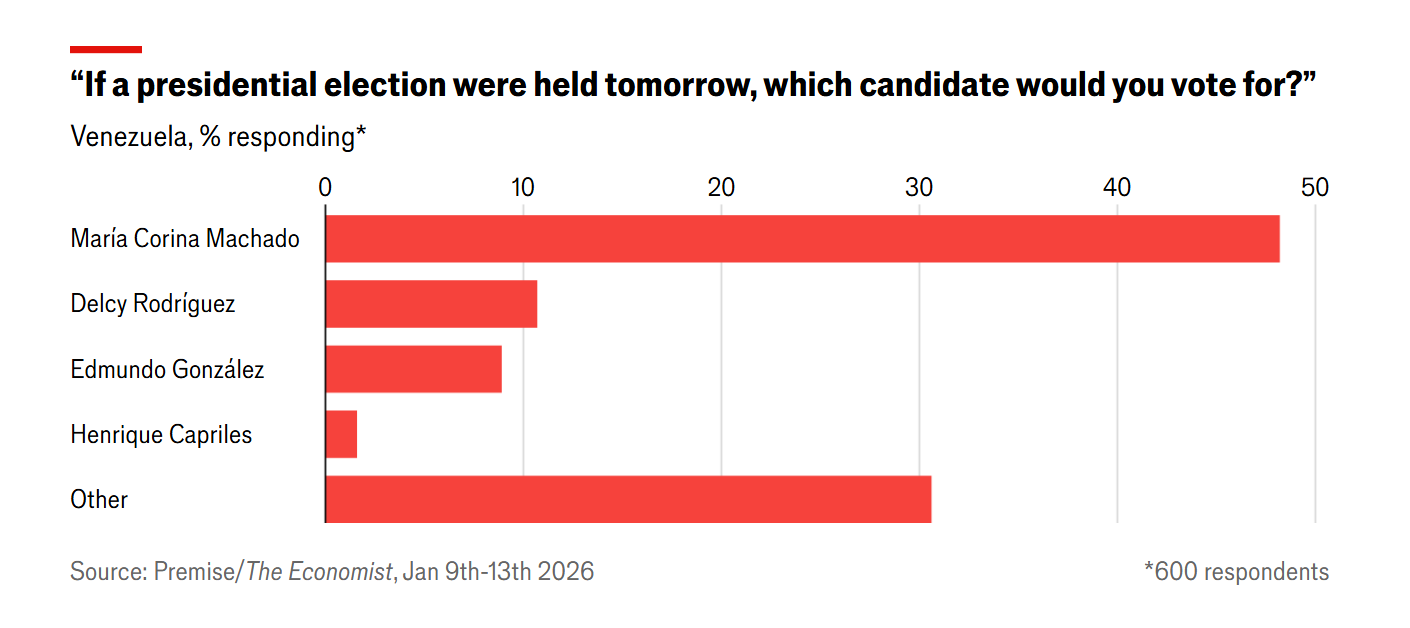
The regime is very unpopular: if elections were held tomorrow, only a tenth of Venezuelans would vote for the interim president Delcy Rodríguez, a Maduro loyalist. Almost half would support Nobel Peace Prize winner María Corina Machado.
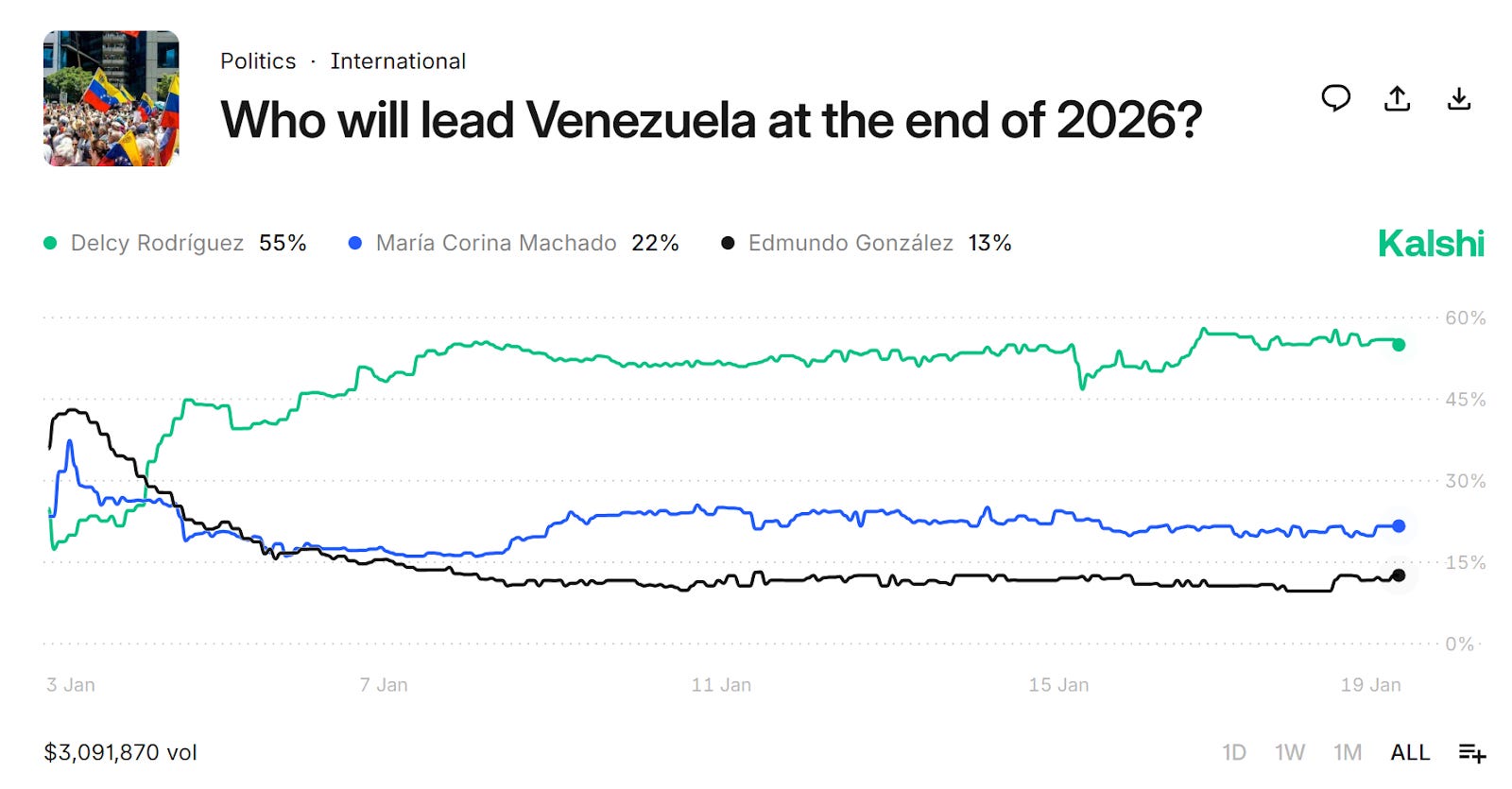
But despite Rodríguez’s unpopularity, traders on the Kalshi prediction market platform believe that she will remain in power by the end of the year.
Russian oil export prices plummet after October sanctions
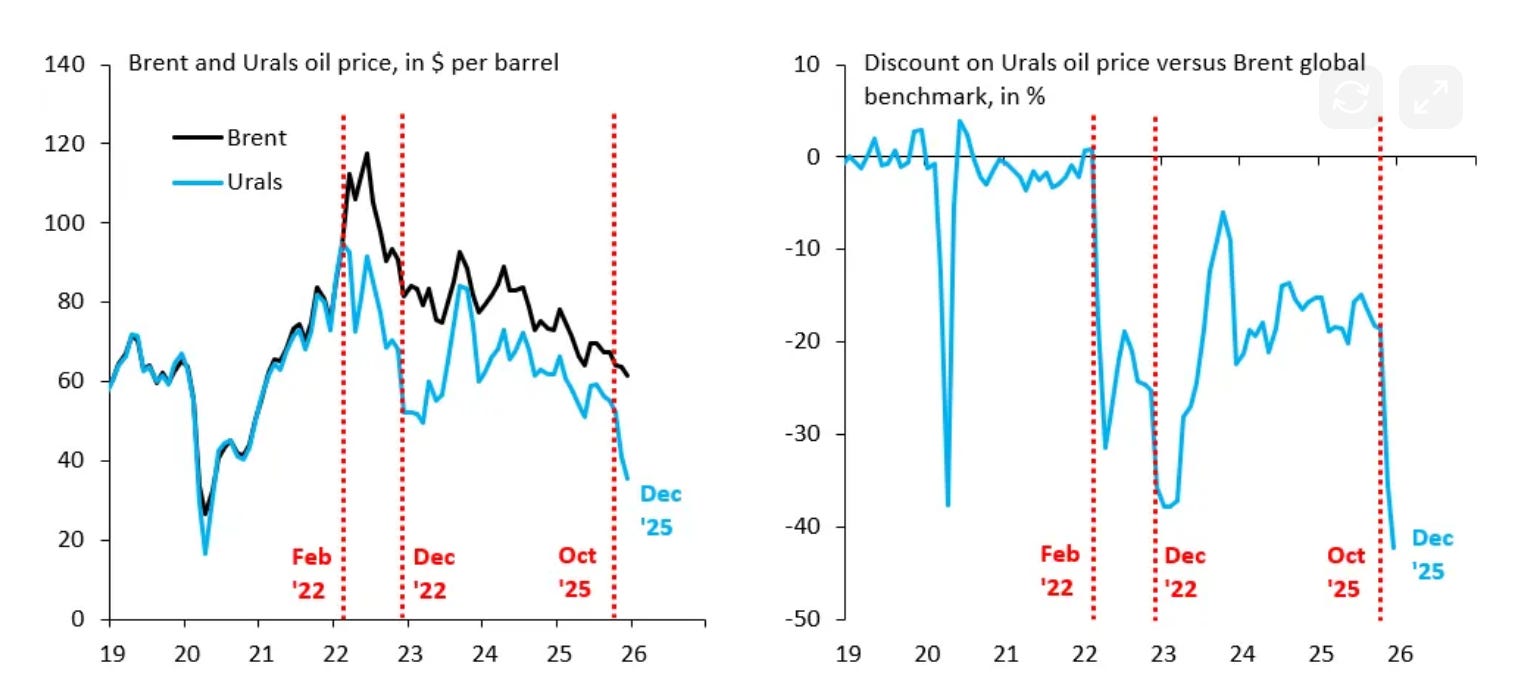
Robin J Brooks writes that the discount on Russian oil has increased considerably since October, when the US introduced sanctions against Russia’s two largest oil companies, Rosneft and Lukoil. Russia’s main crude oil export, Urals, is now more than 40 percent cheaper than Brent, the global benchmark. Since oil is Russia’s main export, this is bound to hurt the Russian economy, and could affect the war effort.
In brief
Unlike search engines, AI chatbots have so far been ad free, but OpenAI now plans to test ads in the free and cheapest paid versions of ChatGPT. The ads will not influence ChatGPT’s answers, according to OpenAI. CEO Sam Altman has previously said that he wants to avoid what’s happened to Google search, where ads have steered users away from the most relevant content.
Many schools, universities, and prospective employers are worried about test takers increasingly using AI, with some universities opting for in-person written or oral exams. But the leading consultancy McKinsey goes in the opposite direction, actively asking candidates to use an AI tool to analyze a case study. I think this makes sense, given that they’ll obviously use AI on the job.
Lightcone Infrastructure, the parent organization of the LessWrong forum, has announced its second Inkhaven Residency: a 30-day writing program where residents write at least one blog post per day. The residency will run 1st–30th April at the Lighthaven Campus in Berkeley, California. Applications are reviewed on a rolling basis and close on 1st March.
That’s all for today. If you like The Update, please subscribe and share with your friends.