


Trump proves the US presidency is broken
Since his return to power, Donald Trump has pardoned the assault on the 2020 election, sent the Department of Justice after his enemies, and talked ominously about ‘nationalizing the voting’. How could a country that has done so much to spread democracy go so wrong at home?
To an extent, Americans can blame bad luck: few people are as flawed as Donald Trump, and the chance that one of them would end up in the White House was fairly low. But even so, Trump exposes the shortcomings of the American political system. You shouldn’t have to rely on luck.
One problem is that binding primaries and an increasingly outrage-driven media environment have opened the door for populists. But the deeper problem is the presidency itself. Even though concentrating power in the presidency is a bad idea, successive American presidents have done exactly that. Now this power rests with Donald Trump.
Once he’s gone, the US should drastically rein in the president’s power – but I’m not optimistic it will happen. In today’s partisan environment, the governing party lacks incentives to reform. The world’s most powerful democracy seems stuck with a broken system.
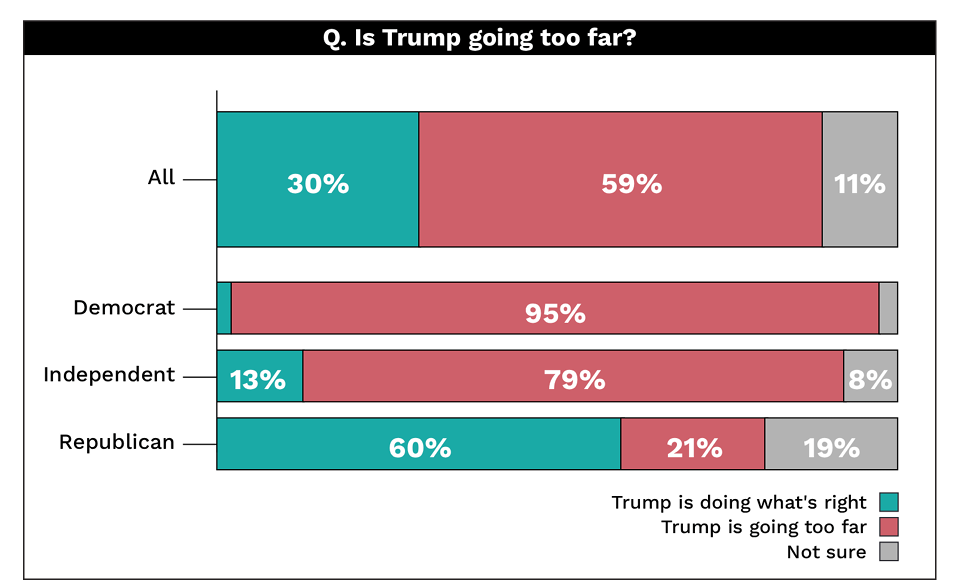
Share of Americans saying Trump goes ‘outside the bounds of our system of checks and balances’. YouGov, 17th September 2025.
Not all green choices are created equal
What can we do to save energy? Many people are almost as meticulous about turning off the lights as about taking shorter showers and turning down the heating. But as Hannah Ritchie shows with a new interactive tool, these choices are not in the same league. Leaving an LED light on for an hour uses just ten watt-hours – roughly 0.1–0.5 cents, depending on where you live. Taking a ten-minute shower uses roughly 160 times more energy, and heating a room for an hour uses 270 times more. This is where the big savings can be found. Turning off the lights matters much less than you might think.
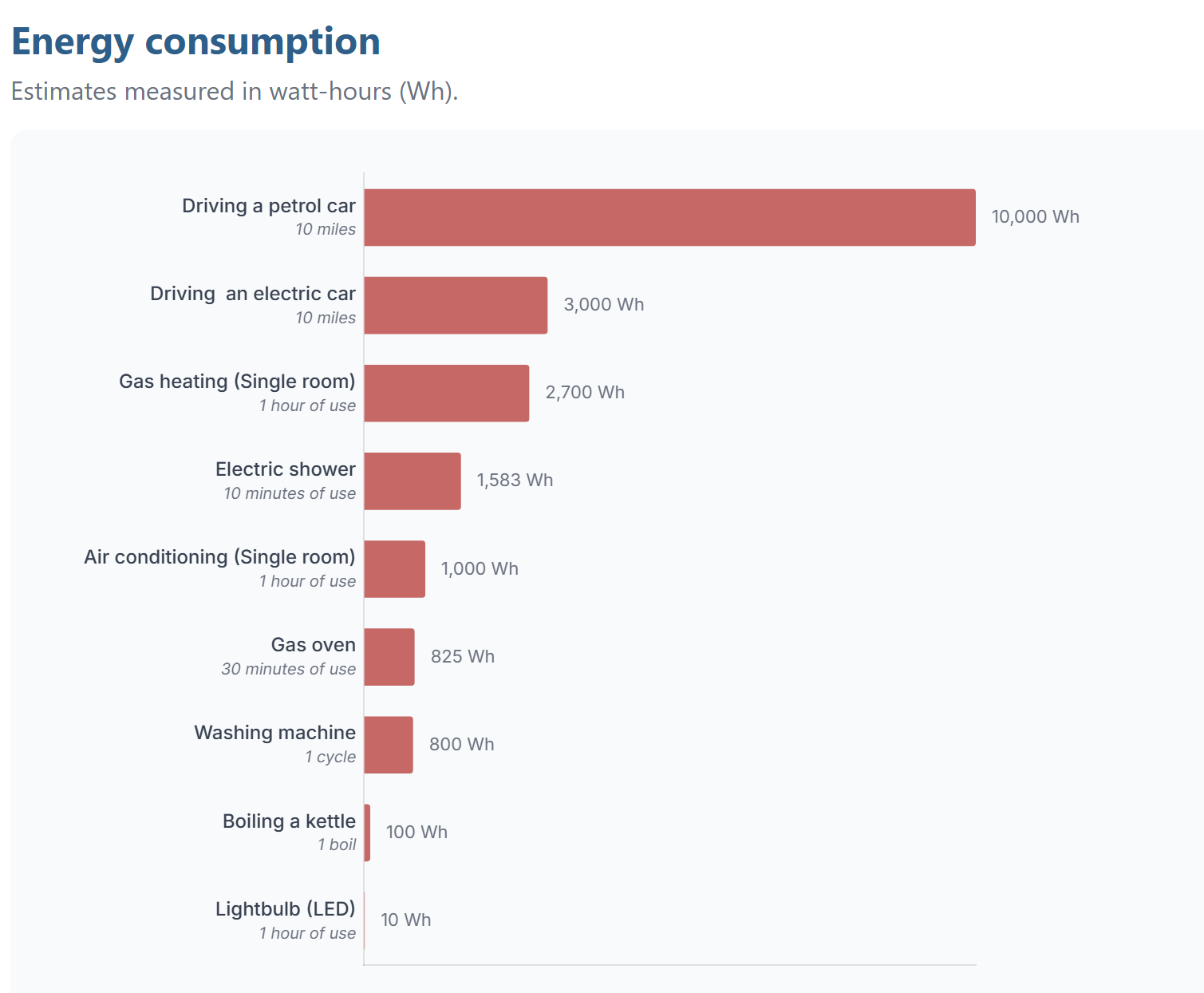
Source: Hannah Ritchie.
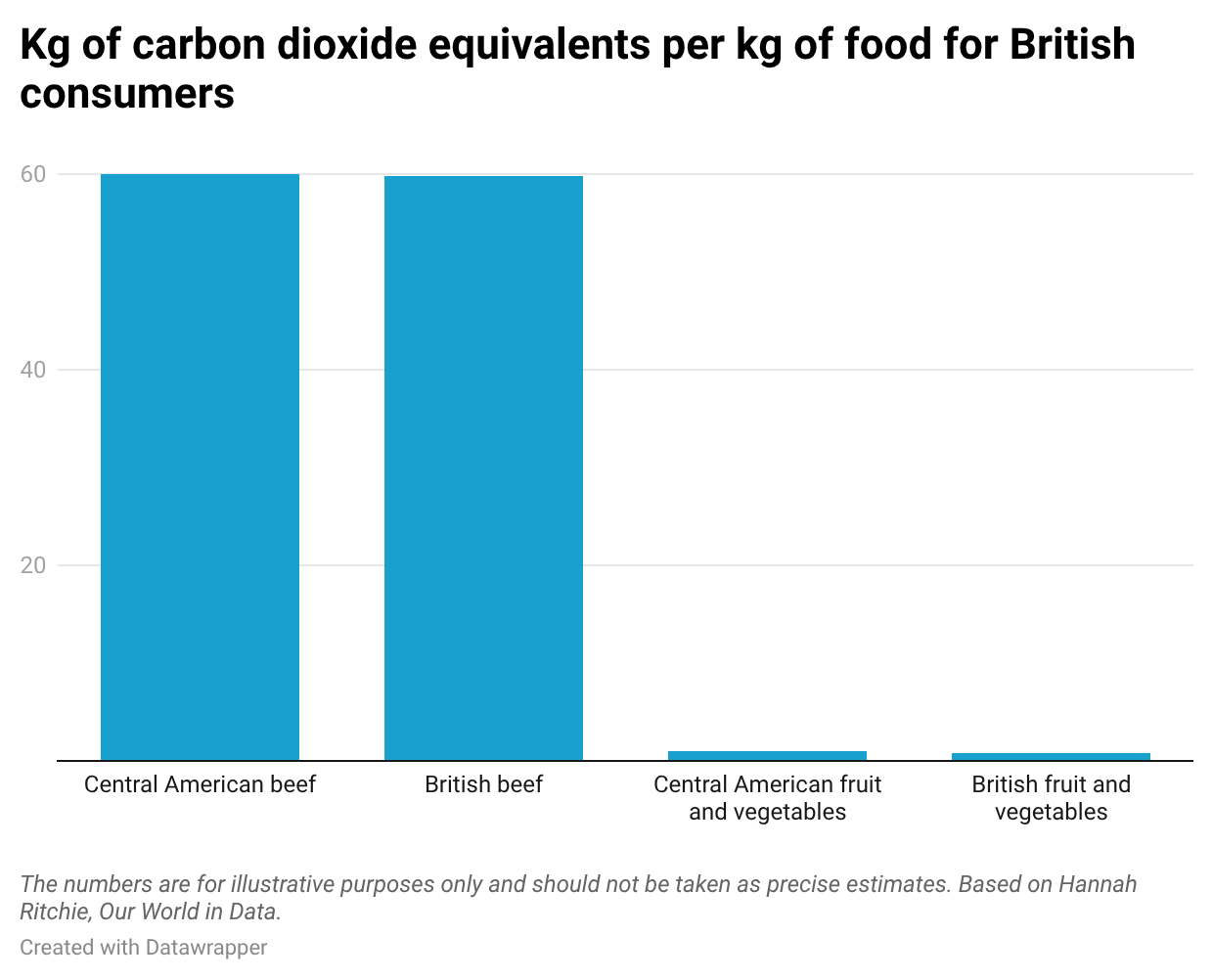
The same lopsidedness shows up in our food choices. Meat generates more greenhouse gas emissions than plant-based food, and buying local food obviously reduces transport emissions. But which choice is more important? Is it better to eat locally produced beef or imported fruit and vegetables?
The difference is enormous: since transport only accounts for five percent of greenhouse gas emissions from food, what you eat completely dominates where it comes from.
We don’t prioritize enough between these choices. Part of the reason is that we don’t like admitting that one good thing matters much less than another. But another part is that we’re simply mistaken. We think the world is relatively flat – that different choices are roughly as important – whereas in fact, it’s full of tall peaks and deep valleys.
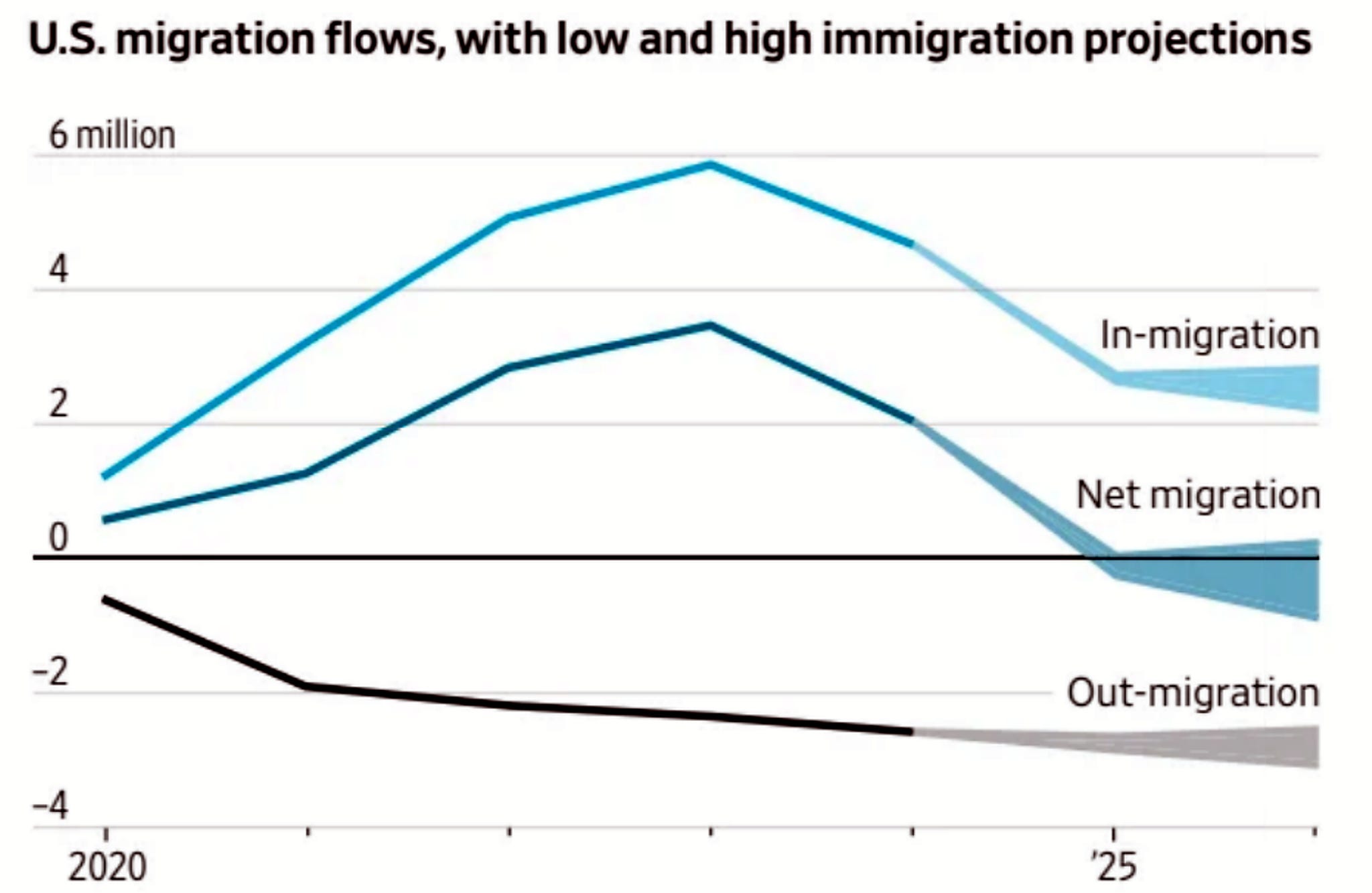
American emigration is rising
In nearly all EU countries, the number of arriving Americans is at a record high. In total, more than 1.5 million Americans now live in Europe.
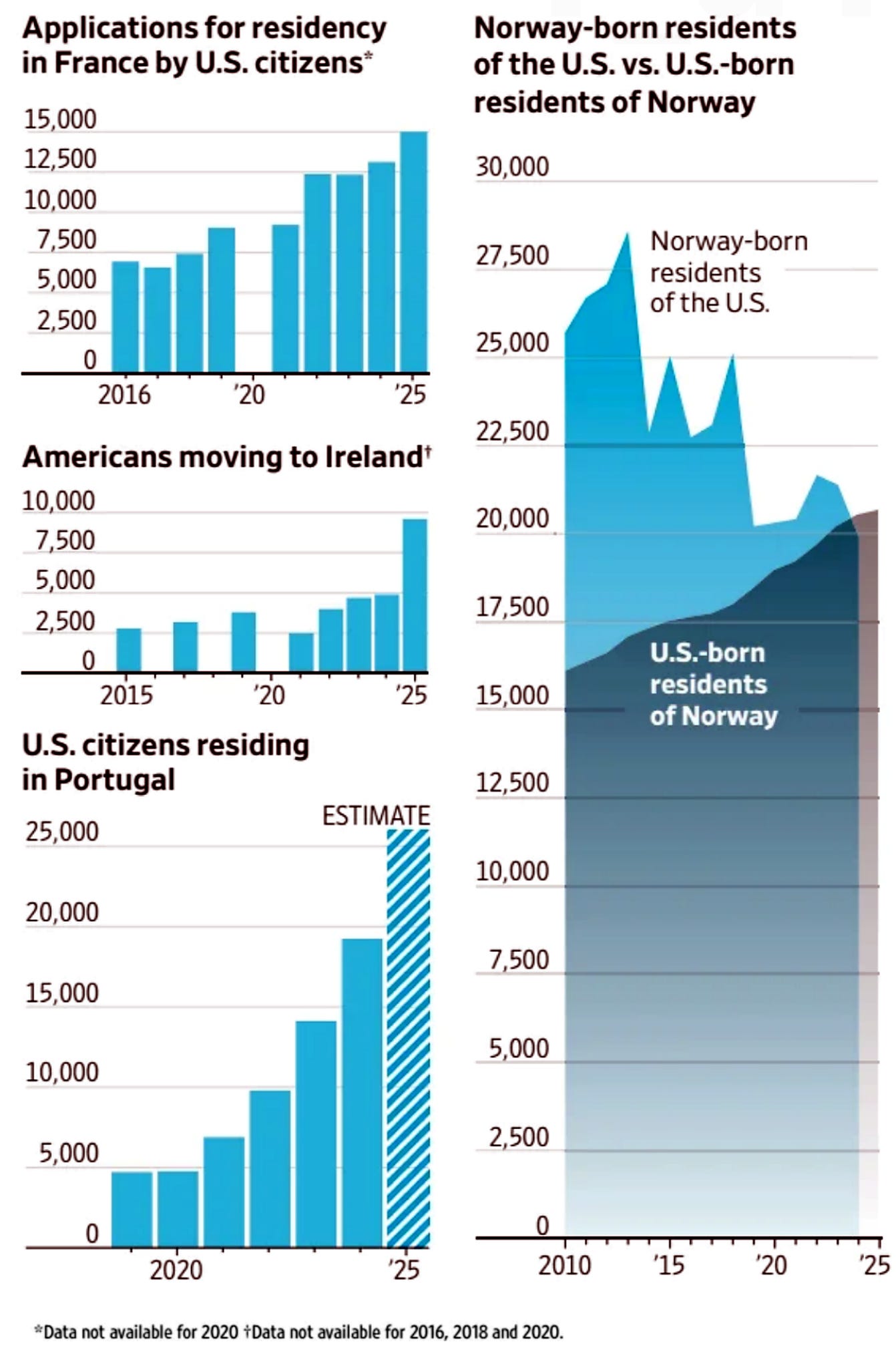
Adapted from The Wall Street Journal.
Overall, US net migration likely turned negative last year, for the first time since the Great Depression.
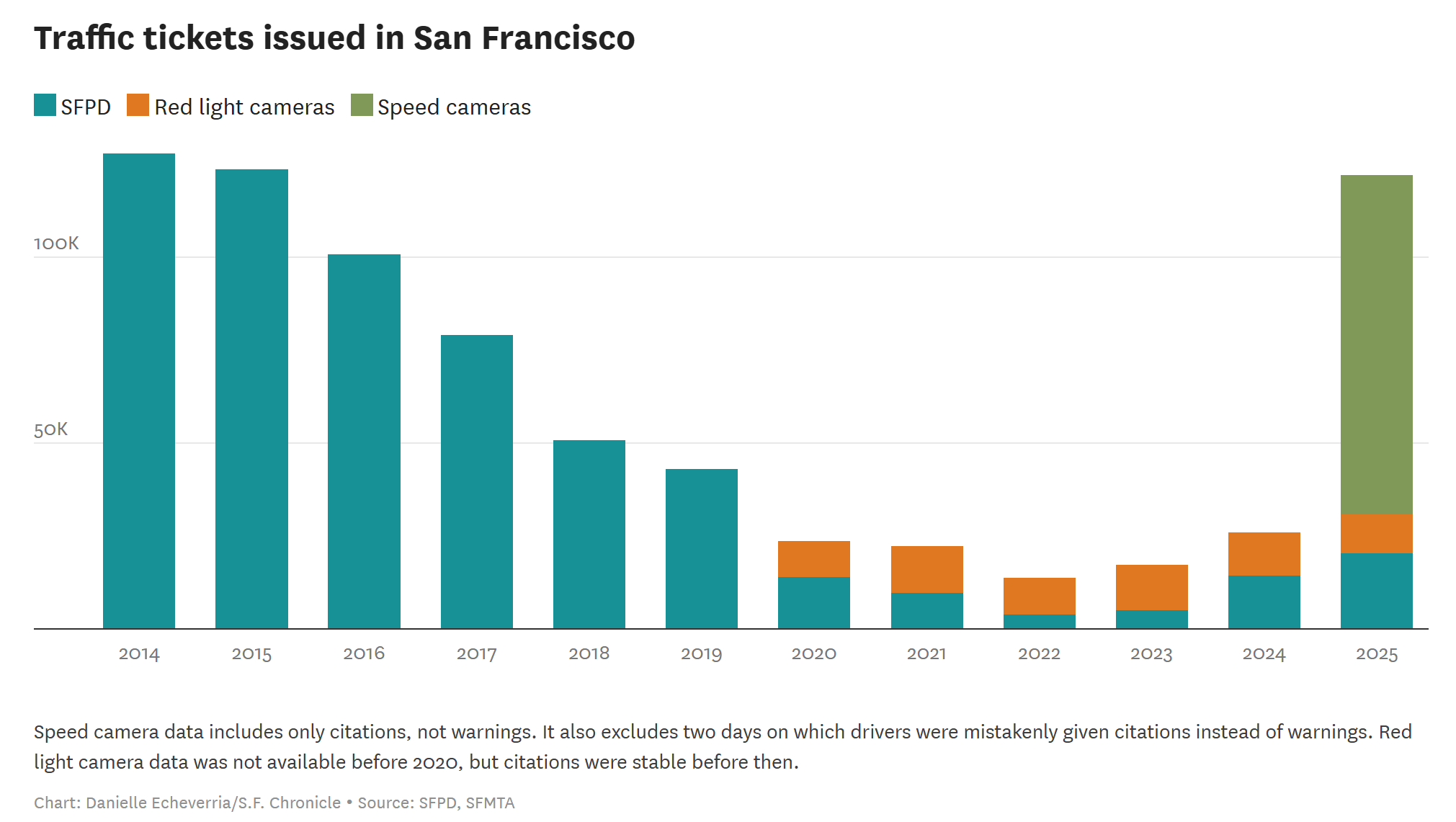
Cameras replace lapsed traffic policing in San Francisco
Over the last decade, the San Francisco police all but stopped issuing traffic tickets, leading to widespread speeding. But in the last few years, ticketing has increased again, thanks to a new tool: cameras. A study of 15 camera locations found that speeding fell by 72 percent after installation.
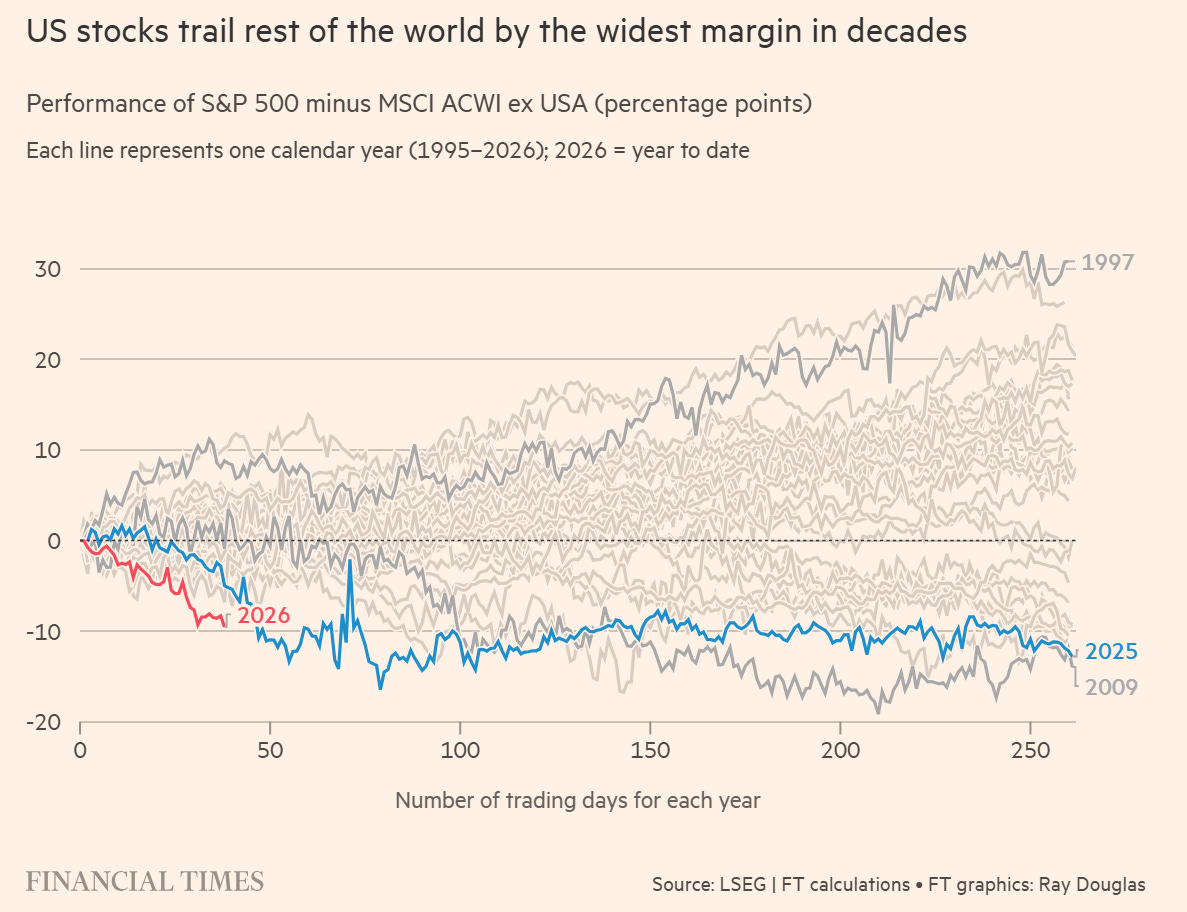
American stocks are lagging the rest of the world
The American stock market had an extraordinary run in the 2010s and early 2020s, but that has come to an abrupt end. The S&P 500 underperformed other markets by more than ten percentage points in 2025, and 2026 has started even worse.
In brief
‘“AI laundering” – blaming AI for layoffs you were going to do anyway – is going to be a real thing’
Indian IT services stocks fall as AI automation tools improve
Male Neanderthals interbred more with female Homo sapiens than the other way around
Luisa Rodriguez interviews Robert Long on why AI consciousness is so hard
David Nash’s monthly links roundup about global development is very comprehensive
Coefficient Giving summarizes its work on global health and well-being in 2025
That’s all for today. If you like The Update, please subscribe – it’s free.
AI laundering is definitely a thing. There are such powerful incentives to do it. a) there always needs to be an external justification when you tell people they're losing their jobs because no-one wants to say "Sure, I could have kept your job, but I chose not to, because I'd probably have lost mine soon if I didn't" b) there is a powerful Emperor's New Clothes effect among leaders of organisations about how they are making efficiencies on the back of AI; much much easier to say "yes, I'm doing it too" like everyone else, rather than "actually I'm not convinced that one can actually use AI to replace people". There are benefits to being openly AI-sceptic if you're a Substacker; there aren't any if you're a CEO.
So, while it’s true that Presidentialism is objectively inferior (for almost everything except ‘regular, fixed changes of govt’), I think it’s a mistake to think of this as a failure of procedure/structure.
You kind of touch on it here:
In today’s partisan environment
The problem is the not the “partisan environment” - the problem is that the Centre-Right* almost everywhere is simultaneously failing in the role it’s held since ~end of the WWII - containing and rationalising the electorate that voted for the Radical Right parties brought about WWII.
Presidentialism makes that worse … because it makes everything worse. But it’s not the core problem.
Nor are any of the checks and balances.
Because they never, ever - or ever could have been - sufficient to constrain a Radical Right leader/executive faction.
It doesn’t mean those things are valuable - they are a visible commitment - like not stepping over velvet ropes in a museum - they are a prop which helps people perform and be seen to perform civility.
But they cannot actually enforce it. If someone breaks into the museum and steals stuff, you can’t fix it by putting the velvet ropes back in place.
Tldr; The core problem is not Presidentialism - or Trump - it’s the Republican Party that held - and still notionally holds - all the power of one of the two monopoly political parties in the world’s remaining nuclear superpower … but couldn’t resist takeover by a reality tv star.
And that problem is the problem of Centre-Right parties everywhere (and there’s no solution on record that doesn’t run through (i) Auschwitz (ii) nuclear weapons only on the liberal side).