


Nature study finds fast human evolution over the past 10,000 years
French electricity is five times cleaner than the EU average, thanks to nuclear
In brief: review of advances in biology and medicine, Our World in Data is hiring a writer, and more
Nature study finds fast human evolution over the past 10,000 years
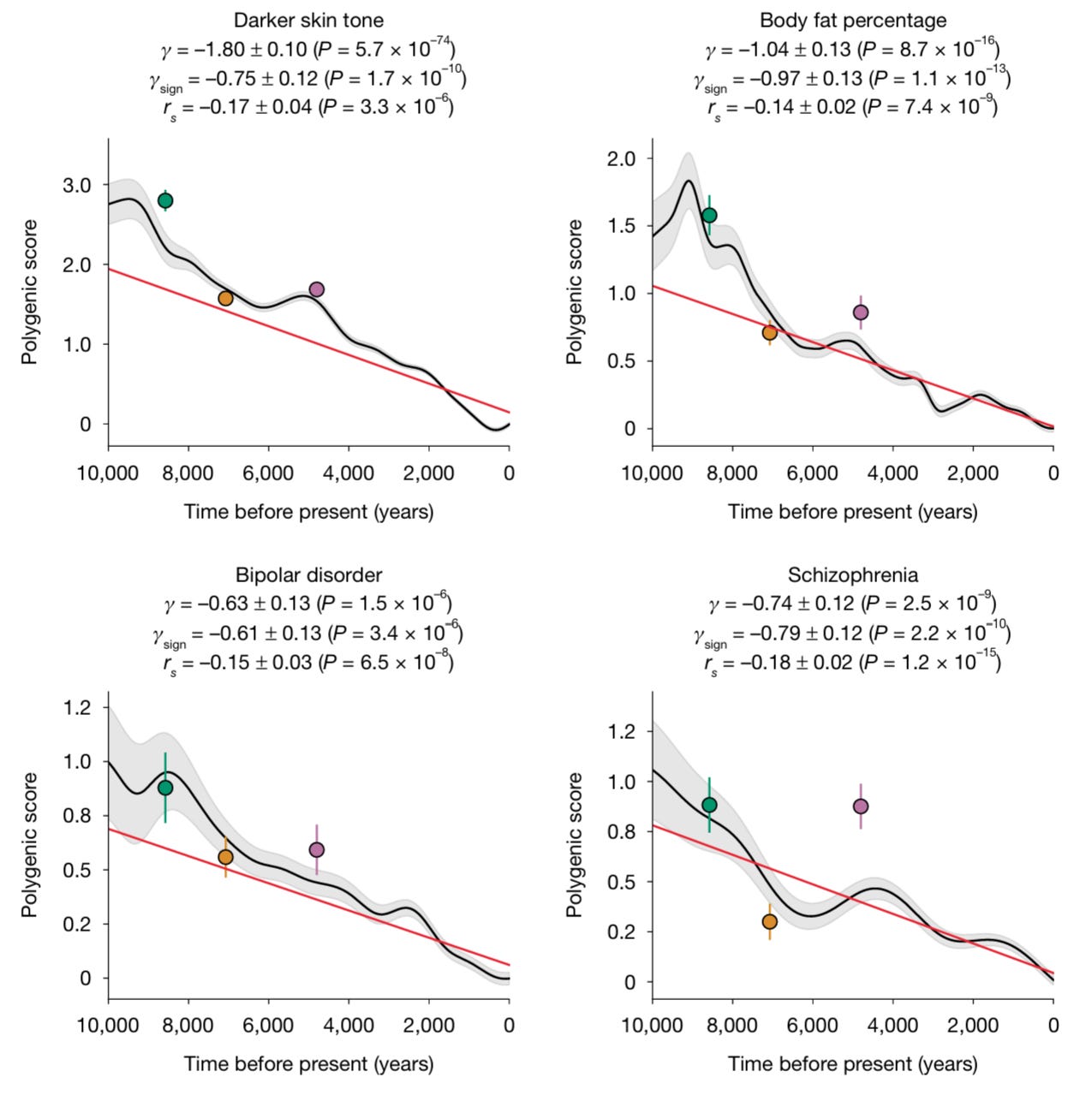
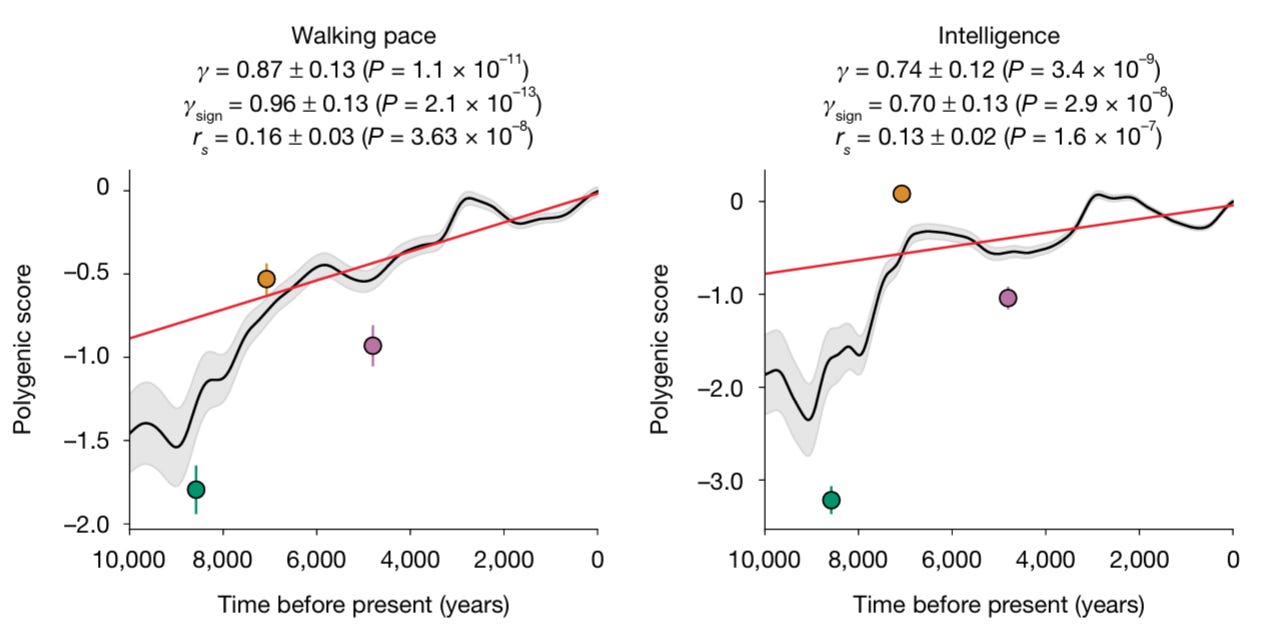
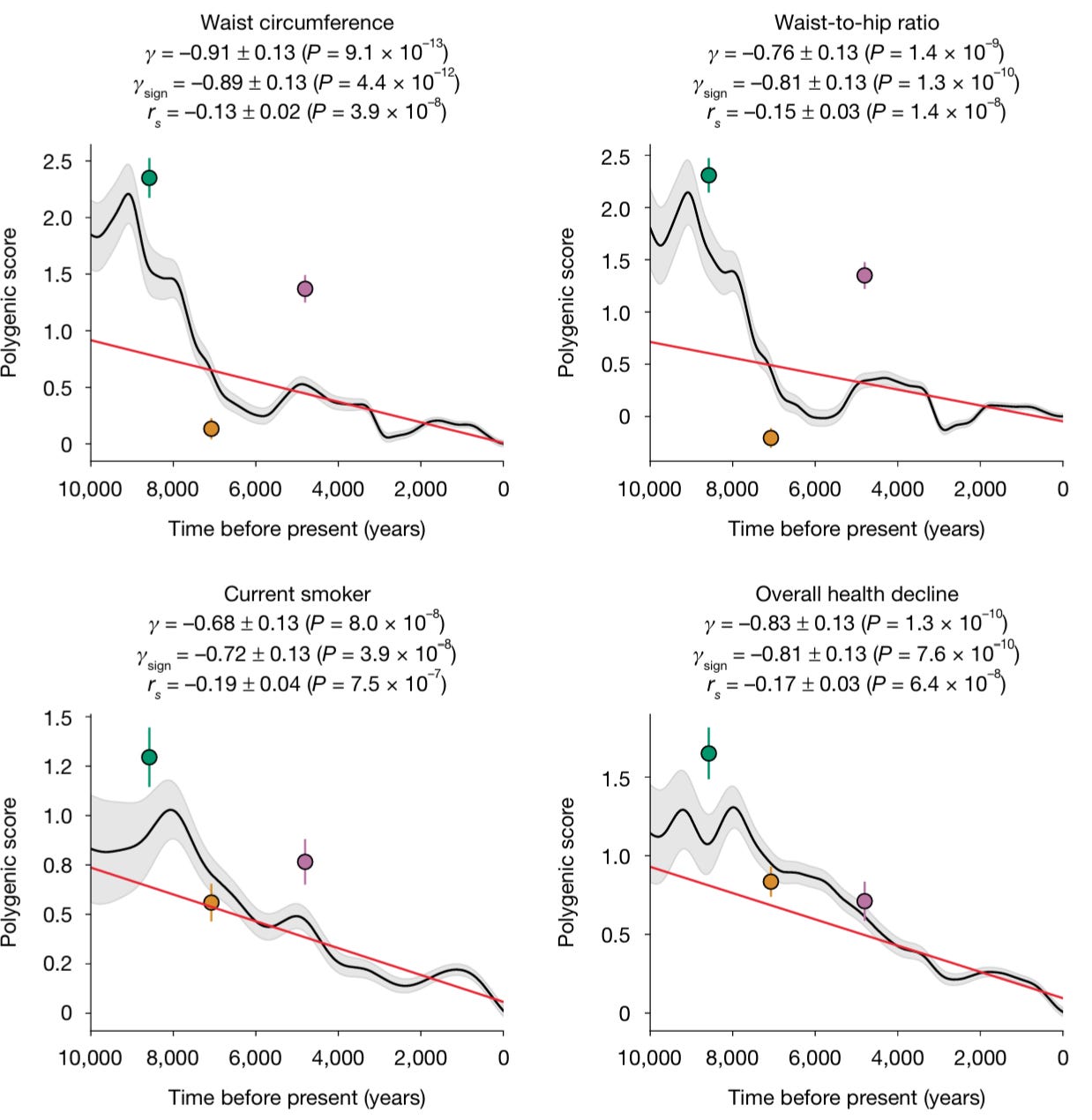
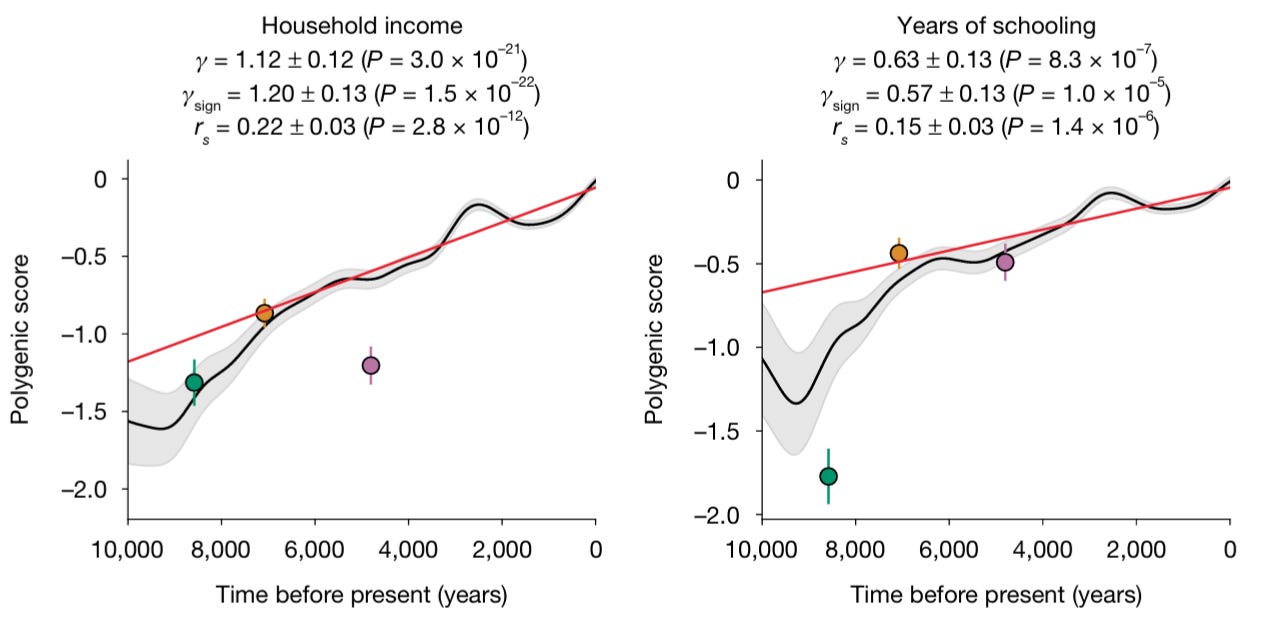
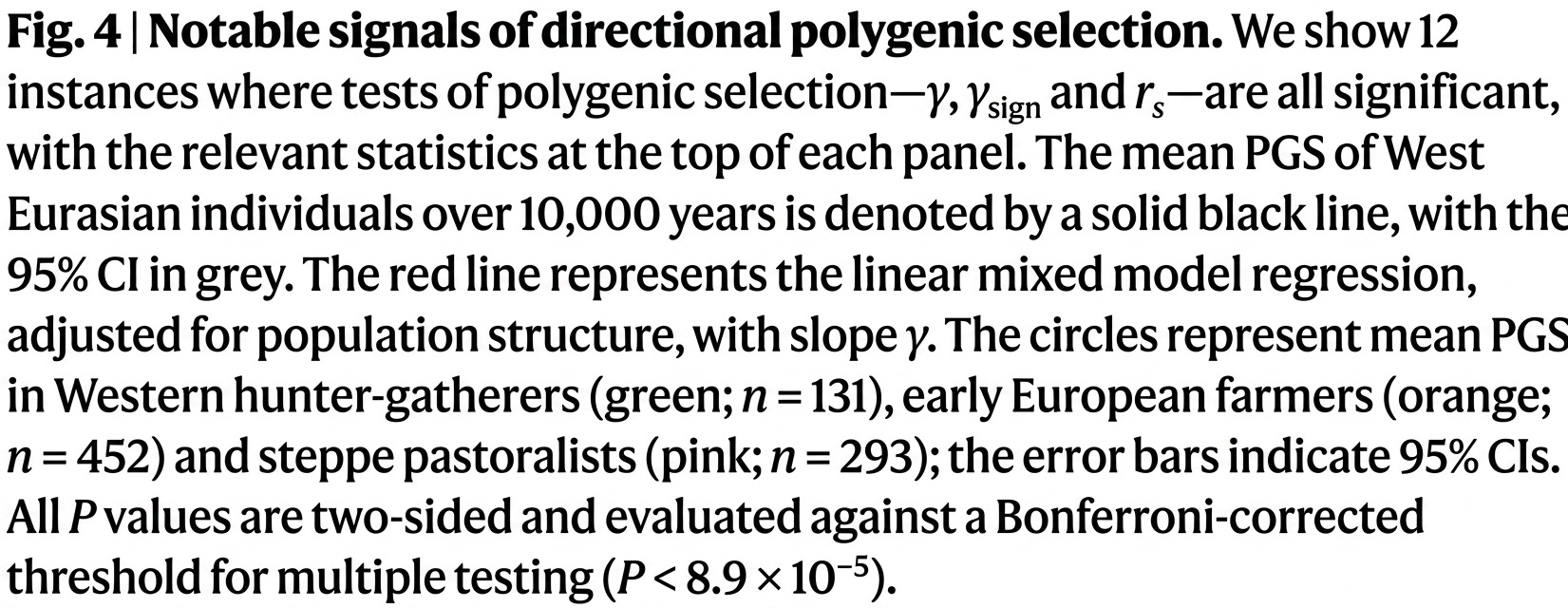
Are we the same as our hunter-gatherer ancestors, only more technologically advanced? Many think so, but a new study in Nature shows we’re not. DNA analysis of modern and ancient samples finds that natural selection has rapidly reshaped populations across Europe and the Middle East.
Some of the changes are unsurprising, like lighter skin, which aids vitamin D synthesis at higher latitudes. But how come genes associated with smoking became rarer long before tobacco reached the Old World? They probably correlate with other traits that reduced reproductive success, such as impulsivity.
Many changes look like improvements. Genes associated with schizophrenia and bipolar disorder have grown rarer, while those associated with intelligence, years of schooling, and income have become more common. For several traits, the shift over the past 10,000 years is around one standard deviation, equivalent to the difference between an average person today and someone at the 84th percentile. The genetic gap between us and our ancestors is substantial.
French electricity is five times cleaner than the EU average, thanks to nuclear
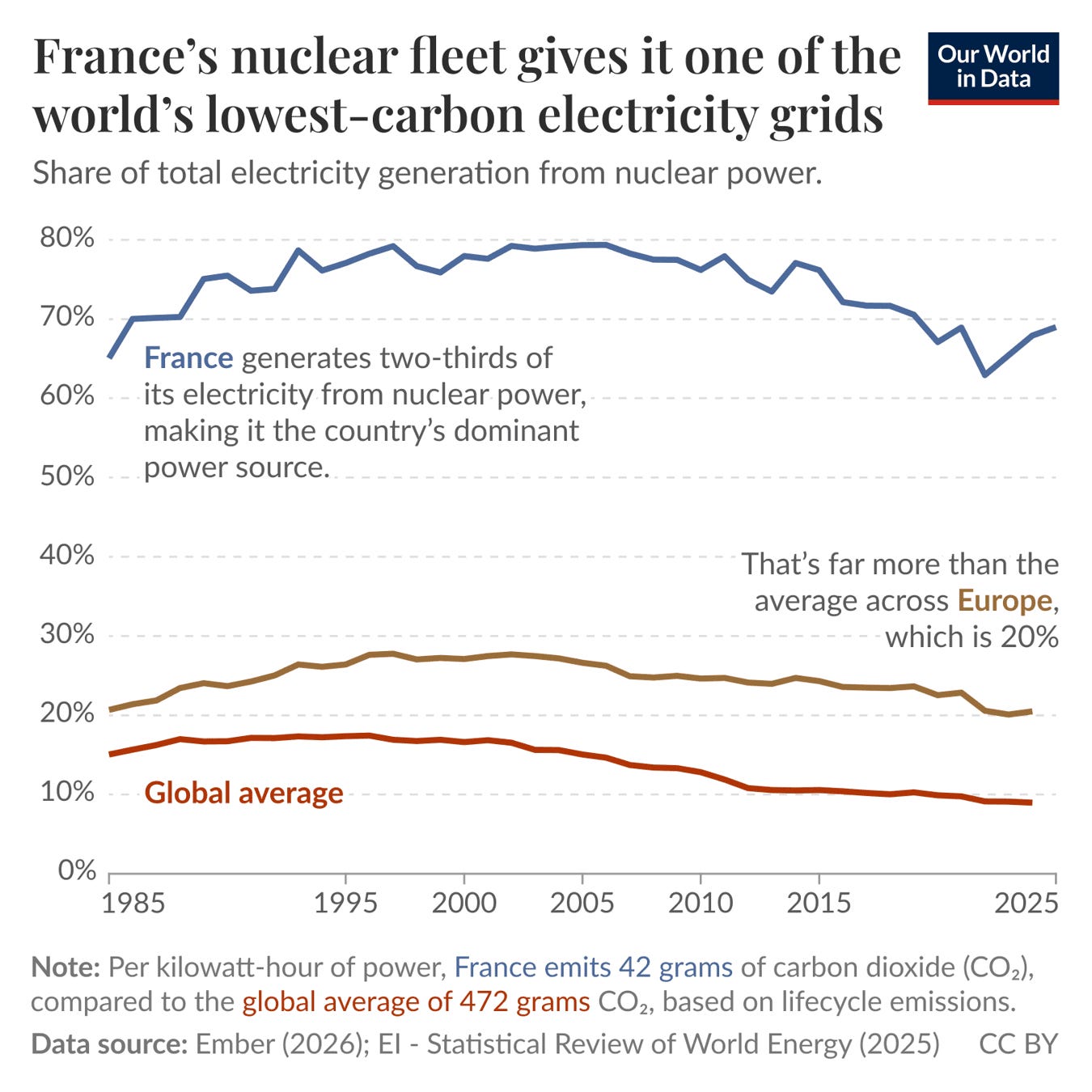
France has long stood apart from its European neighbors for its sustained commitment to nuclear power. While Germany began phasing out its reactors after the 2011 Fukushima accident, this was never on the agenda in France. It still generates more than two thirds of its electricity from nuclear power.
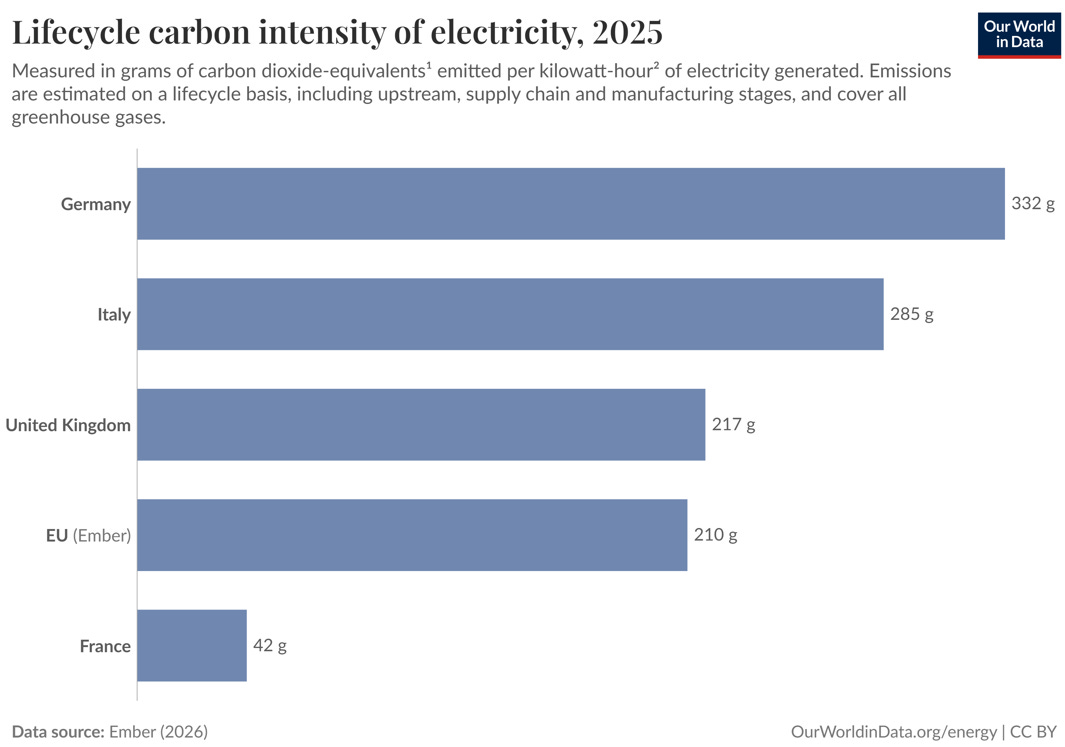
This has given France an electricity system with remarkably low carbon emissions – 20 percent of the EU average.
AI use at work rises sharply with income
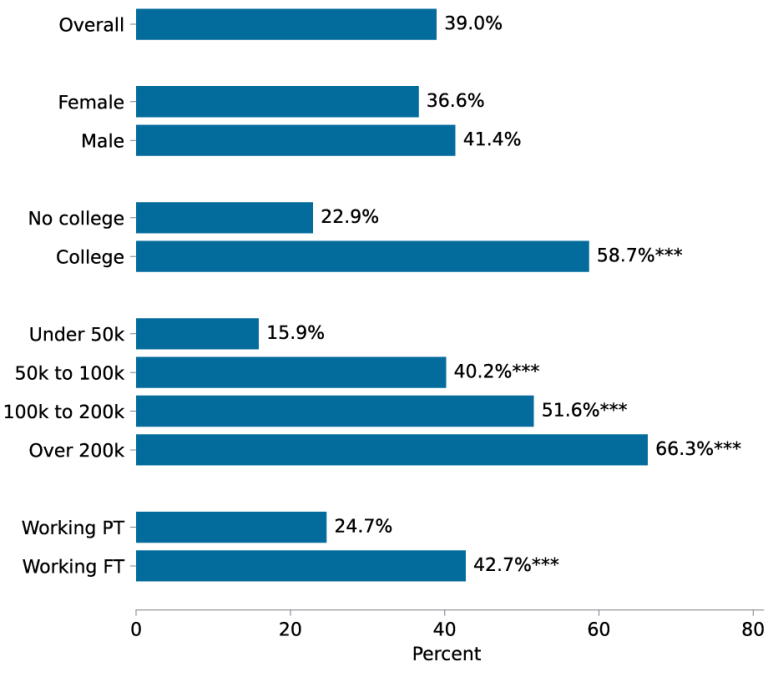
A recent survey of American workers finds that the use of AI is strongly correlated with income. Two thirds of workers earning over $200,000 have used AI at work in the previous year, compared with only 16 percent of workers earning under $50,000. Economist Alex Imas comments: ‘AI cannot reduce inequality if this is what the adoption margin looks like.’
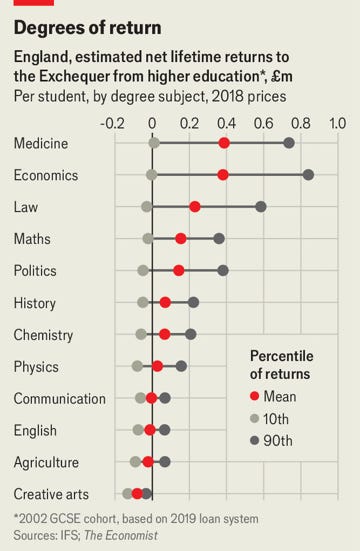
Returns to university degrees vary enormously by subject
Does it pay to go to university? It very much depends on what you study. In Britain, medicine graduates at the 10th percentile earn higher net lifetime returns than creative arts graduates at the 90th percentile. Because their earnings are so low, creative arts graduates are expected to repay only a quarter of their student loans.
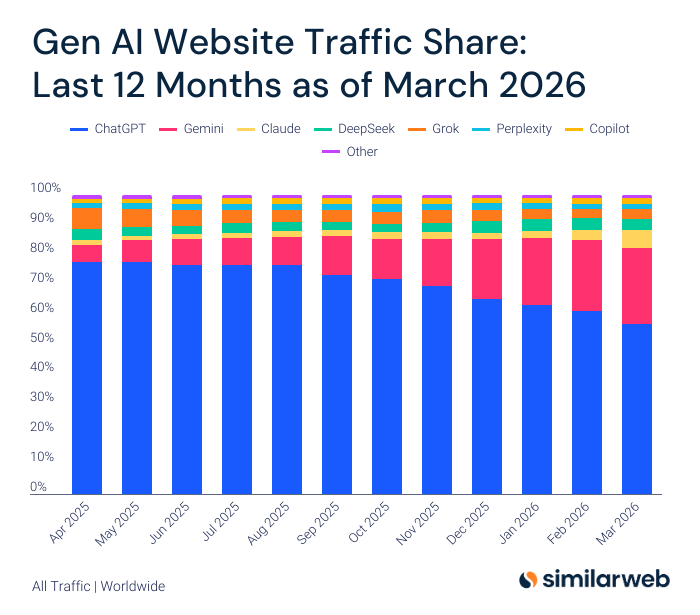
ChatGPT still has the most AI users, but Gemini is growing
ChatGPT’s share of generative AI website traffic keeps shrinking, according to Similarweb. While OpenAI’s chatbot had 77 percent of traffic a year ago, the latest figure is 57 percent. Its closest competitor is Google’s Gemini, whose share has risen from 6 percent to 25 percent over the same period. Meanwhile, Anthropic’s Claude remains a distant third at 6 percent, even though it has gained ground in recent months.
But some users pay much more than others, and AI companies that attract them earn more than overall user numbers might suggest. Thanks to strong enterprise sales, Anthropic’s annualized revenue is now roughly on par with OpenAI’s. On Ventuals, a small market for private company valuations, Anthropic just passed $1 trillion, ahead of OpenAI at $860 billion. (Google’s market cap is far larger – roughly $4 trillion – but its AI business can’t be valued separately from the rest of the company.)
In brief
Niko McCarty and Saloni Dattani round up recent advances in biology and medicine
In Development launches with an article on the surprising findings of cash transfer trials
In a US study, rainy or hot campus tours made students 8–10 percent less likely to apply
The case that acetaminophen (paracetamol) is safer than ibuprofen for most people
The Economist ranks Musk and Bezos as less powerful than Ford and Rockefeller were
Really appreciate these overviews! One comment on the Nature study - did you consider to add a caveat? I can't assess the issues that Gusev presents here https://x.com/SashaGusevPosts/status/2044764325710029139?s=20 but they do seem to indicate that this is not entirely clear cut, yet.