


Welcome to The Update. In today’s issue:
It is better to be vaguely right than precisely wrong about the future of AI
Americans think cancer research is the most important charitable cause
In brief: Grok overtakes DeepSeek, Dutch wind power mistake, and more
It is better to be vaguely right than precisely wrong about the future of AI
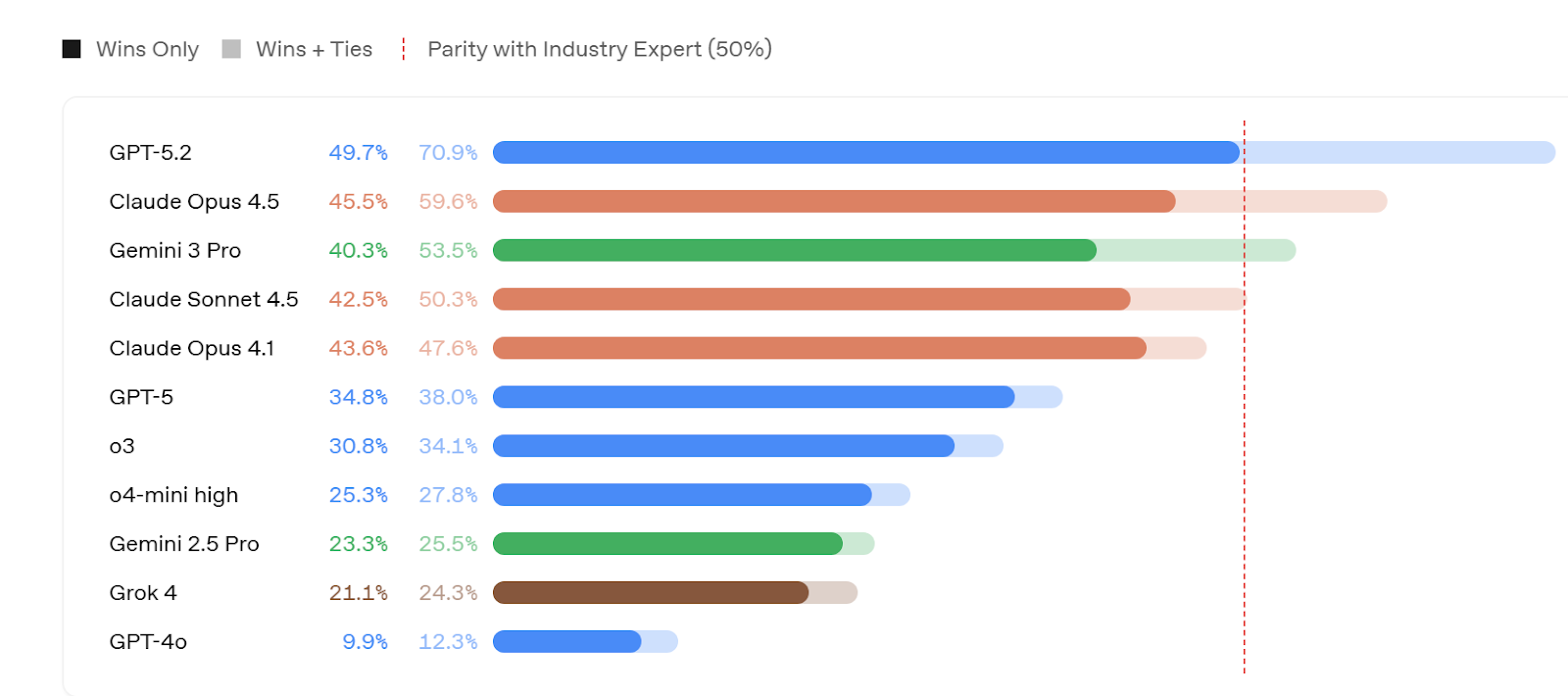
How good is AI at doing human jobs? The most well-known study is OpenAI’s GDPVal, which tests AI performance on well-specified knowledge work tasks across 44 occupations. But these tasks are unrepresentative of real-world jobs, meaning GDPVal tells us fairly little about the actual economic impact of AI. The best AIs match or surpass industry experts on GDPVal, and yet widespread automation hasn’t arrived.
How can we do better? Epoch AI’s Anson Ho suggests that we should study how AI performs on the tasks we actually do at work. He tests AI tools on three tasks of his own and estimates a 50 percent chance that future AI systems will be able to do the most challenging one – writing a particular newsletter article – by late 2028 or early 2029. I’d probably put that further out, but I commend the idea of looking at real-world tasks. There should be ambitious AI evaluations using this methodology.
The world is complex and messy, and researchers across disciplines often find it hard to say something reasonably precise about their topic of interest. Too often, they solve this problem by picking narrow questions or narrow models and then exaggerating their general relevance. Jan Kulveit argues that this can be a problem in what he calls post-AGI economics, which models a world with superhuman AI. While such AI systems may break familiar economic assumptions like the distinction between capital and labor (are they things or people?), economists often hold on to these assumptions instead of developing more realistic alternatives. The result is the same as with GDPVal: a precise answer to the wrong question.
Europeans are souring on the US
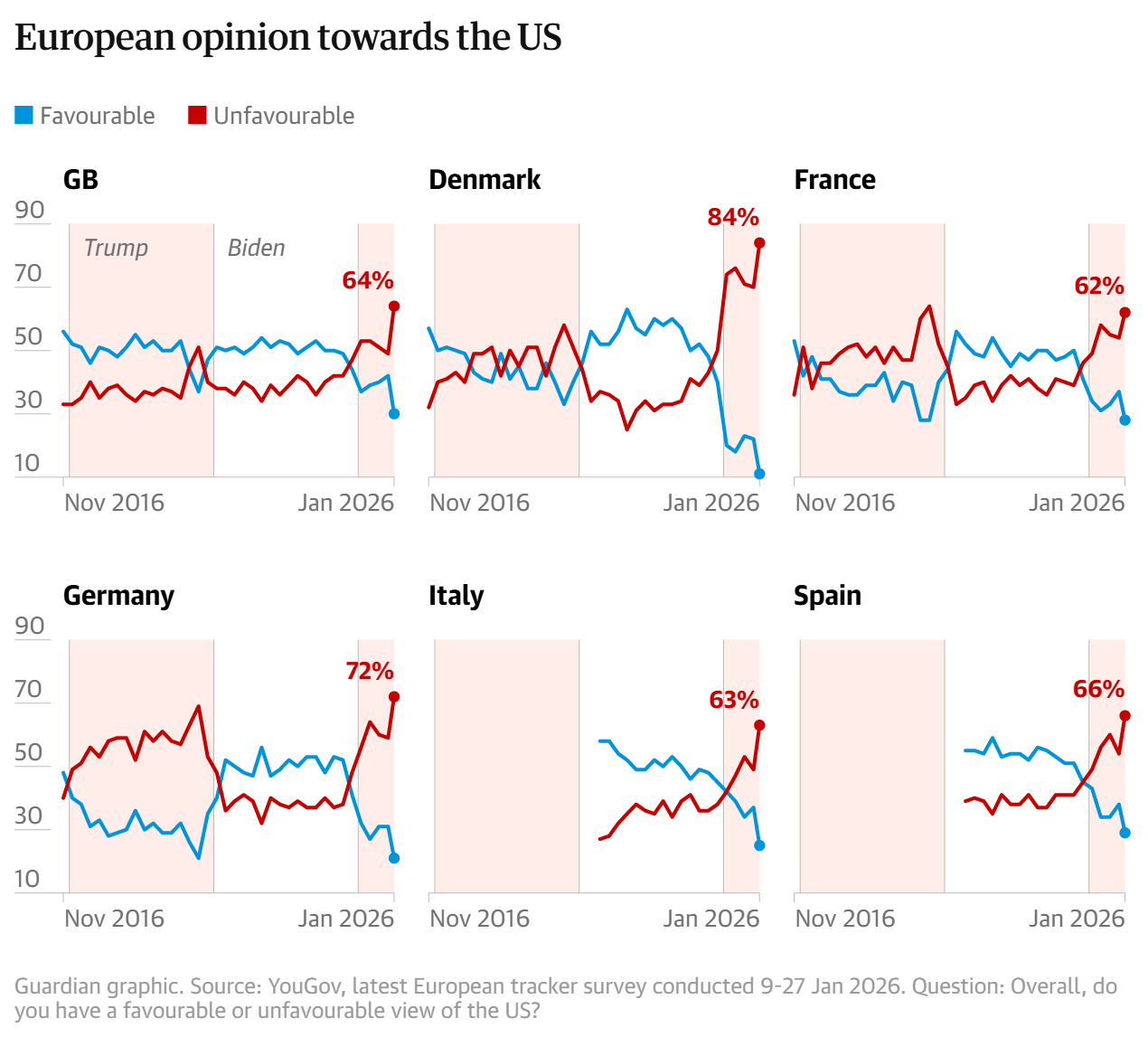
A recent YouGov poll finds that the share of Europeans who hold unfavorable views of the US has increased from the already high November numbers, likely due to the Greenland crisis.
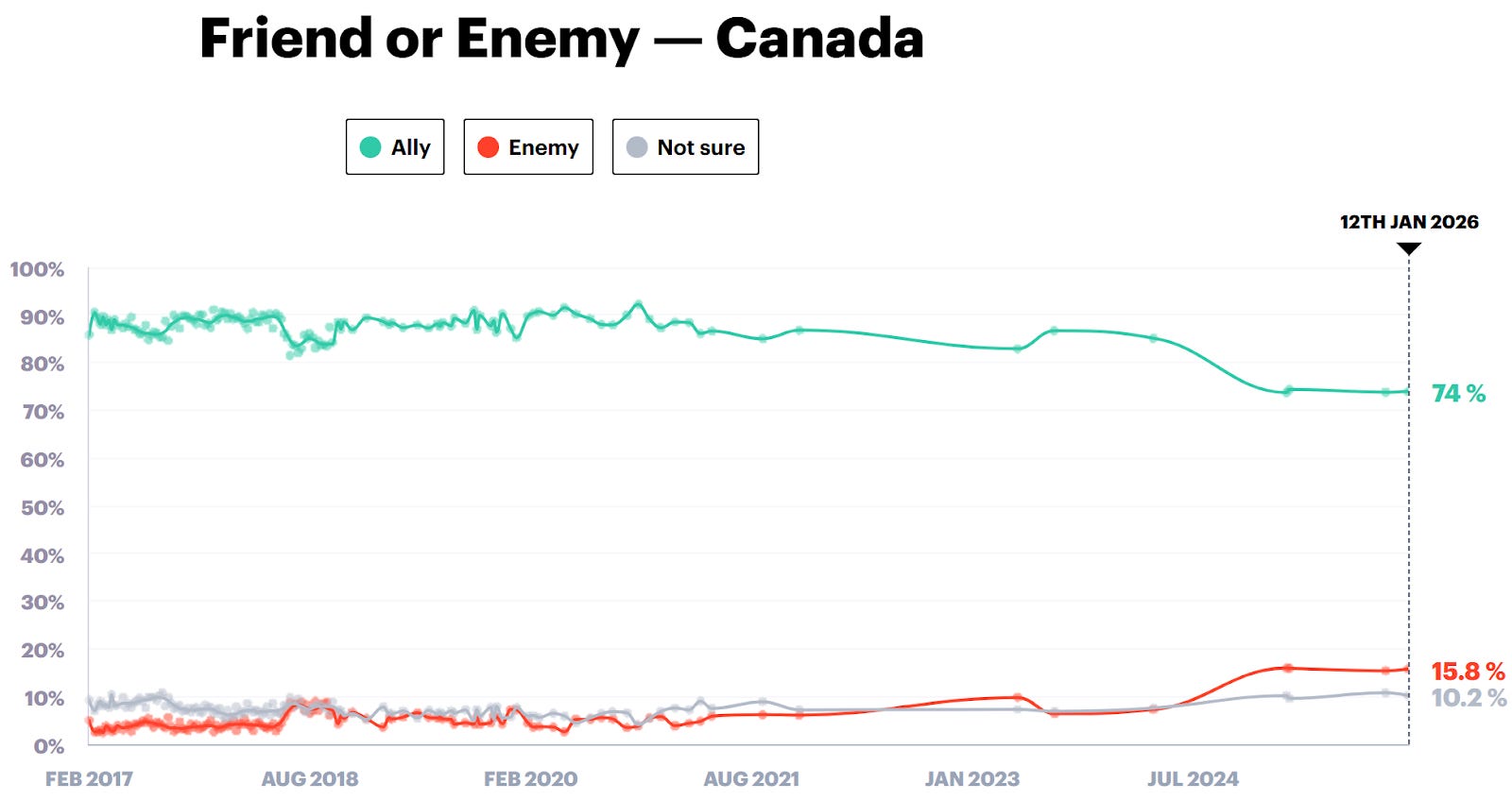
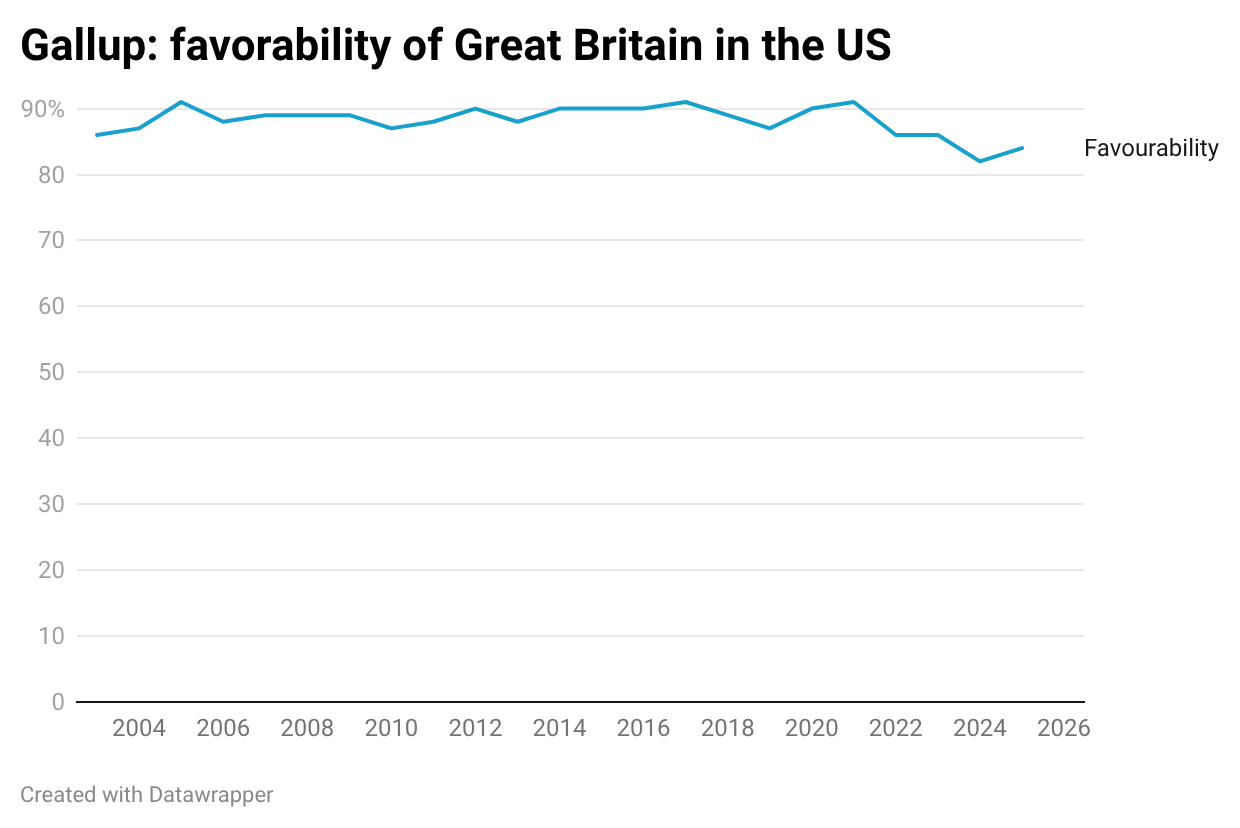
Similarly, Republican favorability ratings of their traditional allies have fallen. However, among all Americans, countries such as Canada and Britain are still well-liked.
Europeans consistently view the US less favorably under Republican presidents, as Pew data shows (note that its latest poll was last spring).
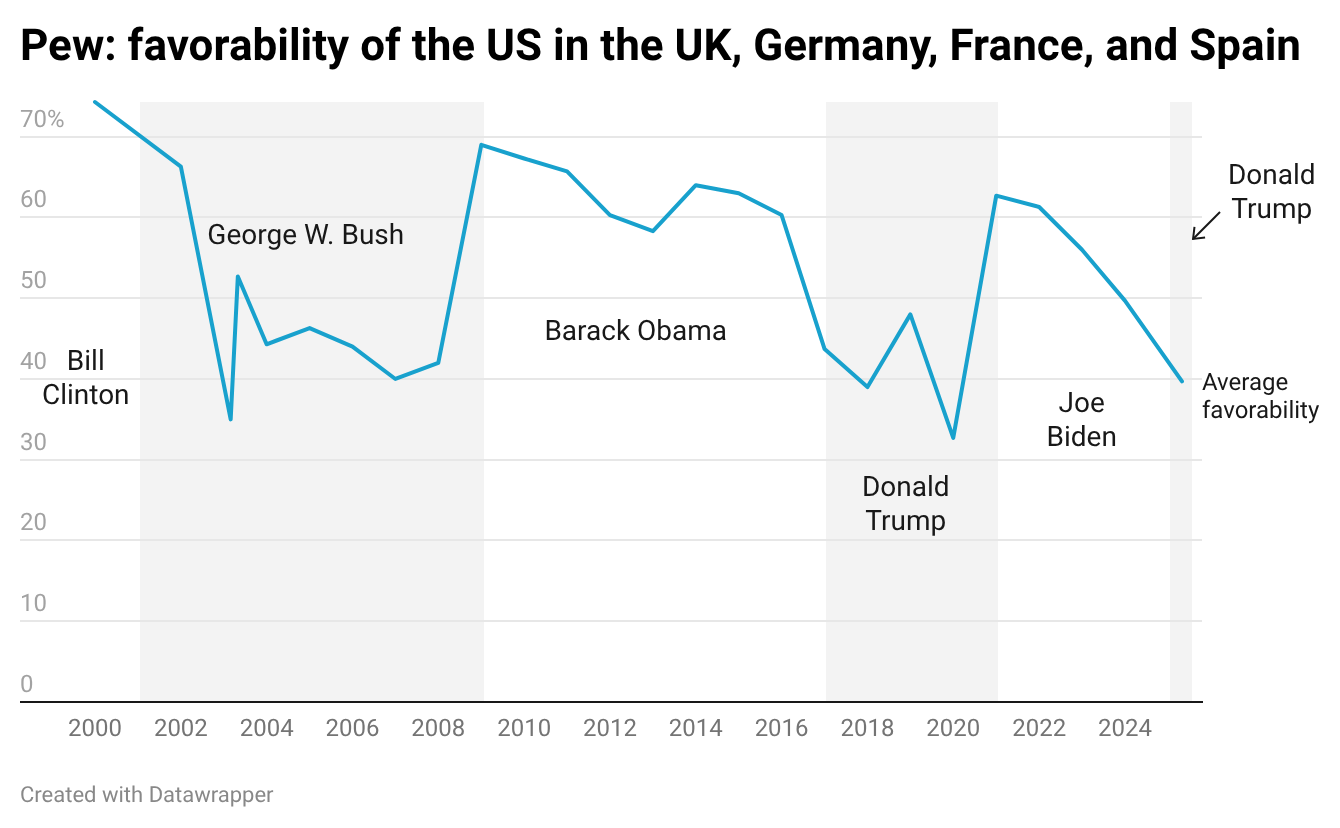
If a Democrat wins the 2028 election, I expect Europeans to view the US more positively again. That said, they might still be wary of its long-term commitments. Trust can be harder to repair than favorability.
Government social spending is rising almost everywhere
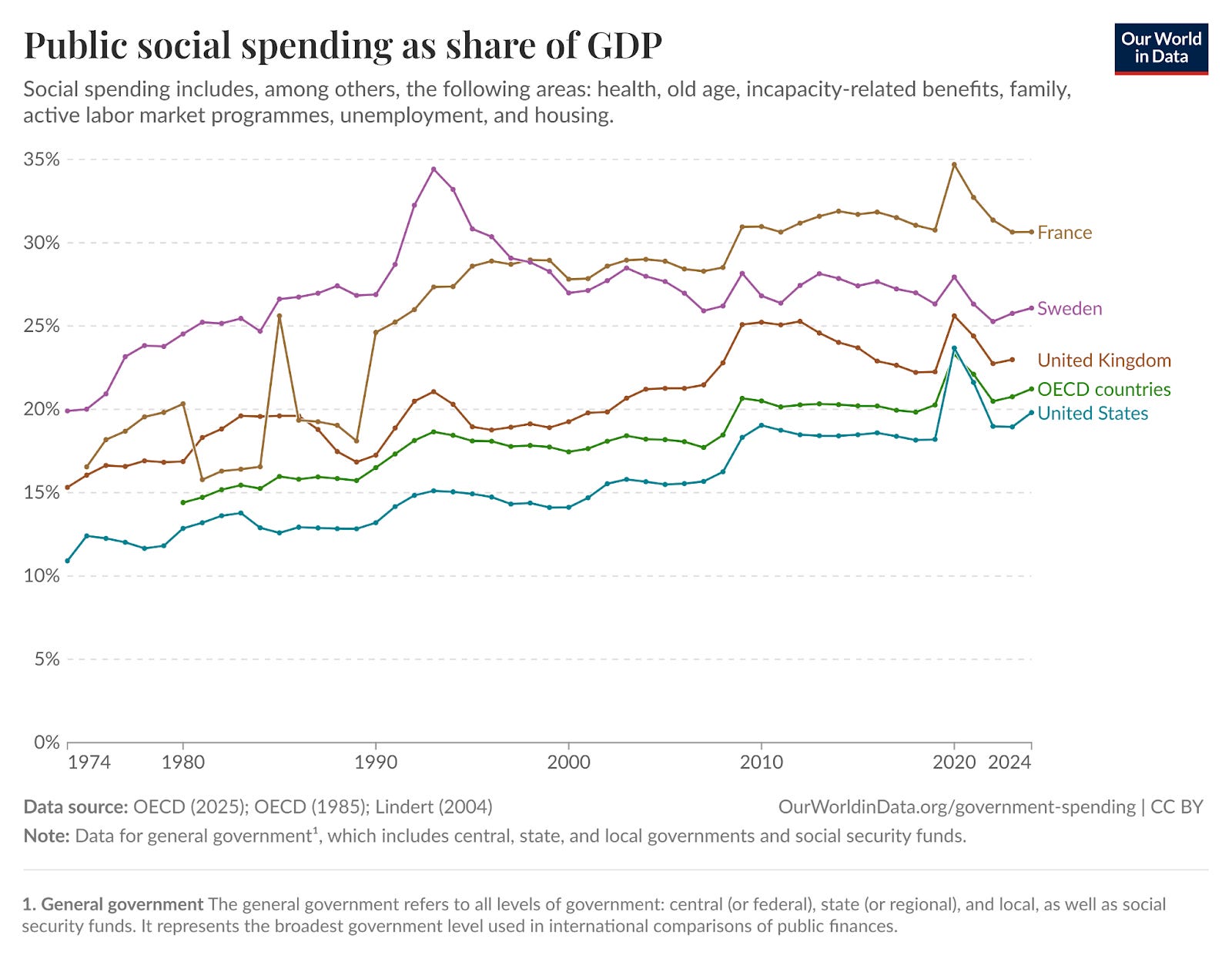
Over the last 50 years, government social spending – healthcare, pensions, benefits, and so on – has increased throughout the rich world. Even in the US, it has doubled as a share of GDP, and is now higher than it was in the UK during Tony Blair’s first years as prime minister. But Sweden is a notable exception to this trend: social spending has decreased from 34 percent of GDP in 1993 to 26 percent in the most recent data. Since these cuts followed a deep economic crisis, they may suggest there is a limit to how much social spending can rise.
Americans think cancer research is the most important charitable cause
What are the most important causes in the world – and do you support donations to them? A study by Rethink Priorities found that the answers to these questions can come apart. While cancer research and mental health topped the rankings on both questions, the risk of nuclear war was seen as the fourth most important issue, but the least worthy of donations.
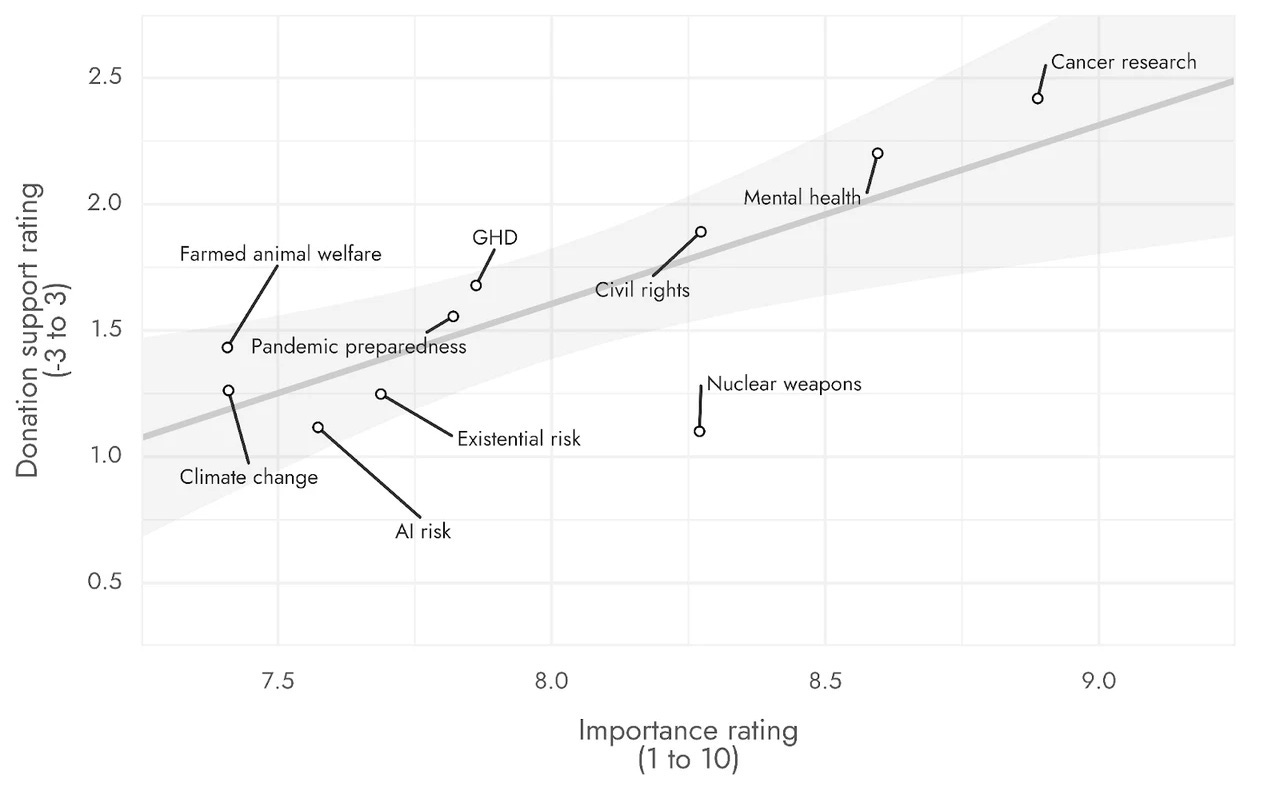
Rethink argues that people may not be aware of donation opportunities related to nuclear risk, but I think it’s also possible that they see it as the government’s responsibility, or view it as so hard to solve that they prioritize other causes.
Record-tying share of Americans identify as pro-choice
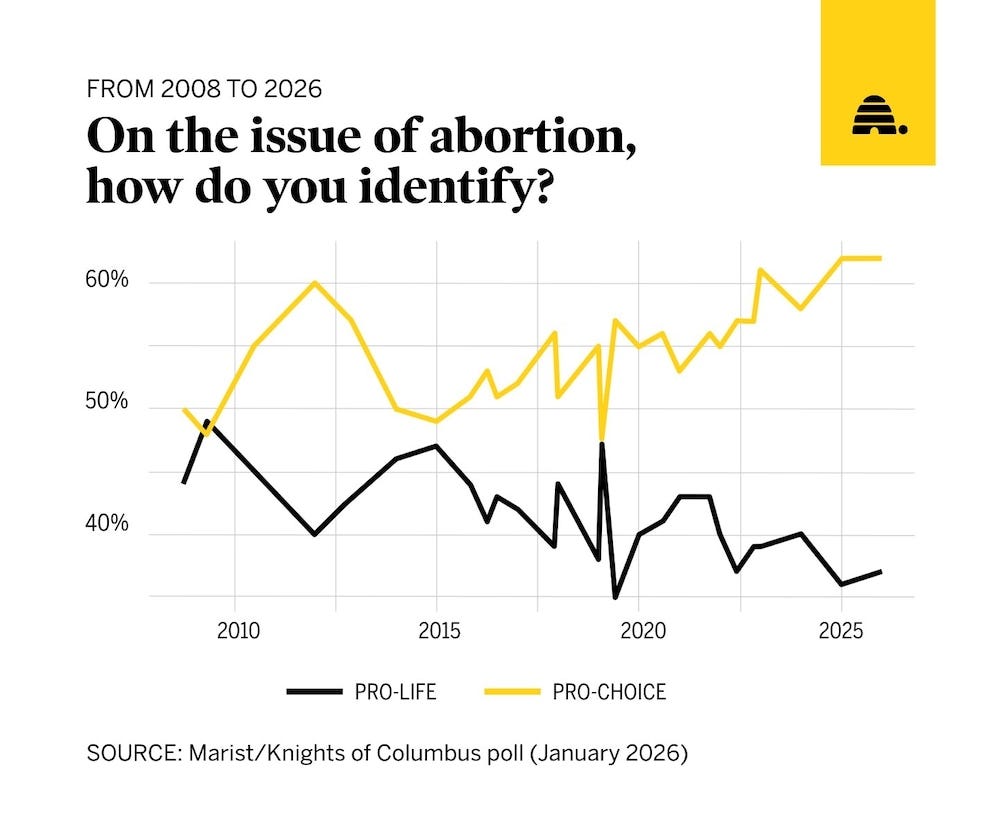
At the annual March for Life in Washington, DC, anti-abortion activists expressed frustration over what they see as the Trump administration’s abandonment of their cause. But the root of their waning influence is that American voters are turning against them. The share of Americans who identify as pro-choice has risen steadily, and now stands at a record-tying 62 percent according to a Marist poll commissioned by the Knights of Columbus. Abortion is a good example of the power of the median voter: on this issue at least, they sway even a politician as impulsive as Donald Trump.
In brief
Landslide victory for Japan’s ruling Liberal Democrats in snap election
Kalshi: 69 percent chance that Keir Starmer resigns by 31st August
The chances of finding a spouse are lower than you might think
Guinea worm disease may become the second disease we eradicate, after smallpox
China’s best math AI trails the US frontier by more than six months
The Netherlands risks locking in high wind power prices, as the UK has done
This fits the pattern of poor prioritization in renewable energy.
VoxDev: If AI is like the Industrial Revolution, expect conflict and turbulence
(As always, it depends on exactly what the analogy is supposed to be.)
That’s all for today. If you like The Update, please subscribe and share with your friends.